

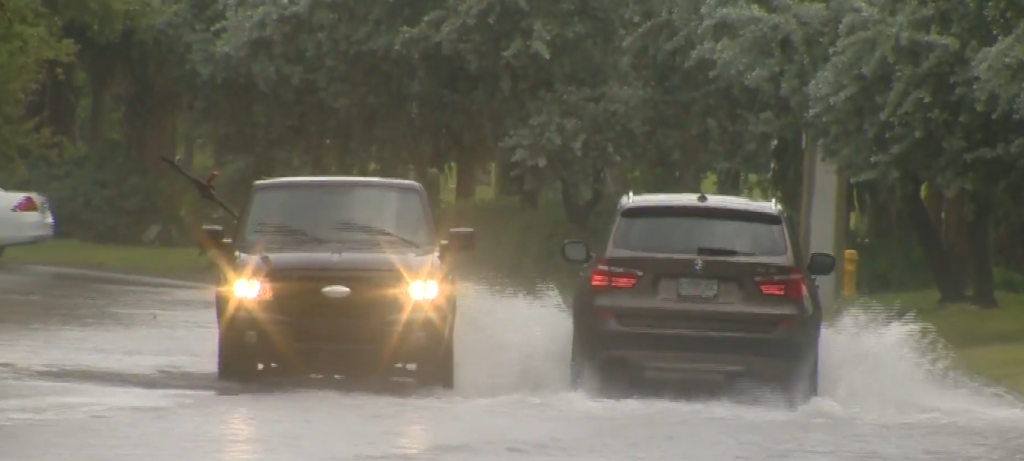
When you drive through some Miami Beach neighborhoods on a morning following a significant downpour, or occasionally even without one, right after an exceptionally high tide, you’ll notice water collecting across the street, spilling up through storm drains, and lapping at parked cars’ tires. Not a hurricane. No significant storm. When a city is constructed six feet above the ocean and the water continues to rise, the ocean simply does what oceans do. Sunny-day flooding is what the locals refer to it as. In the same way that other cities use traffic apps to check tide charts, they have learned to avoid it. It’s now commonplace. Maybe the most disturbing aspect of it is how ordinary it is.
According to analysts, Miami has the greatest financial risk of any city in the world due to sea level rise. That is the current, observable state of a metropolitan area that has spent decades erecting opulent skyscrapers and tourist infrastructure on land that is just above the waterline. It is neither a projection nor a model output. A Realtor.com analysis projects that over the next 30 years, nearly six million Florida homes, worth about $3.4 trillion, will experience severe or extreme flooding. It’s hard to keep the entire number in your head at once because it’s so big. However, the city continues to expand, the cranes continue to operate, and the cost of condos in some areas that are vulnerable to flooding continues to rise.
The engineering solution to this issue has been significant and, in some respects, truly impressive; in other respects, it serves as a reminder of how much human ingenuity is capable of while the underlying issue keeps getting worse. Large portions of Miami are currently protected from frequent flooding by a $400 million pump system, which consists of continuously operating machines that push water back into the ocean, which the ocean is constantly attempting to reclaim. The water department of Miami-Dade is preparing for a worst-case sea level rise of 11 inches by 2040. Until you keep in mind the baseline—six feet of average elevation—that doesn’t sound disastrous. At that scale, every inch counts.
| Topic | Miami Sea Level Rise — Engineering, Economics, and Urban Vulnerability |
|---|---|
| City Average Elevation | Approximately 6 feet above sea level |
| Sea Level Rise Since 1993 | Water in Miami area has risen 5 inches |
| Planning Horizon (Worst Case) | 11 inches of rise by 2040 (Miami-Dade Water and Sewer Dept. projection) |
| Submersion Risk | University of Miami scientists estimate 60% of Miami-Dade County may be submerged by 2060 |
| Florida Property at Risk | Nearly 6 million homes valued at $3.4 trillion face severe/extreme flooding over 30 years |
| Miami’s Flood Control System | $400 million pump system currently keeping large portions of the city dry |
| Septic System Crisis | 100,000+ septic tanks in Miami-Dade; 10,000 already below safe elevation; 50,000 projected at risk within 20 years |
| Biscayne Bay | Generates billions annually; faced catastrophic fish kill in August 2020 due to oxygen depletion linked to sea rise and pollution |
| Financial Risk Ranking | Highest in the world for climate-driven sea level loss, according to CNBC |
| Key Infrastructure Response | Raising key infrastructure as high as 20 feet above sea level; $400M general obligation bond for flood resilience |
| Reference Links | The Invading Sea – Miami Sea Level Rise Commentary · ABC News – Miami Grapples with Rising Seas and Biscayne Bay |
A different, more subdued crisis is developing beneath the city. Over 100,000 septic tanks remain in Miami-Dade County, which is a startling amount for an urban coastal area coping with rising groundwater. 10,000 tanks that are already too low to operate properly have been found by the county’s water department. This means that waste from toilets can flow straight into groundwater and then into Biscayne Bay, which is located at the edge of southeast Florida and generates billions of dollars in revenue annually. The bay experienced a massive fish kill in August 2020 after the water’s oxygen was depleted by heat, nutrient pollution from those malfunctioning systems, and fertilizer runoff. Thousands of fish perished. It was an obvious, tangible indication of what happens when infrastructure built for one climate is used in another. It is projected that there may be 50,000 non-working septic tanks in 20 years.
Observing all of this, Miami’s political relationship with its own vulnerability is characterized by a particular tension. According to scientists at the University of Miami, 60% of Miami-Dade County might be under water by 2060. That is within the lifespan of a 30-year mortgage taken out today, not some far-off abstraction. However, as one city official put it in private, the discussion about what to do with privately held real estate in flood-prone areas continues to take place “behind the scenes.” The notion that some properties east of the elevation ridge may eventually need to be abandoned, known as managed retreat, is politically radioactive in a way that feels more and more detached from the actual ground.
Politics hasn’t reacted in the same way as the property insurance market. Due to insurers’ withdrawal from Florida’s coastal market, homeowners are now forced to rely on the state’s insurer of last resort and pay premiums that only partially account for the compounding risk of flooding, hurricane intensification, and saltwater intrusion into drinking water supplies. The kind of honest accounting that politicians have been hesitant to start may be compelled by market pressure. There is a grim logic to it: the discussion about retreat tends to cease being theoretical when insurance becomes unavailable or unaffordable, and when mortgages become hard to get on properties in designated flood zones.
The city has been performing required engineering upgrades to the pump system and drainage network, as well as raising important infrastructure, some of which are as high as 20 feet above sea level. These are real investments that purchase real time and cost real money. They don’t alter the course, though. Pumping more water won’t solve the issue of sea level rise. When the ocean ultimately prevails in the dispute, decisions must be made regarding what should be sacrificed, what should be defended, and who will pay the price. Whether they acknowledge it or not, the rest of the nation’s coastal cities are keeping a close eye on Miami, which is the most significant location in the US to witness that reckoning.
Disclaimer
Nothing published on Creative Learning Guild — including news articles, legal news, lawsuit summaries, settlement guides, legal analysis, financial commentary, expert opinion, educational content, or any other material — constitutes legal advice, financial advice, investment advice, or professional counsel of any kind. All content on this website is provided strictly for informational, educational, and news reporting purposes only. Consult your legal or financial advisor before taking any step.
