

Graduate students at Harvard’s School of Education are being asked to unlearn a belief that the majority of them have held throughout their careers on a peaceful stretch of Appian Way in Cambridge, Massachusetts. The researchers and faculty who are changing the way the school prepares its next generation of principals believe that the notion that some people are naturally creative and others just aren’t is not only incorrect. It is actively damaging.
For years, Project Zero principal investigator Edward Clapp has been advancing this claim. Clapp does not think that creativity is a personal quality. He is an advocate of participation, which holds that creativity exists in social settings rather than in people’s heads. There are important practical ramifications for school leadership. A principal who is trained to inquire about “which students are creative” will create a very different school culture than one who is trained to inquire about “how can every student participate in the development of creative ideas.” Harvard is purposefully and increasingly placing bets on the second type of principal.
Much of this thinking is rooted in Project Zero, the research center that has operated out of HGSE since 1967. In ways that weren’t entirely established ten years ago, its work on maker-centered learning, participatory creativity, and what it refers to as “Agency by Design” has been moving from theory into principal training. The Principals’ Center at HGSE has been conducting workshops that divert working administrators from the day-to-day grind of management, such as budgets, compliance, and personnel disputes, in favor of asking more fundamental questions like: What do you truly believe about how children learn, and is your school building meaningfully reflecting that belief?
It’s difficult to ignore how this framing differs from the conventional principal preparation model, which viewed school leadership as essentially a managerial role for the majority of the 20th century. You were in charge of the union, the parents, the building, and the schedule. The teachers’ job was to teach. The idea that a school leader’s primary role is to create an adult learning culture that makes better teaching not just possible but inevitable is what HGSE has been promoting and what its relatively new Ed.L.D. doctoral program was intended to formalize. not overseeing educators. cultivating them. There is a significant distinction.
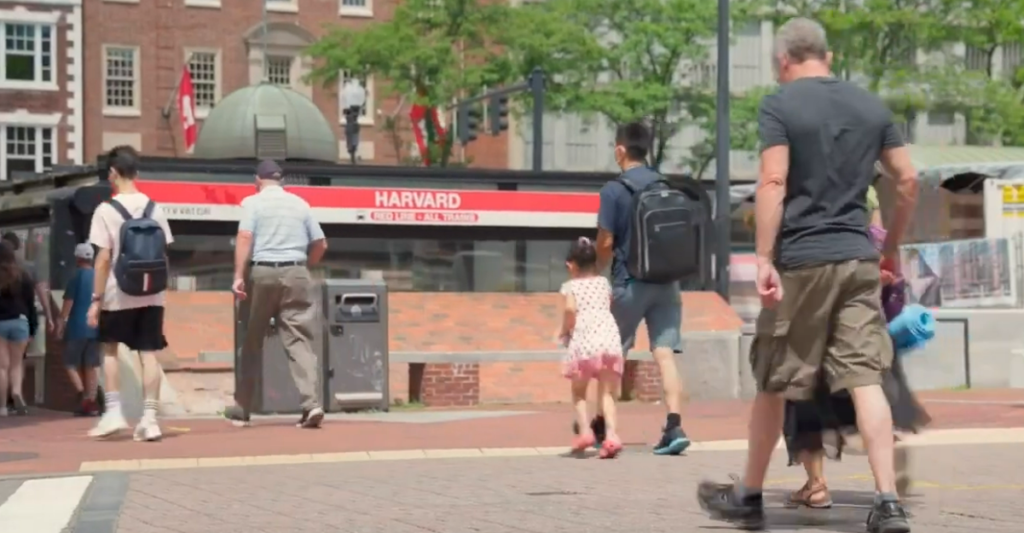
This conflict between vision and practice is the foundation of the Ed.L.D. program, which was established in 2009 and is currently turning out graduates like Tamesha Webb, who finished her residency at Uniondale Union Free School District on Long Island. Webb’s capstone project, which focused on what she called “portrait of a graduate” frameworks, the competencies districts want students to possess by the time they graduate from high school, discovered something that, once stated, seems almost obvious: simply listing the skills you want students to acquire is insufficient. For those skills to be taught every day in real classrooms by real teachers who have been trained for that shift, you need a real, working plan.
Critical thinking. originality. cooperation. Every district website uses these words. It’s a different matter entirely whether they show up in the way a Tuesday afternoon third-period English class operates.
The AI context that is encroaching from all sides is what makes the present moment at HGSE feel intense. The school leadership landscape that the graduating class of 2026 will enter is one in which generative tools can perform a wide range of cognitive tasks that educators once thought were exclusively human. Participatory creativity frameworks are intended to foster the qualities that are still clearly indispensable, such as genuine curiosity, the capacity to form unexpected connections, and the willingness to sit with uncertainty and produce something original. This timing could be coincidental. The likelihood that it isn’t seems higher.
Observing all of this from the outside, it seems as though HGSE is addressing an issue that the majority of those involved in education policy continue to frame incorrectly. The topic of curriculum—art classes, music programs, and theater budgets—tends to dominate discussions about creativity in education. Harvard is teaching its principals that scheduling subjects is not the key. It’s whether the adult in charge of the building genuinely thinks that each student can make a fundamental contribution to the advancement of ideas. Everything is shaped by that belief—or lack thereof. It influences how teachers receive coaching, how classrooms are set up, and how students who don’t conform to the stereotype of “the creative kid” are viewed and handled. It is still uncommon to find a principal who truly believes in that and knows how to create systems that support it. Harvard is attempting to downplay that.
Disclaimer
Nothing published on Creative Learning Guild — including news articles, legal news, lawsuit summaries, settlement guides, legal analysis, financial commentary, expert opinion, educational content, or any other material — constitutes legal advice, financial advice, investment advice, or professional counsel of any kind. All content on this website is provided strictly for informational, educational, and news reporting purposes only. Consult your legal or financial advisor before taking any step.
