

It takes time for the sea to arrive. Silently, it slowly advances, moving a little further inland with each passing season. In some areas of Mumbai, the water lingers longer than it used to, collecting close to historic sea walls and seeping into streets where store owners now place sandbags next to their shutters. It’s difficult to ignore how commonplace this has started to feel.
Over 7,500 kilometers of coastline support both vulnerable villages and crowded cities in India. However, the sea has steadily risen over the last few decades, initially only a few centimeters, making it difficult to measure without instruments. The pace is accelerating now. There is a feeling that the shoreline is becoming negotiable, almost transient, and is no longer stable.
When it rains a lot in Chennai, the water pushes in from the coast rather than falling from the sky. Buses travel slowly through knee-deep water, their engines humming under stress, and flooded roads reflect the light from streetlights. Although the frequency seems unfamiliar, these scenes recur frequently enough that locals discuss them informally. What was once considered an exceptional flood may be subtly turning into a regular occurrence.
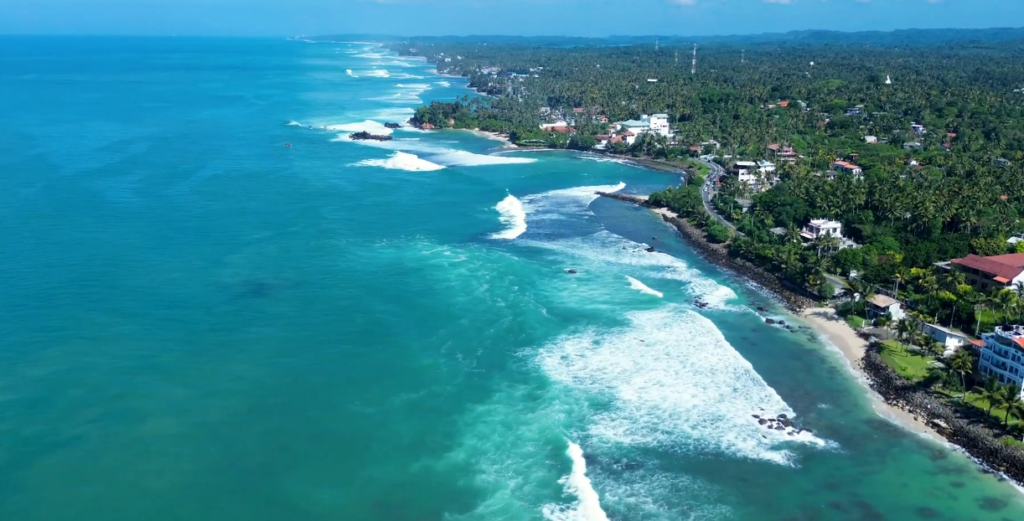
The underlying science is simple. Oceans expand when they get warmer. Ice melts. The seas are filled with more water. However, the explanation seems almost too straightforward for what’s happening when you’re standing close to the Bay of Bengal at high tide and witnessing waves crash against embankments. The change appears to be subtle. Less so are the repercussions.
| Category | Details |
|---|---|
| Topic | Sea-Level Rise in India’s Coastal Cities |
| Coastline Length | ~7,500 km |
| Major At-Risk Cities | Mumbai, Chennai, Kolkata, Visakhapatnam |
| Estimated Rise | Up to ~1 meter by 2100 (varies by region) |
| Key Drivers | Climate change, thermal expansion, melting ice |
| Additional Risks | Cyclones, storm surges, erosion, salinization |
| Population Impact | Tens of millions in coastal zones |
| Policy Framework | Coastal Regulation Zone (CRZ), climate action plans |
| Reference 1 | India Climate Coverage – Down To Earth |
| Reference 2 | Climate Scorecard India Sea-Level Data |
The risk feels multifaceted in Kolkata because the city is oriented toward both rivers and the sea. Water comes from above as much as it rises from below. Because low-lying neighborhoods are only a few meters above sea level, even small surges have the potential to spill inward. You can see how close the city is to the edge by strolling along the Hooghly River; buildings are pressed up against embankments, and cars are passing by the agitated water.
Additionally, there is the tale of locations that have already collapsed. Families in Satabhaya village, Odisha, have relocated inland, leaving behind homes that erosion has claimed. Gradually, then abruptly, it took place. The walls broke. The land became thinner. There was eventually nothing to cling to. As this develops, there’s a sense that these moves are preliminary indicators of something much bigger.
Everything is complicated by the financial stakes. Cities like Mumbai are financial engines in addition to being major population centers. Along the coast are transportation hubs, ports, and industrial areas. When infrastructure is disrupted by flooding, even for a short time, it has an impact on daily life, trade, and employment. For the time being, investors appear to think the risks are manageable, but it’s still unclear how long that confidence can last if disruptions increase in frequency.
In ways that are simple to ignore, the environment itself is changing. In some places, mangrove forests—which formerly mitigated storm surges—are disappearing in favor of concrete construction. Without them, waves move more quickly and farther. Fishermen in some areas of the eastern coast report that fish patterns are changing as salinity seeps into previously distinct waters. Despite their small size, these observations are significant.
There are policy responses—at least on paper. In addition to plans for seawalls, drainage improvements, and early warning systems, Coastal Regulation Zones were designed to regulate development close to sensitive areas. However, there is a sense of uneven enforcement when strolling through some neighborhoods where construction is pushing closer to the waterline. The scope of the issue may have surpassed the capabilities of the systems intended to handle it.
Simultaneously, adaptation is taking place in more subdued ways. Farmers experiment with crops that can withstand salt. New flood barriers are tested by engineers. Communities become more adept at interpreting weather patterns, enabling them to react to warnings more quickly. Although they frequently appear disjointed, these initiatives feel realistic and even hopeful.
Tension is increased by cyclones. Storms are predicted to get stronger due to warmer seas, pushing higher surges toward already vulnerable coasts. Not only do these systems bring wind, but they also carry water deep into cities, overwhelming drainage systems and revealing infrastructure flaws. Every storm raises the question of whether it was a preview or an anomaly.
Beyond India, a more extensive change is taking place. From Jakarta to Miami, coastal cities worldwide are under comparable strain. However, the challenge feels different because of India’s size. The stakes are increased by the density of development, the number of people living near the coast, and the uneven planning.
Disclaimer
Nothing published on Creative Learning Guild — including news articles, legal news, lawsuit summaries, settlement guides, legal analysis, financial commentary, expert opinion, educational content, or any other material — constitutes legal advice, financial advice, investment advice, or professional counsel of any kind. All content on this website is provided strictly for informational, educational, and news reporting purposes only. Consult your legal or financial advisor before taking any step.
