

A digital sketch of a creature that no one has ever touched or identified is hidden in a university server archive. No photograph has ever been taken of the frog, or at least that’s what it appears to be. However, it is there, suspected in silence. Its call echoes in the audio recorded by jungle traps, and fragments of its DNA are found in murky river water. “Something lives here,” murmur AI systems after deciphering everything.
Researchers now use algorithms designed to detect patterns that are unseen to the human eye rather than waiting for explorers to stumble across the unknown. Driven by extensive biological datasets, these models are defining what ought to exist rather than just listing what is known. Consider these ever-changing, high-resolution treasure maps. But rather than pointing scientists in the direction of gold, they lead them to creatures that might only exist in theory—until they don’t.
These techniques use sophisticated analytics to link disparate clues, such as unusual frequencies in nocturnal bird calls, fuzzy heat signatures from camera traps, and fragments of environmental DNA. When combined, they produce astonishingly accurate forecasts that point to potential gaps in Earth’s biodiversity narrative.
The way AI handles audio is one significant advancement. Animals are frequently ignored or misidentified in deep oceanic waters and impenetrable woods. These days, thousands of hours of sound recordings are scanned by new AI-driven platforms to identify unique vocal fingerprints. Many of these calls don’t belong to any species known to exist. These days, instead of ignoring these signals, academics view them as digital imprints that invite more inquiry.
| Key Fact | Details |
|---|---|
| Main Technology | AI trained on species datasets (DNA, images, sound, location data) |
| Key Application | Predicting undiscovered species and biodiversity hotspots |
| Biological Input Sources | Environmental DNA (eDNA), camera traps, audio recordings |
| Notable Use Cases | Bacteria, fungi, insects, fish, rare mammals |
| Scientific Significance | Helps prioritize fieldwork and conservation before physical discovery |
| Annual Species Discovery Rate | ~16,000 new species formally described per year |
| Estimated Undiscovered Species | Millions potentially still unknown |
| Conservation Role | Predicts extinction risk for unassessed species |
This method has been especially useful for tracking amphibians, whose calls frequently provide more information than their elusive movements. A hotspot for biodiversity predicted by AI was recently identified by field researchers in South America. After three days, they found a new species of frog based on unidentified audio data, whose mating call had been recorded years before but had never been named.
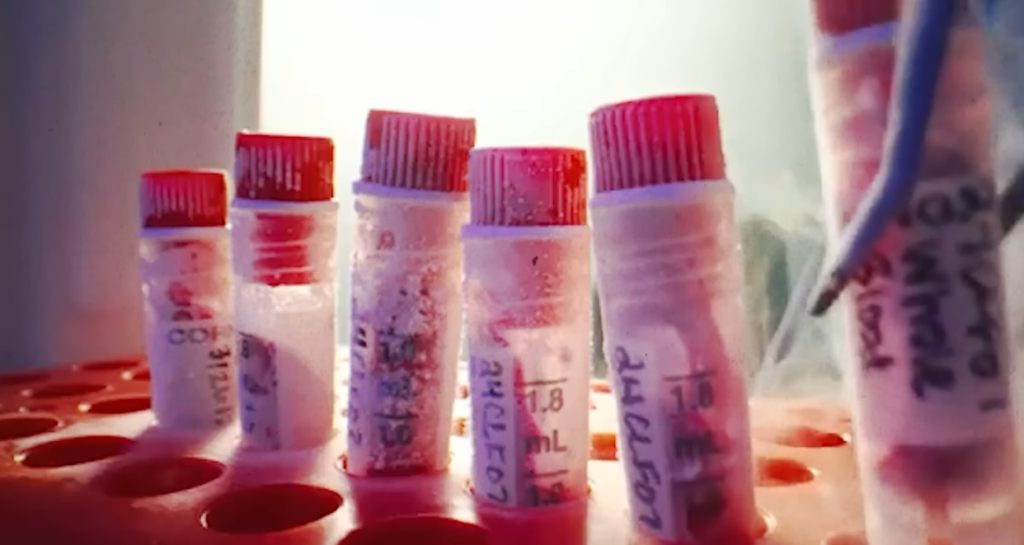
Another crucial area of research is genetic data. Scientists can identify the presence of organisms without direct observation by using environmental DNA sampling from soil, water, and even the air. Artificial intelligence models are remarkably adept at classifying these sequences, identifying taxonomic relationships even in the absence or deception of physical characteristics. This is especially novel in the microbiological realm, where morphology frequently fails.
In a Borneo experiment, artificial intelligence recognized hundreds of unknown microbial strands as possible novelties. Many were confirmed as new species by lab analysis months later. This was not a haphazard guess. They were algorithmic prods for scientific confirmation.
Time is of the essence in contemporary conservation. Some species disappear before we ever become aware of them. These methods are remarkably helpful since they can estimate the risk of extinction for species that have not yet been evaluated. AI assists in setting conservation resource priorities based on habitat range, environmental stresses, and genomic fragility—even in cases where the species has not yet received an official designation.
That, of course, brings up awkward issues.
Should a software-predicted organism that we have never seen be considered discovered? Instead of conducting fieldwork, are we depending too much on digital inference? Some biologists warn about the danger of converting scientific discoveries into conjecture. Most people, however, concur that the advantages exceed the philosophical trade-offs.
While visiting a secluded ecology station in Costa Rica, I observed a small group discussing their next hike. Their disagreement was over confidence intervals rather than practicalities. They have mapped three areas with a high likelihood of new reptile species using their AI technique. Based on a collection of peculiar camera trap abnormalities, one valley in particular stood out. They made the decision. They captured a lizard with an iridescent stripe pattern that had never been seen before in a photograph a few days later.
As I looked at that picture, I thought about how odd it seemed that arithmetic had taken the lead.
It’s not just exotic rainforests that offer thrill. AI has been utilized in desert tunnels and arctic waters to identify biological forms in hidden fissures. With the use of the Evo2 platform, a model trained on almost all known plants, animals, and bacteria, scientists can now forecast entire evolutionary branches that haven’t been examined yet using algorithms.
These technologies, which are surprisingly inexpensive, are being incorporated into citizen science platforms. With only a few simple tools, backyard scientists can now add soil samples or audio to global biodiversity models. By improving forecasts with each data piece, the digital and physical worlds become increasingly intertwined.
Now, this goes beyond simply listing all that is available. It involves projecting what life might bring. AI has made species hunting a cooperative, real-time endeavor rather than a solitary one, relying more on distributed intuition.
It’s a novel method of operation for field biologists. You go where the data leans, where the probabilities cluster, and where the map faintly glows—you don’t just follow your gut.
Some will refer to it as impersonal or chilly. However, there’s something really human about being curious about the world. even though the code now determines the path.
