

Unauthorized access to client data held by one of Africa’s biggest financial institutions occurred at some point in the weeks preceding Standard Bank’s public statement on March 23, 2026. The bank’s Johannesburg headquarters, a glass-and-steel structure on Simmonds Street in Selby that exudes the kind of subdued institutional confidence that big banks favor, continued to function. Cash was still being dispensed by the ATMs. The application continued to function. However, beneath that outward normalcy, data from an unidentified number of clients had already been transferred to an inappropriate location.
The first statement from Standard Bank was measured and cautious. Systems that used transactions were safe. There was no risk to client funds. A thorough investigation had been started. Affected customers would be informed directly by the bank. In terms of corporate disclosure, it was the bare minimum of what could be said in such a statement. It did not specify how many clients were impacted, what specific data had been stolen, or how the breach had initially occurred.
Then, roughly three weeks later, the information that most observers likely anticipated but still hoped would not materialize finally arrived. Personal identifying information was not the only thing compromised. Some customers’ credit card information had also been compromised. The updated image was more alarming than the bank’s earlier description of the exposure as being restricted to personal information, such as names, ID numbers, account numbers, and company registration numbers. The bank cautioned that Standard Bank credit card holders may now be the target of active fraud. The financial news source in South Africa According to The Citizen, at least one instance of a fraudster transferring over R16,000 to virtual cards, canceling debit orders, and maxing out overdrafts on credit and check accounts had already surfaced. Just one instance. recorded. The kind of detail that suddenly gives the abstract a concrete form.
Standard Bank Data Breach: South Africa’s Largest Bank Under Investigation as Credit Card Data Leaks Emerge
| Category | Details |
|---|---|
| Institution Name | Standard Bank of South Africa |
| Headquarters | 5 Simmonds Street, Selby, Johannesburg, South Africa |
| Founded | 1862 |
| Assets (approx.) | Among the largest banks in Africa by assets |
| Incident Type | Unauthorised access to client data |
| Date of Discovery | March 23, 2026 |
| Date First Disclosed | March 23, 2026 (public statement issued) |
| Data Reportedly Exposed | Names, ID numbers, company registration numbers, account numbers, business names; later credit card details |
| Banking Systems Status | Standard Bank states transactional systems remain secure |
| Number of Clients Affected | Not disclosed |
| Regulatory Body Investigating | Information Regulator of South Africa (POPIA division) |
| Key Regulator | Adv. Tshepo Boikanyo (Executive: POPIA), Deborah Lamola |
| Also Breached (same period) | Liberty |
| SA Cybercrime Ranking (2025) | 27th globally among most breached countries (Q2 2025) |
| Total SA Records Exposed (since 2004) | 124.2 million personal records |
| Fraud Reporting Line (SA) | 0800 222 050 |
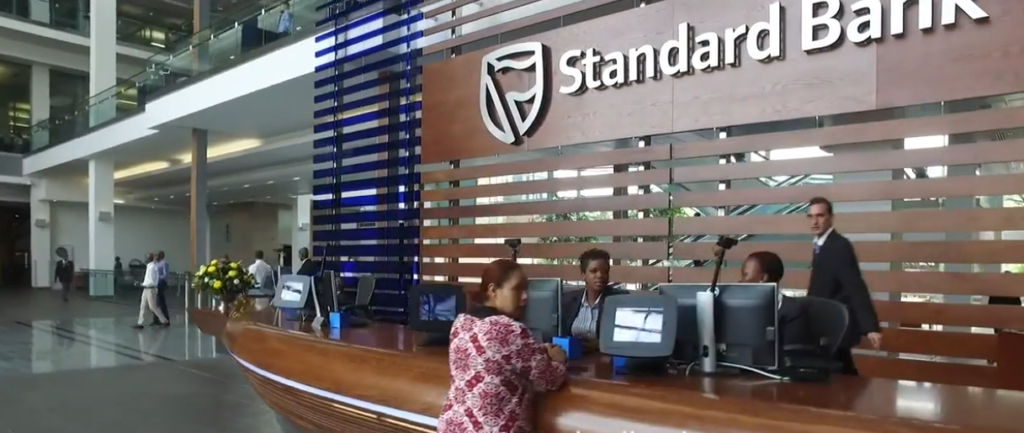
The South African agency in charge of enforcing the Protection of Personal Information Act, or POPIA, the Information Regulator, acted swiftly to make it clear that it would not be taking this quietly. The executive in charge of enforcing POPIA, Advocate Tshepo Boikanyo, informed South African broadcasters that the regulator would be carrying out an independent investigation in addition to Standard Bank’s internal investigation. He claimed that the investigation would encompass nearly every aspect of Standard Bank’s client data management and security architecture, including firewall configurations, intrusion detection systems, encryption techniques, access controls, user authentication protocols, network security, and monitoring and logging procedures. It’s an extensive list. It conveys to the bank and other observing institutions that the regulator plans to examine all aspects, not just the point of failure.
The timing and context of the Standard Bank situation are what make it so uncomfortable. The Information Regulator is concurrently evaluating both organizations after Liberty, the massive South African insurance company, was also involved in a data breach that was made public around the same time. When taken as a whole, they imply that the financial sector in South Africa is dealing with a cybersecurity issue that is not fully addressed by individual corporate claims about safe transactional systems. The issue of data exposure in the nation is not new. According to research by cybersecurity company Surfshark, South Africa was the 27th most breached country in the world in the second quarter of 2025, with over 369,000 accounts compromised in that year alone. Over 124 million personal records have been made public in the nation since 2004. That number is astounding. For the majority of South Africans whose information was compromised, the breach exposed more than one piece of personal information, with an average of about 2.9 extra data points exposed per compromised email address.
As this develops, there’s a sense that the full extent of what transpired at Standard Bank might take a lot longer to become apparent than the bank’s statements indicate. The bank had yet to reveal the number of impacted customers as of mid-April 2026. The Information Regulator’s POPIA division’s Deborah Lamola publicly stated that no final decision had been made and that the regulator was still examining data provided by the bank before determining the severity of the breach and the potential course of formal action. “How serious the breach is” suggests a range of severity that has not yet been thoroughly mapped. By its own admission, Standard Bank continues to carry out its own evaluation.
The eventual scope of the breach might turn out to be rather small—a particular dataset accessed by a particular vulnerability that has since been fixed. That’s the hopeful interpretation. The less optimistic interpretation is that the delay in revealing credit card exposure indicates that the whole picture is still developing and that impacted clients are making decisions regarding their financial security based on incomplete information. The bank’s website provides the fraud line number. It’s another matter entirely whether the clients who most need it are aware of that.
More than anything, the Standard Bank hack highlights a disconnect between the sophistication of the defenses themselves and the sophistication of the systems being protected throughout the whole South African financial services industry. Large banks are not the only ones at risk; similar incidents have occurred at JPMorgan, Capital One, and numerous other international institutions. However, the pattern in South Africa, where cybercrime is on the rise and the regulatory framework is still developing its enforcement capabilities, points to something more structural than a string of unfortunate events. The right questions are being asked by the Information Regulator. The next few months will show whether the responses it gets will have significant effects on Standard Bank and the industry at large.
Disclaimer
Nothing published on Creative Learning Guild — including news articles, legal news, lawsuit summaries, settlement guides, legal analysis, financial commentary, expert opinion, educational content, or any other material — constitutes legal advice, financial advice, investment advice, or professional counsel of any kind. All content on this website is provided strictly for informational, educational, and news reporting purposes only. Consult your legal or financial advisor before taking any step.
