

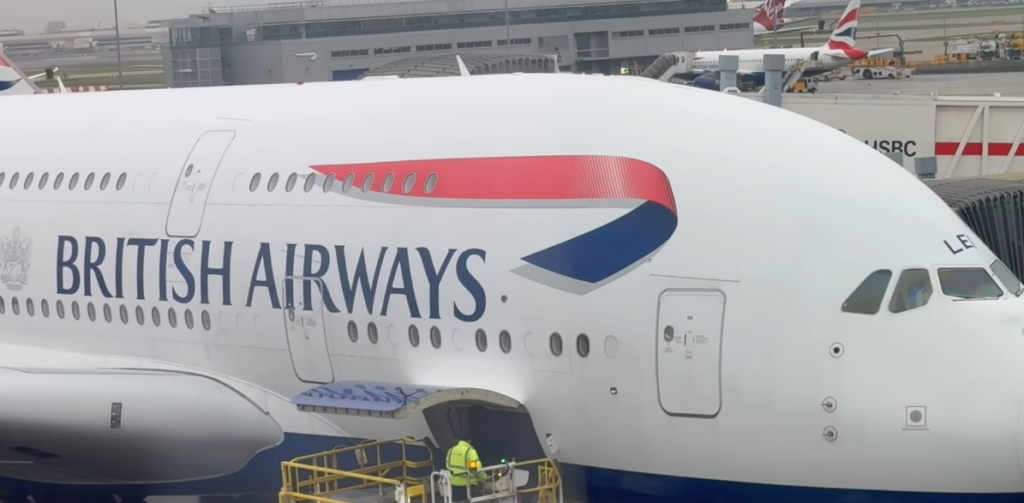
On a British Airways flight from Heathrow, seat 1A, which is in the front row of business class and offers the full suite of flat beds, noise-canceling headphones, and attentive cabin crew that the airline’s Club World product promises, is about as good as commercial aviation gets. In September 2023, a 61-year-old businessman from Chelmsford, Essex named Andrew Chesterton reserved that seat for a vacation to Cincinnati. At one point during the flight, he reached down between the seats with his left hand. He was unable to see the sharp object in the seat fold. The events that followed—two cut fingers, eleven stitches in an American hospital, months of hypersensitivity, and restless nights—have resulted in a £50,000 damages claim and a legal dispute regarding aviation liability that extends far beyond the injuries sustained by one man.
British Airways does not contest the following facts: the seat fold contained a sharp object. Chesterton had cuts on his left ring and little fingers. He started bleeding. For the duration of the flight, cabin crew assisted in tending to the wound. Emergency services were on hand when the plane touched down in Cincinnati. Four stitches were placed on the ring finger and seven on the little finger after the hospital staff cleaned and sealed the wounds. Liability for the actual accident has been acknowledged by the airline. That aspect is resolved. The financial issue remains unresolved, particularly whether British Airways is legally obligated to cover the entire human experience of what transpired after that flight.
For five months, Chesterton’s ring finger remained uncomfortably hypersensitive. Antibiotics were needed because his little finger wound became infected. He was left with permanent scars, measuring 15 mm on his ring finger and 18 mm on his little finger. According to court documents, his little finger grip strength has not fully recovered and is a permanent impairment. After the incident, he was unable to drive for about two months, which interfered with his everyday activities and severed him from some aspects of his social life in ways that are easy to overlook. He underwent five physiotherapy sessions. He must now modify garden chores and exercise caution when lifting. These tangible, observable physical repercussions depict a man whose day-to-day existence was significantly impacted by something a maintenance crew overlooked in seat 1A.
Andrew Chesterton BA Lawsuit £50k: The Business Class Finger Injury That Became a Test Case for Aviation Psychological Harm
| Category | Details |
|---|---|
| Claimant | Andrew Chesterton |
| Age | 61 |
| Residence | Chelmsford, Essex, England |
| Former Role | Chief Operating Officer, Bravura Solutions (financial services) |
| Defendant | British Airways |
| Incident Date | September 24, 2023 |
| Route | London Heathrow to Cincinnati, USA |
| Seat | Seat 1A (Business Class) |
| Injury | Lacerations to left ring finger and left little finger from concealed sharp object in seat fold |
| Medical Treatment | 11 stitches (4 on ring finger; 7 on little finger); antibiotics for subsequent infection |
| Scarring | 15mm scar (ring finger); 18mm scar (little finger) |
| Physical Ongoing Effects | Hypersensitivity, stiffness, reduced grip strength in little finger (described as permanent) |
| Psychological Effects | Flashbacks, nightmares, sleep disruption; prescribed sleeping tablets October 2023; social anxiety for ~3 months |
| Physiotherapy | Five sessions |
| Unable to Drive | Approximately two months post-accident |
| Damages Sought | More than £50,000 |
| Legal Basis | Montreal Convention (international aviation liability) |
| BA’s Position | Admits accident; contests damages; disputes recoverability of psychological harm under Article 17(1) |
| Claimant’s Barrister | Jessica Muurman |
| BA’s Barrister | Christopher Loxton |
| Court Status | Proceeding to full damages assessment unless settled |
The case becomes truly intriguing from a legal standpoint when the psychological effects are taken into consideration. Chesterton began to experience social anxiety, particularly from crowds running into his injured fingers. He stayed away from concerts and sporting events for about three months following the accident. He began to have flashbacks to the injury. Weeks after the flight, in late October 2023, he was having so much trouble falling asleep that his doctor recommended sleeping pills. The accident was the subject of the nightmares. His attorney, Jessica Muurman, contends that these psychological effects should be compensated in addition to the physical injuries since they are a component of the overall harm brought about by British Airways’ negligence in maintaining the aircraft seat’s safety.
The stance taken by British Airways goes beyond a straightforward denial. Christopher Loxton, the airline’s attorney, cites Article 17(1) of the Montreal Convention, an international agreement that has been in effect since 1999 and governs airline liability for passenger injuries. According to the Convention, travelers who suffer “bodily injury” or die as a result of accidents on international flights are entitled to compensation. According to Loxton, “bodily injury” refers to physical harm, and the terms of the treaty do not allow for compensation for psychological harm in the absence of a corresponding bodily injury. It’s a reading of the Convention that has been contested in aviation courts for years, and it’s genuinely contested. Different jurisdictions have come to different conclusions regarding the boundaries between psychological and physical harm, as well as whether anxiety, flashbacks, and sleep disturbances resulting from a physical accident are separate or inseparable from the physical injury itself.
As this case develops, there’s a sense that the result will have an impact that goes beyond the precise £50,000. Both airlines and passenger advocates closely monitor cases that test the limits of the Montreal Convention, which serves as the fundamental framework for passenger rights on international routes. Future claimants who have suffered real mental health consequences from in-flight accidents will have a stronger case if Chesterton wins the psychological harm argument. The definition of recoverable damages will be narrowed if British Airways prevails on that point, which will have an impact on how seriously airlines handle the non-physical consequences of incidents they cause.
As a chief operating officer at the financial services technology company Bravura Solutions, Chesterton was used to closely examining contracts and comprehending liability frameworks. He might be more determined than the typical injured passenger to pursue the full extent of what he is entitled to because of his background. Alternatively, anyone who had been unable to drive for months, couldn’t get a good night’s sleep, and instinctively flinched at the thought of a crowd jostling their hand might have made the same choice. If a settlement cannot be reached between the parties, the case will proceed to a full damages assessment in court. Regardless of the result, a judge will now have to decide how to distinguish between a cut finger and a compensable psychological injury.
Disclaimer
Nothing published on Creative Learning Guild — including news articles, legal news, lawsuit summaries, settlement guides, legal analysis, financial commentary, expert opinion, educational content, or any other material — constitutes legal advice, financial advice, investment advice, or professional counsel of any kind. All content on this website is provided strictly for informational, educational, and news reporting purposes only. Consult your legal or financial advisor before taking any step.
