

Rats playing hide-and-seek with people may seem more like the plot of a children’s tale than actual research at first. But beneath those fast paw-steps and joyous squeaks is a tale that challenges our preconceived notions about the joy, memory, and motivation of animals that we all too frequently ignore.
The experiment started with the seemingly straightforward hypothesis that rats may learn an organized social game for enjoyment rather than food, under the direction of neurobiologist Michael Brecht and his group at Humboldt University in Berlin. The rats not only picked up the rules but also became enthusiastic about the game in a matter of weeks. When hiding, they constantly chose opaque boxes over clear ones, displaying strategic thinking. As seekers, they methodically went back to their old hiding places and deliberately peered around corners. Their motions were quite effective and clearly planned; they weren’t haphazard.
There was no forced repetition, no meal to chase. It was only a social prize. They frequently reacted with a rush of happiness after they found the researchers—or were found themselves. This joy manifested as physical excitement, such as sudden hops in place, and high-frequency squeals that could only be heard with specialized audio equipment. Freudensprung, which means “joy jump” in German, is a fantastic way to describe the energy.
Here, the lack of conditioning using conventional reinforcers is quite novel. These rats were tickled—gently, regularly, and carefully—instead of being trained with sugar pellets. That strategy has emerged recently as a very successful way to promote connection without interfering with natural behavior.
| Key Detail | Description |
|---|---|
| Study Origin | Humboldt University, Berlin |
| Published In | Science journal, 2019 |
| Behavior Observed | Rats played hide-and-seek, showing strategic thinking, joy, and role switching |
| Reward System | Tickling and social interaction, not food |
| Cognitive Traits | Prefrontal cortex activity linked to decision-making and social cues |
| Key Insight | Rats played for enjoyment and prolonged games voluntarily |
| Implication | Suggests deeper emotional and cognitive complexity in mammals |
| Notable Term | Freudensprung – “joy jumps” observed during gameplay |
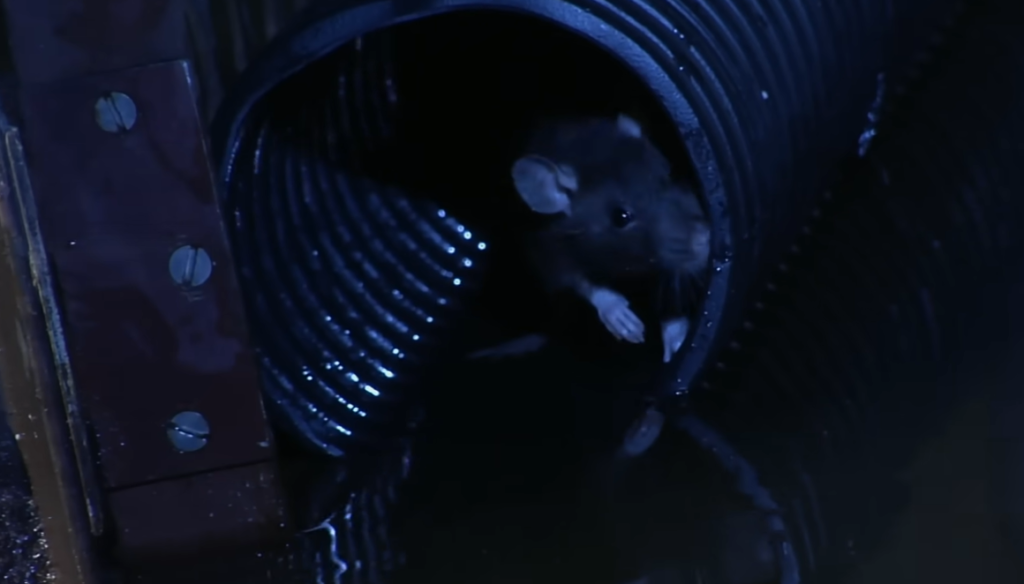
The research team was genuinely taken aback by what transpired next. Some rats would run off to hide again as soon as they were discovered, even if it meant postponing their prize. That nuanced choice made it clear that they were not only putting up with the experiment. They were having fun. They desired that the game go on. Their actions demonstrated both emotional involvement and a certain comprehension of the dynamics of the exchange.
The researchers were able to track the rats’ brain responses while they played by placing tiny wireless electrodes in their prefrontal cortex. This area of the brain plays a major role in social cue processing, planning, and decision-making—processes that are generally associated with higher mammals. Brain activity patterns appeared as the rats navigated the space, coinciding with particular actions such as sticking their heads out of the starting box, stopping before sprinting in the direction of a possible hiding place, or approaching the human player.
The researchers began by studying the raw brain signals using an incredibly smart reversal of traditional neuroscience method. After that, they connected those brain patterns to game video data. This method removed the bias that frequently comes with behavioral coding and let the story be determined by the physiology of the rats.
Every time a rat moved suddenly with purpose, when it had obviously made a decision, one characteristic brain state emerged. When the rat carefully examined its surroundings, another emerged. These spikes were not generalized and ambiguous. They were signals that could be repeated, creating reliable connections between interaction, action, and thought. For researchers attempting to link neurological data with real-world behaviors, this constancy throughout such an impromptu and enjoyable pastime is especially helpful.
A rat stopped by a wall at one point, its whiskers quivering. A state of the brain flickering. The same neurons were repeatedly illuminated by these exploratory wall treks, according to subsequent study. It made intuitive sense, even if the scientists hadn’t originally coded for that behavior. Rats see the environment, particularly textured surfaces, with layers of meaning because they use their whiskers as navigational aids.
In a blurry lab film, I recall witnessing one of the rats pause in a dark corner, motionless for a brief minute before launching into action. It was delicate, almost unremarkable. However, it seemed almost cinematic to know that its brain had subtly sent out a predictable series of messages.
This goes beyond just demonstrating rats’ intelligence, but that is noteworthy as well. It’s about demonstrating how, when given the freedom to act freely, animals that have long been restricted to specific duties in controlled environments may teach us more. Here, play—often written off as pointless or difficult to measure—emerges as a disciplined, emotionally fulfilling activity with obvious cognitive underpinning.
The researchers discovered dynamics that strict testing procedures could never reveal by letting the rats take the lead. It demonstrates how intelligence can occasionally be most apparent when no pressure is applied and no incentive is offered.
This study is especially novel in the context of larger neuroscience. It establishes a standard for researching spontaneous behavior and makes a compelling case for moving toward more flexible, unrestricted experimental models. Although there is already a change in research, this case shows how beneficial it may be for both the researcher and the animal.
Beyond rodents, the results have ramifications. They imply that social play is supported by neural networks that are not unique to language animals or huge brains. Rather, they might be fundamental—shared by all mammals as part of an evolutionary arsenal for learning, cooperation, and exploration.
Disclaimer
Nothing published on Creative Learning Guild — including news articles, legal news, lawsuit summaries, settlement guides, legal analysis, financial commentary, expert opinion, educational content, or any other material — constitutes legal advice, financial advice, investment advice, or professional counsel of any kind. All content on this website is provided strictly for informational, educational, and news reporting purposes only. Consult your legal or financial advisor before taking any step.
