

They designed a working city as an outdoor laboratory rather than merely constructing a university. In addition to being a school, KAUST developed into an ecosystem, a deliberate fusion of technical expertise, precise architecture, and a vision of what a city centered on research could become. This Saudi effort has not been modest since its launch in 2009.
You sense it even before you step inside. Thuwal has a peculiar way of thudding air. This city did not develop from a collection of banks and cafés. The area was created from the ground up, featuring classrooms next to coral reef labs, programmable crossroads, and tested sidewalks. In addition to academic achievement, the original concept called for treating the city as a continuous experiment.
Due to its small size of 14 square kilometers, the city is incredibly effective for extensive experiments. According to KAUST’s leadership, it is “a living laboratory.” And that goes beyond branding. Autonomous buses drive by malls and cafes by the shore. Drone delivery services actually lower parcels into apartments via automated lifts, so they don’t stop at the door. The infrastructure does not respond to innovation; rather, it anticipates it.
I recall reading that KAUST’s unified community app enables users to pay bills, buy food, and navigate the city simultaneously—something I’ve hardly ever seen done smoothly anywhere. I was surprised by how well the city’s digital layer is planned and integrated into everyday life, to the point where even tech fatigue seems to be halted.
Key Factual Context
| Element | Details |
|---|---|
| University Name | King Abdullah University of Science and Technology (KAUST) |
| Founded | 2009 |
| Location | Thuwal, Saudi Arabia |
| Campus Size | 14 square kilometers |
| Community Infrastructure | Housing, schools, shopping, golf course, labs, restaurants, smart tech |
| Research Focus | AI, marine biology, genomics, climate science, nano fabrication |
| Notable Feature | Only university with name on a Formula One car (McLaren partnership) |
| Governing Vision | Saudi Arabia’s Vision 2030 reform and innovation agenda |
| Student Demographics | Graduate-only, over 120 nationalities represented |
| Source | KAUST Wikipedia |
Failure at speed is made possible by this meticulously planned mechanism, which is very novel. Here, concepts that could otherwise suffocate in a bureaucratic maze can be swiftly tested. Iteration is better than perfection, which is why smart geothermal energy cooling homes, autonomous mobility experiments, and even waste-to-energy projects were started.
The departure of Jason Roos, the former CTO of Stanford Healthcare, from Silicon Valley to take a position as Chief Information Officer at KAUST is telling. Here, he saw something special and scalable: more agility and fewer red tape. Progress is frequently impeded by the limitations of older cities, which have complex legacy systems. The most underappreciated benefit of KAUST is the lack of those limitations.
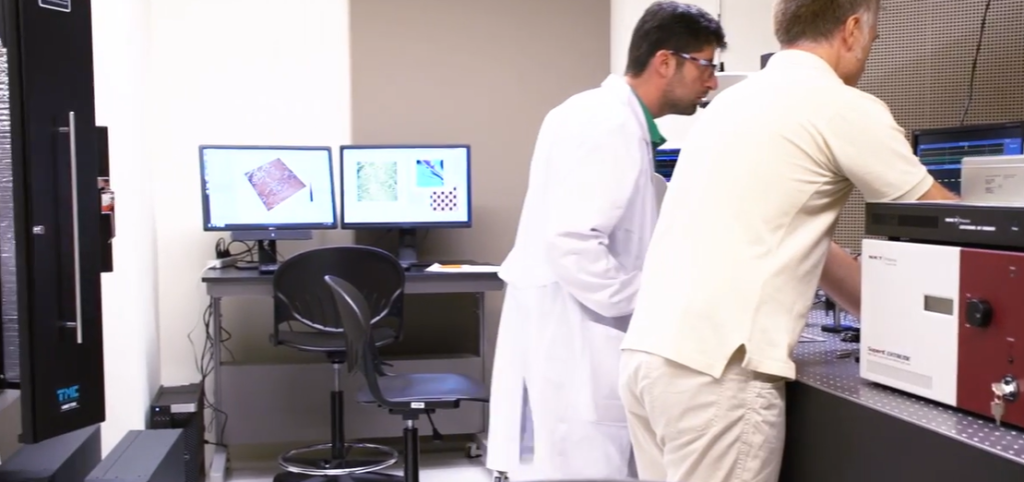
The priorities of KAUST’s research are being shaped by this similar independence. Electron microscopy, nanofabrication, genomics, and artificial intelligence tools are among the most cutting-edge lab equipment in the world. Their third-generation supercomputer is about to be installed. The emphasis is unapologetically on the future: climate resilience, artificial intelligence, and smart energy systems. Undergraduate programs do not exist here. Only postdocs, researchers, and graduate students—all of whom are heavily involved in solving problems rather than debating theories.
The kind of relationships that KAUST draws in is maybe a better measure of its long-term influence than the research it does. A partnership with McLaren Racing? It’s to co-engineer fuel mixes and aerodynamics, not to brand sponsorships. Aramco is part of a very advantageous industrial adjacency that includes Boeing, Lockheed, and Aramco.
Although Saudi Arabia’s Vision 2030 reforms may have attracted attention from outside the country, KAUST was also socially progressive. Western dress regulations, women’s driving on campus, and coed classes were all implemented in 2009, years before these rights spread throughout the Kingdom. It was not just a technical prototype but also a social one.
Additionally, KAUST has cultivated a strong pipeline of entrepreneurs over the last ten years. Their startup incubator provides shared workspace in the nearby research park, lab-to-market guidance, and seed money. Their businesses not only grow through smart alliances, but they are also supported by community members’ real-time user feedback. The feedback loop between concept and implementation is greatly shortened by this ecosystem.
I thought it was a subtle but effective tactic when I found out that KAUST helps top Saudi high school students attend universities like MIT and Oxford with the assurance that they will return for their graduate studies. Talent retention at its most strategic level involves developing global brains and connecting them to local soil.
However, even though KAUST is purposefully isolated, it is not a cloistered institution. The city is gradually “tearing down its walls,” both literally and figuratively. As stated by Roos, the Kingdom is changing, and KAUST is keeping up with this openness by strengthening its linkages to other Saudi cities and global research networks.
The city provides a controlled environment for early-stage academics and entrepreneurs to fail, improve, and relaunch—something that is shockingly inexpensive in terms of time and risk. KAUST is creating the template by incorporating AI into its urban infrastructure rather than merely reacting to trends.
Disclaimer
Nothing published on Creative Learning Guild — including news articles, legal news, lawsuit summaries, settlement guides, legal analysis, financial commentary, expert opinion, educational content, or any other material — constitutes legal advice, financial advice, investment advice, or professional counsel of any kind. All content on this website is provided strictly for informational, educational, and news reporting purposes only. Consult your legal or financial advisor before taking any step.
