

Social media went crazy when a rumor broke that Kenny Loggins had sued Donald Trump for $900 million. Bold headlines and AI-generated images of Trump in a fighter jet set to Loggins’ “Danger Zone” were featured in the post, which had the appearance of breaking news. It was completely fake, but it looked good enough to fool thousands. The reality was much more straightforward and more indicative of the era.
Liberty & Vision, a Facebook page that specializes in viral political memes, is where the false claim first appeared. According to the report, Loggins filed a lawsuit against Trump for using his 1986 hit song in an AI-generated video without permission. The bizarre footage, which was uploaded to Trump’s website Truth Social, showed Trump flying a jet bearing the name “King Trump,” donning a crown, and throwing trash at demonstrators. Despite its ridiculous theatricality, the use of “Danger Zone” gave it a familiar and poignant tone.
Kenny Loggins – Key Details
| Category | Information |
|---|---|
| Full Name | Kenneth Clark Loggins |
| Date of Birth | January 7, 1948 |
| Birthplace | Everett, Washington, U.S. |
| Profession | Singer-songwriter, musician, producer |
| Notable Songs | “Danger Zone,” “Footloose,” “This Is It,” “I’m Alright” |
| Associated Acts | Loggins & Messina |
| Alleged Lawsuit | False online rumor claiming $900M lawsuit against Donald Trump |
| Verified Statement | Loggins confirmed he did not sue Trump but objected to unauthorized use of his song |
| Legal Context | AI-generated Trump video used “Danger Zone” without permission |
| Authentic Source | Snopes – https://www.snopes.com/fact-check/kenny-loggins-lawsuit-trump/ |
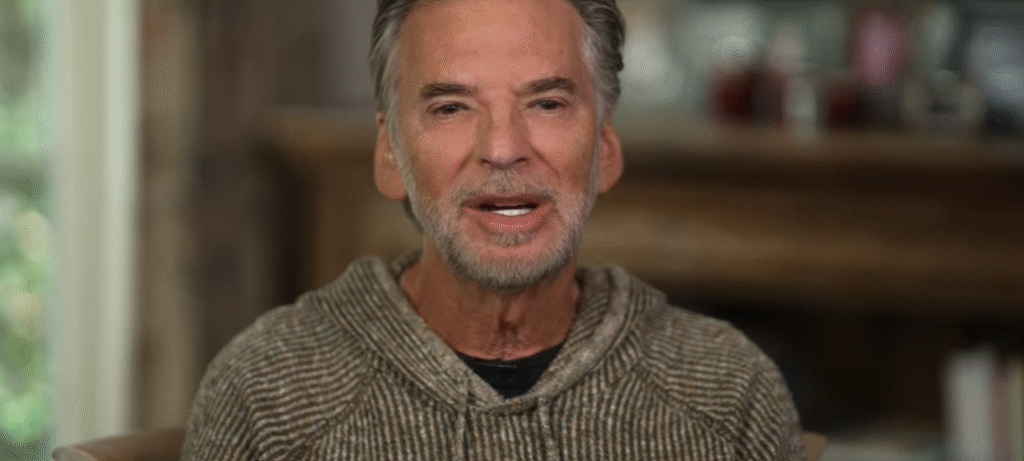
Loggins quickly clarified that while he had not brought a lawsuit, he was adamantly against his music being used without permission. He described the video as “disgusting” and stressed that his performance was used without permission in a statement released via his official channels. His tone, which was firm but polite, was remarkably effective in his message, which called for the removal of his song and the use of art to bring people together rather than drive them apart.
Despite being strange, this incident sparked a wider conversation about creative ownership in the digital era. Beyoncé, Neil Young, and other musicians have denounced politicians for utilizing their songs without their consent. However, the fact that Loggins’ case involved artificial intelligence—a technology that can replicate artistic creations with unnerving accuracy—made it feel especially novel. Artists who see their work slipping into a digital gray area are becoming increasingly concerned about the possibility that AI tools could copy or alter songs without the proper authorization.
The fact-checking group Snopes was instrumental in disproving the widely shared tale. According to their report, the post’s authors were based abroad and ran a number of AI-generated news sites with the intention of generating advertising revenue. Casual readers found the article that accompanied the rumor credible because it used bold fonts, exaggerated dramatic phrasing, and made-up “court details.” It followed a remarkably similar pattern to other fictitious celebrity lawsuits that have gone viral on the internet.
The Loggins scenario is especially instructive because it emphasizes how powerful false information is in influencing perception. Social media was overrun in a matter of hours with people discussing the alleged lawsuit, posting links, and quoting made-up legal experts. It served as a reminder that digital narratives, particularly those that combine political satire, artificial intelligence imagery, and celebrity culture, frequently eclipse the truth.
Loggins never took legal action, but his reaction was noticeably cool. He concentrated on the moral ramifications of employing AI to produce content that divides people rather than inciting indignation. He argued that music, which is a language of universal emotion, should continue to serve as a unifying force rather than an ideological tool. His statement was full of emotion and showed that the performer was still very much in touch with the human significance of his work.
The struggles that musicians face when their music is misused for political purposes are not new. Campaigns have received cease-and-desist letters from Adele, Rihanna, and Steven Tyler of Aerosmith for using their songs without permission. Unauthorized use of AI, however, was a new dimension that the Loggins episode reflected. This dispute, in contrast to conventional copyright cases, brought to light how AI muddies ownership, resulting in layers of imitation that are both morally and legally dubious.
Questions concerning how false information spreads more quickly than confirmation were also rekindled by the Loggins rumor. The story was amplified by engagement-driven algorithms on platforms such as X and Threads. The fictitious lawsuit validated preconceived notions for a large number of users, whether they were outrage at Trump or admiration for Loggins’ position, rendering the story’s falsity essentially meaningless. This dynamic demonstrated how modern virality is driven by emotion rather than facts.
Nevertheless, amidst the chaos, there was a glimpse of something noticeably better: a heightened awareness of artificial intelligence’s abuse in digital media. Supported by publications like Newsweek and Axios, Loggins’ objection sparked important conversations about producing ethical content. It was a striking illustration of how genuine contemplation can be sparked by even fictitious controversies.
The entertainment sector is currently going through a phase of quick change. Digital publishers, streaming services, and record labels are reviewing contracts to add provisions shielding artists from unapproved AI use. Artists are protecting their voices, compositions, and likenesses from exploitation by utilizing such clauses. Despite being an accident, Loggins’ experience served as a very effective catalyst for this change, elevating discussions about consent and accountability to the fore of public discourse.
Disclaimer
Nothing published on Creative Learning Guild — including news articles, legal news, lawsuit summaries, settlement guides, legal analysis, financial commentary, expert opinion, educational content, or any other material — constitutes legal advice, financial advice, investment advice, or professional counsel of any kind. All content on this website is provided strictly for informational, educational, and news reporting purposes only. Consult your legal or financial advisor before taking any step.
