

Today’s education seems to be situated at the bustling nexus of innovation and tradition. On the one hand, teachers’ reassuring presence as they lead students on their exploration. Conversely, the slick effectiveness of digital learning platforms promises unrestricted customization. The topic that divides educators, parents, and legislators is surprisingly straightforward: can digital learning really take the place of human interaction in the classroom?
The technical aspect of learning can now be handled by technology with remarkable efficiency. AI tutors track understanding, evaluate progress, and modify difficulty with nearly human-like accuracy. No question is left unanswered thanks to tools like Noodle Factory and Khanmigo, which provide learning support around-the-clock. However, they lack the nuanced warmth that characterizes a true teacher’s presence, despite their speed and scope.
What machines can’t see, human instructors can. Before a student raises their hand, a teacher notices the hesitancy, hears the hesitancy in a voice, and automatically offers support. This emotional sensitivity is particularly evident in times of uncertainty or annoyance, when confidence is restored by empathy rather than analysis. Technology may be able to identify when a pupil is having difficulty, but it is unable to sense the cause.
Test scores increased in Finnish schools that implemented AI-assisted teaching, but teachers also noted a subtle change. “It was effective but isolating,” a teacher thought. The classroom was less impromptu and the interactions were now data-driven. There was a noticeable decrease in the shared discoveries, storytelling, and laughter that contribute to the joy of learning. While connection had drastically decreased, efficiency had noticeably increased.
| Topic | Can Digital Learning Truly Replace the Human Touch in Teaching? |
|---|---|
| Focus | Exploring whether AI-driven digital learning can replicate empathy, mentorship, and creativity provided by human teachers |
| Featured Expert | René Neuner – Educator and Writer at Institute for Humane Education |
| Profession | Thought Leader in Ethical Education, Author, and Curriculum Developer |
| Primary Reference | Institute for Humane Education – “Using AI in Education (And the Human Skills Machines Can’t Replace!)” |
| Supporting Sources | UNESCO, American Psychological Association, Education Week, Noodle Factory AI |
| Key Themes | Emotional intelligence, mentorship, hybrid learning, ethical education, AI-human collaboration |
| Reference Link | https://humaneeducation.org/blog/using-ai-in-education-and-the-human-skills-machines-cant-replace |
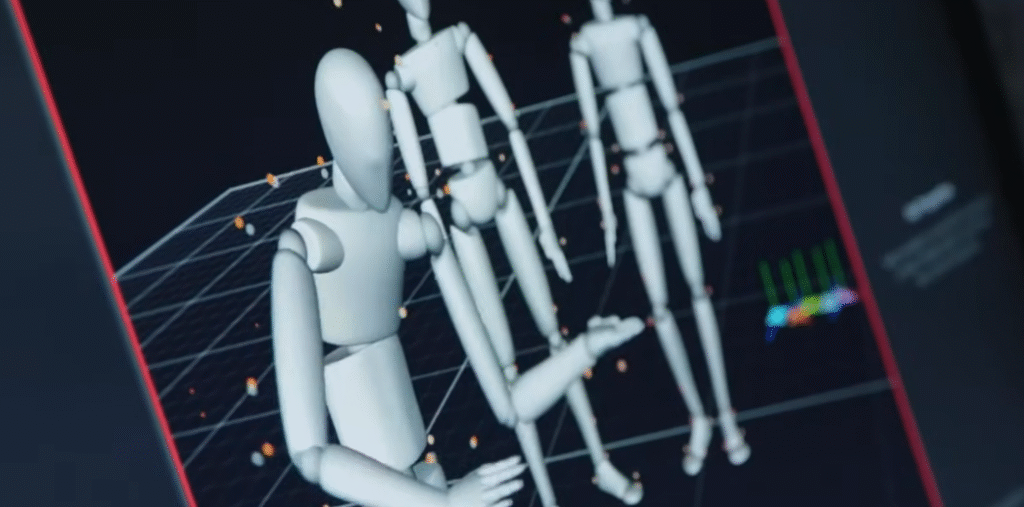
Structure is what makes AI so brilliant. It is capable of processing large amounts of data, creating customized study plans, and giving immediate feedback. This is especially helpful in technical fields where right and wrong answers are well-defined, like coding, engineering, or mathematics. However, ambiguity, interpretation, and conversation are essential to creativity, literature, and philosophy and are nearly impossible for algorithms to mimic.
This disparity is eloquently emphasized by René Neuner’s work at the Institute for Humane Education. She created the “Solutionary Framework,” a teaching methodology that uses empathy-driven inquiry to enable pupils to address moral and environmental issues. Under this strategy, students have created campaigns to improve inclusion in schools, support mental health initiatives, and ban single-use plastics. These initiatives succeed due to compassion rather than algorithms.
According to Neuner, artificial intelligence (AI) can be a very effective tool for education, but it will never be able to fully replace the emotional scaffolding that characterizes human instruction. She points out that while AI is capable of writing essays, it is unable to campaign for change in front of a school board. Her statement encapsulates a reality that many educators perceive: technology facilitates learning, but people give it purpose.
However, with careful integration, digital technologies are extremely adaptable. Student involvement increased by 22% in Japan’s hybrid classrooms, where professors concentrate on mentoring while AI tutors handle mundane assignments. Teachers save up time for one-on-one engagement by assigning tedious tasks to computers. It’s a noticeably better mix between automation and authenticity—evidence that, when applied properly, technology enhances rather than replaces mankind.
“Teachers who use AI will replace those who don’t” is how Education Week recently summed up this balance. The line is about evolution rather than losing one’s job. Classrooms where creativity and computation coexist are being shaped by educators who embrace digital tools as cooperative partners rather than rivals. Humans maintain the goal while AI expedites the process.
The key component of schooling is still emotional intelligence. Moments like a teacher’s comforting look after a test failure or the unplanned humor that relieves stress in the classroom are priceless. They demonstrate empathy, build resilience, and establish trust. Though emotional connection necessitates vulnerability, which is fundamentally human, machines can mimic emotion recognition.
AI can tailor learning courses, but it has trouble understanding social context and cultural nuances, according to UNESCO’s educational studies. A teacher is aware that a reluctant student may be culturally restrained rather than bashful, or that quiet may indicate introspection rather than disinterest. Artificial intelligence still falters in context, where human intelligence flourishes.
The ethical aspect is just as important. Teachers set an example of morals in addition to imparting knowledge. They assist pupils in developing integrity, navigating moral quandaries, and understanding the distinction between wisdom and knowledge. AI is unable to develop consciousness, yet it is capable of calculating probability. Moral thinking, empathy, and ethical contemplation are still uniquely human abilities that are necessary for social and civic life.
Technology is not the enemy because of this. Conversely, when utilized as an ally, digital learning may be especially inventive. In order to spot early indicators of stress or burnout, AI systems can monitor trends in student writing. They can recommend adaptive pacing for a variety of learners by analyzing data from the classroom. However, the reaction—the caring deed, the follow-up discussion, the change in instruction—is wholly dependent on human discretion.
The difference between human and digital instruction is even more pronounced in artistic disciplines. Although AI-generated art can have a beautiful appearance, it is soulless. Even while a music computer may create flawless melodies, it is unable to impart vulnerability—the tremble that precedes a note, the hesitation that turns technique into expression. Courage is taught by great teachers, not just competence. They remind kids that making errors is a necessary element of learning, not a sign of failure.
The job of the instructor changes along with technology. They are now translators of meaning rather than censors of information. Their job is to humanize technology so that kids may act morally, think critically, and sympathize deeply. By combining human empathy with AI’s accuracy, education can accomplish something incredibly successful and well-balanced.
The goal of the future of learning is to integrate technology into the human fabric of education, not to replace instructors with algorithms. Imagine classrooms where data informs but empathy takes the lead, where AI manages analytics while teachers concentrate on creativity. This hybrid strategy is especially advantageous since it guarantees that innovation strengthens rather than weakens connections.
Disclaimer
Nothing published on Creative Learning Guild — including news articles, legal news, lawsuit summaries, settlement guides, legal analysis, financial commentary, expert opinion, educational content, or any other material — constitutes legal advice, financial advice, investment advice, or professional counsel of any kind. All content on this website is provided strictly for informational, educational, and news reporting purposes only. Consult your legal or financial advisor before taking any step.
