

The conflict between innovation and educational reform is like a race in which the runner never crosses the finish line. Every new technological advancement—whether it be tailored data analytics, immersive virtual classrooms, or AI-driven tutoring—reshapes education more quickly than legislators can fund, regulate, or adjust. While innovation advances quickly, education institutions, which are constrained by tradition and bureaucracy, develop slowly. The internationally renowned education expert Yong Zhao contends that structure, not merely pace, is the problem. Innovation exists to disrupt, whereas reform is designed to stabilize.
The gap between Boston and Beijing classrooms is becoming more apparent. The majority of courses still use standardized examinations to gauge student progress, even though AI systems are now able to evaluate essays, identify learning gaps, and create customized lessons. The juxtaposition is remarkably akin to listening to digital remixes as an orchestra performs Mozart. Zhao maintains that the issue is a philosophical disconnect more than a matter of outmoded policy. “How can we improve what exists?” is the question posed by education reform. “Why are we still doing this at all?” wonders Innovation.
According to Christine Massey, a senior researcher at UCLA and leader of a National Academies committee on STEM education, only a small percentage of students ever reap the rewards of outstanding programs. Over fifty evidence-based innovations that have enhanced engagement, creativity, and critical thinking were highlighted in the report she oversaw, although the majority are still isolated. “We don’t have the system to scale them, but we have the tools,” she stated. Her remark encapsulates the persistent annoyance that educators around the world experience: innovation flourishes locally but faces difficulties nationally.
| Name | Yong Zhao |
|---|---|
| Profession | Education Scholar and Author |
| Nationality | Chinese-American |
| Known For | Research on innovation, globalization, and educational transformation |
| Current Position | Foundation Distinguished Professor, University of Kansas |
| Education | Ph.D. in Education, University of Illinois at Urbana-Champaign |
| Major Works | World Class Learners, Never Send a Human to Do a Machine’s Job, Fixing the Past or Inventing the Future |
| Focus Areas | Creativity, student agency, AI in education, education reform |
| Reference | https://www.edtechdigest.com/2025/07/17/education-doesnt-need-an-upgrade-it-needs-a-rethink |
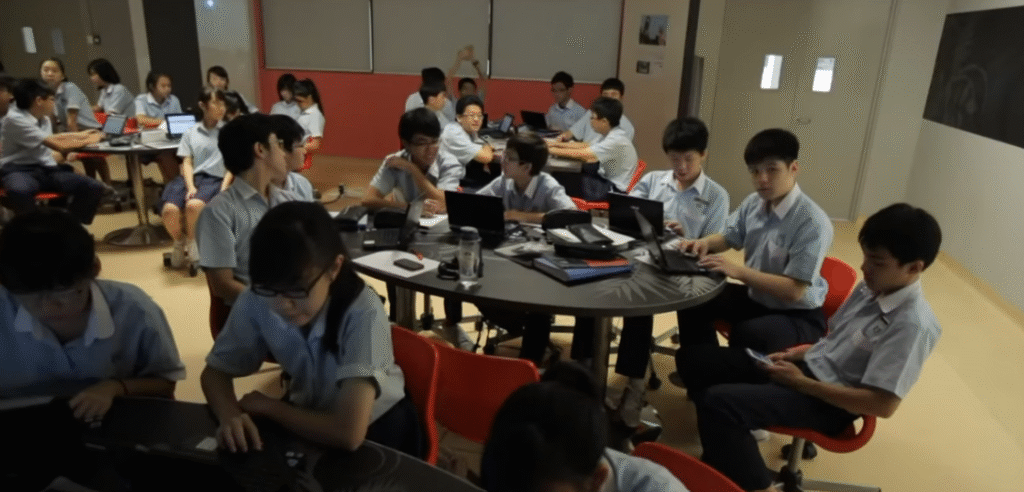
Yong Zhao, who has researched changes on other continents, observes a similar trend. According to him, the education sector fears permanence but adores pilots. According to him, “every generation realizes the need to rethink learning, but we keep going back to the same structure—age-based grades, fixed curricula, timed tests.” He advocates for reinvention rather than more rapid reform. Zhao is adamant that we need different schools, not better ones.
His books are filled with echoes of his vision. While Fixing the Past or Inventing the Future contends that educational institutions should cease mending systems that were never intended for an era of artificial intelligence, World Class Learners promoted creativity and entrepreneurship as crucial educational goals. “Technology doesn’t replace teachers—it frees them to become more human,” Zhao says in a tone that is frequently upbeat but forceful.
Zhao’s argument was supported by the National Academies’ 2024 study, which called on policymakers to incorporate ongoing R&D cycles into education, much like the technological and medical fields do. Schools should operate as learning ecosystems that continuously innovate and adapt rather than as isolated projects. It’s a very creative strategy, but it takes political guts to trust educators as experimenters rather than merely executors and to decentralize authority.
Another problem is teacher habits. Professional development lags behind innovation, which is why many reforms fail. Teachers frequently encounter new technologies without the necessary training, which leaves them feeling overworked or dubious. Although AI tools can be very effective at automating lesson preparation and grading, they run the risk of perpetuating antiquated practices if they are not used appropriately. Zhao contends that reform has to give teacher agency equal weight with student agency.
The greatest persistent obstacle is still assessment. Once meant to democratize education, standardized testing now limits it. It penalizes curiosity, narrows the definition of success, and favors memorization over discovery. According to Zhao’s research, kids in East Asia, where test scores are most important, perform well academically but lack confidence and inventiveness. Western institutions that prioritize freedom, on the other hand, frequently lack structure, which deters many students from participating. This cultural gap might be closed by reform that combines autonomy with structure, or what Zhao refers to as “controlled creativity.”
Already, the private sector is outpacing policy. Millions of people’s educations are being personalized by EdTech businesses like Coursera, Khan Academy, and Duolingo. Curricula are being reimagined around problem-solving and multidisciplinary thinking by Musk’s Ad Astra school and will.i.am’s i.am College Track project. Despite their narrow scope, these initiatives demonstrate how innovation thrives when bureaucratic constraints are removed. However, they run the risk of becoming upscale choices for the wealthy rather than accessible public solutions in the absence of systemic change.
While technology by itself cannot improve education, it can highlight its flaws. The emergence of AI chatbots that can tutor, write essays, and mimic conversations has compelled educators to face difficult concerns regarding their mission. What function should human teachers serve if technology can provide content instantly? Zhao advises them to pursue careers as mentors and coaches, which call for creativity, flexibility, and empathy. When applied carefully, technology can enhance these attributes rather than take their place.
However, inertia continues. Political calendars and reform cycles frequently align, resulting in short-lived programs with little follow-through. “Education loves promises but hates experiments,” as Zhao states. While innovation thrives on failure, policymakers crave predictability. When the two ideologies collide, progress becomes divided. Reformers must embrace an approach more akin to that of startups—one that is data-driven, risk-tolerant, and iterative.
The issue is made worse by cultural opposition. Unbinding schools from rigid subjects, age-based grades, or set schedules is still a novel idea. However, Zhao contends that customization means accuracy rather than chaos. He asks, “Why teach them all the same way when every student learns differently?” His method, which has been tried in Australian and Chinese microschools, focuses on empowering pupils to identify and resolve important issues. It’s about giving kids the tools to shape the future, not about preparing them for it.
These concepts have supporters outside of academia. Zhao held the view that creativity and imagination must be at the core of education, as did the late Sir Ken Robinson, whose TED Talk on creativity in education became a legend. Despite their apparent similarities and differences, their messages agree on one point: reform ought to be human-centered rather than test-centered. Persuading systems built for compliance to embrace autonomy is the difficult part.
Instead of chasing innovation, education reform should work alongside it. Think of schools as living labs where educators, learners, and techies collaborate to create answers. Consider policies that encourage experimentation instead than uniformity. Think of AI as an ally rather than a threat, quietly observing, adjusting, and promoting learning like a constant coach. If leaders view innovation as a partnership rather than an intrusion, such a future seems especially attainable.
Disclaimer
Nothing published on Creative Learning Guild — including news articles, legal news, lawsuit summaries, settlement guides, legal analysis, financial commentary, expert opinion, educational content, or any other material — constitutes legal advice, financial advice, investment advice, or professional counsel of any kind. All content on this website is provided strictly for informational, educational, and news reporting purposes only. Consult your legal or financial advisor before taking any step.
