

There has always been a subtle power to storytelling—an unspoken capacity to inspire, educate, and connect. For teachers who wish to go beyond memorization and foster true understanding, it is quickly emerging as the most remarkably effective tool in the classroom. Professor Dr. R. Eric Landrum of Boise State University characterizes it as the emotional engine of teaching rather than an add-on. According to his research, stories enable students to connect the dots between knowledge and emotion in ways that data alone could never.
Whether they are aware of it or not, every teacher tells stories as soon as they enter the classroom. Geometry suddenly feels urgent when a math teacher opens with a rocket launch story. A science teacher transforms a radiation lesson into a meditation on bravery by sharing Marie Curie’s tenacity. Lessons become alive instead of abstract as a result of this subtle yet incredibly powerful change.
According to psychological research, when we listen to a story, our brains align with the emotions of the person telling it. It is a duet of the nervous system. Because the brain interprets facts as experiences rather than instructions, facts are more likely to stick when they are wrapped in a story. According to Landrum’s research, this phenomenon is known as “multi-sensory encoding,” in which feelings strengthen understanding and memory. To put it briefly, storytelling imprints rather than merely informs.
Table: Dr. R. Eric Landrum — Educational Psychologist and Researcher
| Full Name | Dr. R. Eric Landrum |
|---|---|
| Profession | Professor of Psychology & Education Researcher |
| Institution | Boise State University |
| Field of Expertise | Cognitive Psychology, Pedagogical Storytelling, Learning Theory |
| Known For | Co-author of The Pedagogical Power of Storytelling |
| Collaboration | With Dr. Karen Brakke and Dr. Maureen A. McCarthy |
| Major Contribution | Integrating narrative psychology into modern classroom pedagogy |
| Published Research | The Pedagogical Power of Storytelling – American Psychological Association |
| Reference | https://www.researchgate.net/publication/335193649_The_Pedagogical_Power_of_Storytelling |
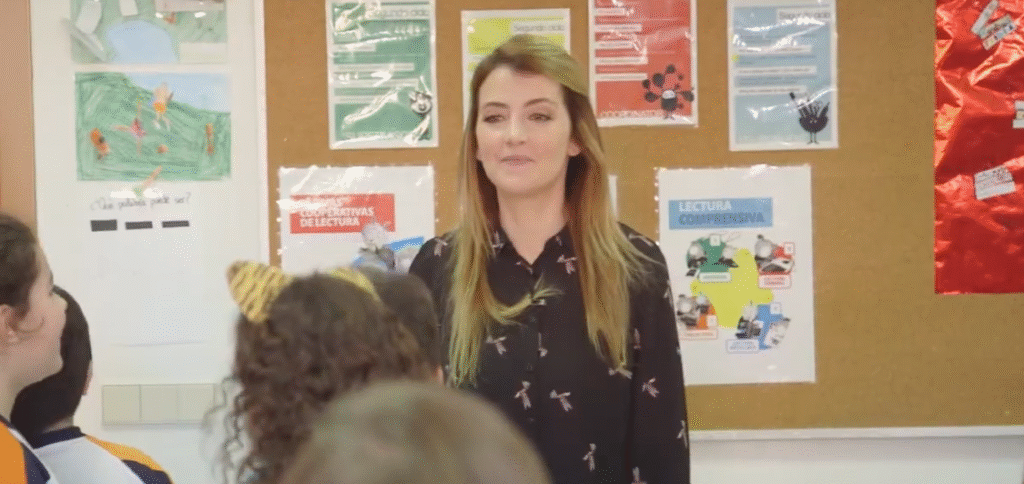
Storytelling was once described as “a secret superpower” by author and educator Dan Steele. By sharing his own childhood struggles with number comprehension, he transformed a routine math lesson on partitioning into an unforgettable experience for his students. He imparted the emotion of discovery in addition to the method. Once-apprehensive math students leaned in, chuckled, and connected. According to Steele, learning really started at that point of emotional connection.
It has been shown that storytelling works especially well in classrooms with a wide range of linguistic and cultural backgrounds. It is possible to bridge cultural gaps by retelling a folktale in a different language. Children learn to identify with unfamiliar situations when they hear stories from other cultures, which is a very powerful tool for fostering empathy. ResearchGate-published studies demonstrate that storytelling pedagogy fosters inclusive environments where all voices are respected in addition to increasing literacy.
With screens, apps, and algorithms aimed at speeding up learning, modern classrooms are now entirely digital. But in the midst of this technological race, a fundamentally human need for narrative connection is resurfacing. Even the most sophisticated resources are only as effective as the stories they convey, educators are coming to realize. A literature lesson gains relevance when it is linked to a teacher’s personal experience, and a coding class becomes incredibly captivating when it is presented as a tale of problem-solving.
Trends in other industries are reflected in this rediscovery of narrative as pedagogy. Narrative is still the lifeblood of communication, as demonstrated by tech founders like Steve Jobs, who characterized Apple’s history as a human tale of ingenuity and defiance, and by influential figures like Oprah Winfrey, whose storytelling fostered a culture of empathy and introspection. That reality is now being reflected in education. Humanizing lessons is more important than making them simpler.
Something extraordinary occurs when educators incorporate storytelling into their lesson plans. Pupils start to view education as a collaborative process. They begin sharing their own stories, whether they are about conquering obstacles, about unattainable dreams, or about their ancestry. Through these interactions, a classroom community based on mutual understanding rather than hierarchy is fostered. Curiosity takes the place of compliance, and empathy takes the place of competition in this subtle but noticeably better dynamic.
This trend is being further amplified by digital storytelling. Teachers are encouraged to combine technology and narrative structure by platforms such as ISTE’s Standards for Students. These days, students produce animated podcasts, video essays, or mini-documentaries that combine academic rigor with artistic expression. This method is especially novel since it transforms digital literacy into storytelling literacy. The focus of the lesson shifts from merely turning in assignments to creating meaning.
In education, storytelling also has therapeutic benefits. Students develop both narrative skills and emotional strength when they share personal stories, particularly those that deal with loss, identity, or resiliency. Schools that use narrative-sharing circles or reflective writing report much fewer behavioral problems. It’s healing through expression rather than punishment as a form of discipline.
In his research, Dr. Landrum compares this emotional involvement to more profound cognitive growth. He discovered that stories aid students in developing what psychologists refer to as “narrative imagination,” along with his co-authors, Drs. Karen Brakke and Maureen McCarthy. This ability enables students to imagine viewpoints different from their own, which is a very obvious sign of empathy and moral reasoning. It’s the kind of education that molds not only intelligence but also character.
There is a direct correlation between this narrative-driven educational movement and broader societal changes. Storytelling has become an activist art form in media and entertainment. Narratives are being used by filmmakers, artists, and journalists to promote awareness and discussion. In a similar vein, educators are realizing that storytelling empowers students to speak up and believe that their own stories are important enough to share.
Celebrities frequently serve as a reminder that stories can effect change. Barack Obama was not just narrating history when he shared tales of his time spent organizing communities; he was also setting an example of leadership. Emma Watson invited empathy rather than relying on statistics when she told her personal advocacy stories at the UN. These instances illustrate what Landrum refers to as “the human velocity of storytelling,” which is the capacity of storytelling to convey concepts more quickly than any kind of instruction could.
Disclaimer
Nothing published on Creative Learning Guild — including news articles, legal news, lawsuit summaries, settlement guides, legal analysis, financial commentary, expert opinion, educational content, or any other material — constitutes legal advice, financial advice, investment advice, or professional counsel of any kind. All content on this website is provided strictly for informational, educational, and news reporting purposes only. Consult your legal or financial advisor before taking any step.
