

Ironically, despite the fact that education is frequently characterized as life preparation, students hardly ever have a say in how that preparation is carried out. This long-standing paradox is being reshaped by the radical idea that kids should create their own lessons. Students are starting to create their own learning experiences—motivated by curiosity rather than coercion—instead of memorizing predetermined curricula. Echoing pioneers like John Dewey, who maintained that learning is most effective when it is connected to experience and choice, the idea feels remarkably new yet firmly grounded in a century of educational philosophy.
Lisa Nielsen, a vocal supporter of innovative education, contends that modern classrooms are still stuck in the logic of the industrial age—efficient, yes, but rarely inspiring. In her ideal educational environment, students would design their own curricula based on their interests, abilities, and goals rather than being consumers. She has written, “Students should shape knowledge, not just absorb it.” The concept encourages educators to become mentors rather than information providers, creating spaces where students can pursue their own intellectual journeys.
The concept might appear idealistic at first. However, there are more and more instances of its success. Adventure Days, a program created by Seattle STEM educator Lindsey Own, allows students to spend two full days a year working on projects they have designed themselves. Some create prototypes of their imagined inventions, while others sculpt, film, or even code mobile apps. The outcomes have been strikingly successful—not because they meet a predetermined standard, but rather because they arouse a deeply human emotion: motivation. The line between learning and life becomes beautifully blurred when students pursue subjects they are passionate about.
Profile Overview: Lisa Nielsen
| Category | Details |
|---|---|
| Full Name | Lisa Nielsen |
| Profession | Author, Educator, and Founder of “The Innovative Educator” Blog |
| Expertise | Education Reform, Student-Centered Learning, Technology in Classrooms |
| Known For | Advocating radical education models that prioritize student autonomy and creativity |
| Education | Master’s in Educational Leadership |
| Current Role | Director of Digital Literacy and Innovation, New York City Department of Education |
| Contribution | Pioneering alternative learning concepts like personalized and student-led learning |
| Reference | The Innovative Educator Blog |
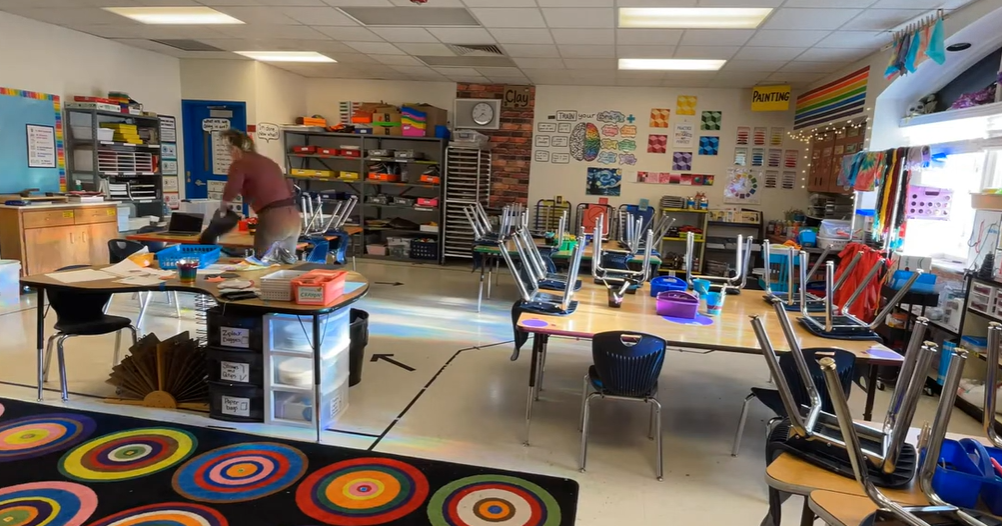
In their “Imaginary High School” project, Victoria University researchers Megan O’Connell and Bill Lucas investigated a comparable model in Australia. There, teachers and students collaborate to create lessons on subjects like “migration and belonging” or “why the internet is changing punctuation.” They work together on community projects, such as revitalizing nearby parks, mentoring younger kids, or operating small businesses, rather than listening to solitary lectures. The curriculum turns into a purpose-driven ecosystem where learning objectives arise organically from action.
This model is a social experiment in empowerment rather than merely an academic endeavor. Children learn the value of agency by creating their own lessons. They gain the ability to negotiate ideas, handle complexity, and take responsibility for their own development. In turn, educators work together to support learning without taking charge of it. “The greatest learning happens when teachers become learners of their own teaching, and students become their own teachers,” said education researcher John Hattie, in a concise summary of this evolution. It is not a hierarchy but rather a partnership.
Across Europe and the United States, programs based on this philosophy are emerging. Finland, which has long been praised for its progressive educational system, has implemented “phenomenon-based learning,” in which teachers and students collaborate to create projects that cross disciplines, such as literature and digital design or climate science and ethics. Finnish schools foster curiosity and resilience rather than test scores. Significantly higher engagement and mental health are the outcomes, demonstrating that rigor need not be compromised for personalization.
Similar ideas are even being adopted by tech innovators. Teachers were inspired to implement “Genius Hour” in schools by Google’s “20 Percent Time” program, which permits staff members to dedicate a fifth of their working hours to personal projects. Under this model, students create their own learning paths by devoting a portion of the week to pursuing subjects that interest them. What arose were student inventions, community service projects, and a never-before-seen sense of purpose. It became very evident how freedom and creativity are related.
The underlying reasoning is straightforward but revolutionary: respecting autonomy increases engagement. Youngsters who create their own lessons start to view education as an extension of who they are rather than a chore. By studying game design, a student who enjoys video games can simultaneously learn coding and narrative structure. Another who is interested in fashion might study textile chemistry, which would combine art and science. Because of this adaptability, learning is highly relevant and extremely versatile.
Children are not mature enough to plan their own education, according to skeptics. Evidence, however, points to the opposite. Students show remarkably mature decision-making when given clear frameworks and mentorship. Instead of teaching chaos, the process teaches self-discipline. The goal is to turn structure into scaffolding that promotes independence, not to eliminate it. Instead of giving orders, teachers mentor, probe, and challenge. “We didn’t lose control,” one teacher in the “Adventure Days” program said. We were able to collaborate.
There are important societal ramifications. A generation that is brought up to create their own education will be more adaptive as adults. They will possess the ability to solve problems creatively, be at ease in the face of uncertainty, and be self-assured—qualities that are highly sought after in fields that depend heavily on innovation. Imagine young journalists honing their writing skills by running social advocacy blogs, or future engineers learning physics by building drones. These possibilities are not far off; they are already occurring.
Disclaimer
Nothing published on Creative Learning Guild — including news articles, legal news, lawsuit summaries, settlement guides, legal analysis, financial commentary, expert opinion, educational content, or any other material — constitutes legal advice, financial advice, investment advice, or professional counsel of any kind. All content on this website is provided strictly for informational, educational, and news reporting purposes only. Consult your legal or financial advisor before taking any step.
