

The term “polar vortex” resurfaced on television, in WhatsApp groups, and even in casual arguments between neighbors standing outside in unusually heavy coats after pipes burst throughout Texas in February 2021 and supermarket shelves emptied overnight. It’s difficult to forget the confusion. Why does it feel like the Arctic has suddenly arrived if the planet is warming?
Unfortunately, the solution is not straightforward. The polar vortex is neither a novel phenomenon nor an indication of overstated climate change. A massive swirl of cold air circling the poles high above us is a long-standing feature of Earth’s atmosphere. It acts predictably most winters, trapping that chilly air like a pot lid. However, the lid can occasionally come loose.
The cold air spills southward and slides into unsuitable areas when the vortex weakens or changes. Suddenly, cities like Chicago, Berlin, or Dallas have to deal with temperatures that seem out of place, almost dramatic. There is a sense of contradiction as you watch this happen—frozen highways on one screen, global warming headlines on another.
This contradiction might be the very point.
The Arctic is warming more quickly than the rest of the planet, a phenomenon that scientists have been researching. The term “Arctic amplification” may sound technical, but it actually describes something fairly obvious. Darker ocean water is exposed when ice melts, absorbing more heat and speeding up the process. The potential external effects of that warming are less evident.
A temperature differential determines the jet stream, the swift-moving river of air that divides the colder northern air from the warmer southern air. Stability and tightness are maintained by strong contrast. The jet stream starts to wander and bend into exaggerated waves when that contrast is reduced.
Those waves are important.
| Category | Details |
|---|---|
| Topic | Polar vortex and its relationship to climate change |
| Phenomenon | Stratospheric low-pressure cold air system over the poles |
| Key Mechanism | Jet stream behavior and Arctic temperature gradients |
| Arctic Trend | Warming 2–4x faster than global average |
| Main Impact | Cold air displacement into mid-latitudes |
| Notable Events | 2019 North America cold wave, 2021 Texas freeze |
| Scientific Debate | Mixed evidence on long-term vortex trends |
| Key Concept | Weather vs climate distinction |
| Reference 1 | MIT Climate Portal – Polar Vortex Explained |
| Reference 2 | NOAA Climate – Understanding the Polar Vortex |
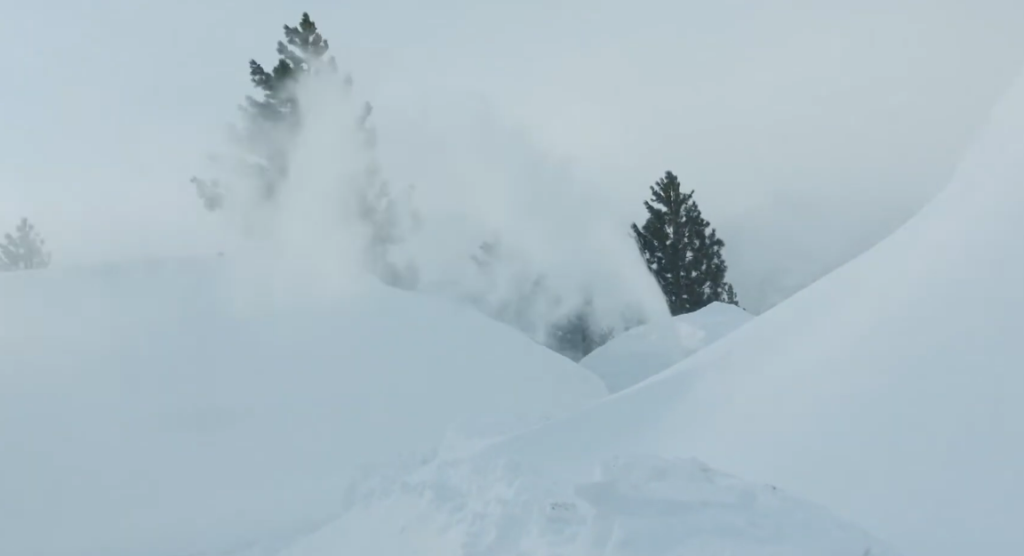
Arctic air can be carried by a wavier jet stream that dips far south. Warm air simultaneously pushes northward into the Arctic, resulting in an odd symmetry with unusually warm temperatures in one area and freezing temperatures in another. Although it’s still unclear if this pattern will increase in frequency or continue to be a feature of natural variability, interest in the mechanism is growing.
It’s easy to mistake this moment for a reversal of global trends when you’re standing on a quiet street during a cold snap, the kind where breath hangs in the air and car engines struggle to turn over. It makes sense to have that instinct. The weather is instantaneous. Climate is a concept. One causes your fingers to freeze. The other resides in long-term averages and data sets.
Particularly online, there is a propensity to interpret these cold events as proof of global warming. One storm turns into a topic of conversation. A week of snow turns into a story. Even if it ignores the larger context, it’s difficult to ignore how convincing that can seem at the time.
Temperatures are still rising on a global scale. Winter hasn’t stopped that trend.
The fact that scientists themselves disagree on how climate change will affect the polar vortex over decades further complicates matters. While some models exhibit mixed or even opposite effects, others point to a weakening pattern. In terms of climate, observations span only a few decades, which is a brief memory.
The system appears to be more sensitive than previously thought, reacting in ways that are challenging to isolate to changes in sea ice, ocean temperatures, and atmospheric pressure. Occasionally, the vortex splits into several lobes in a dramatic breakdown. At other times, it remains intact and the winters go by in silence.
The overall warming trend is unaffected by this uncertainty. If anything, it emphasizes how intricate the system is.
It’s difficult to avoid the impression that the polar vortex has evolved into a sort of cultural shorthand that is more about how people perceive change than it is about atmospheric physics. A cold week turns into a refutation. A heatwave is confirmed. In the middle, the subtlety often disappears.
As this develops, it becomes clear that climate change isn’t about constant, widespread warming. It’s about changes that reorganize well-known patterns, some subtle, some disruptive. Some regions experience harsher winters, while others experience milder ones. Summers are getting longer. Storms are still present.
In that narrative, the polar vortex appears as a symptom of a system adapting to stress rather than as a contradiction.
However, the extent of that adjustment is still unknown. Researchers are still attempting to determine whether these disruptions will become more frequent or continue to be sporadic anomalies magnified by attention. Although the data is increasing, it is not conclusive.
Meanwhile, the urge to doubt everything is likely to reappear the next time a cold wave sweeps through an unprepared city. It always does. More convincing than any chart is the ice on the pavement.
