

During the hottest weeks of the year, midday in Bamako can seem almost unreal. As though the air itself has become liquid, the streets shimmer. Shopkeepers withdraw further into shaded doorways as motorbikes pass slowly, their riders covering their faces with scarves. Naturally, the Sahel has always been hot. However, many locals discreetly report that the heat feels different these days—heavy, prolonged, and somehow less forgiving.
Researchers studying climate change have begun to quantify that emotion. Scientists have been monitoring this trend for decades: temperatures in the Sahel region of Africa are rising at a rate that is roughly 1.5 times faster than the global average. At first, it seems like a technical observation, the kind of statistic found in climate reports. Yet standing in the dusty markets of Niamey or walking past fields outside Ouagadougou, the shift becomes easier to notice.
Situated between the Sahara Desert to the north and more verdant savannah regions to the south, the Sahel spans the continent like a long, sun-bleached ribbon. It has been a site of delicate balance for centuries. Herders move livestock along seasonal grazing routes, farmers plant quickly, and rainfall is fleeting. Timing has always been crucial to life here. That rhythm seems to be straying lately.
| Category | Details |
|---|---|
| Region Name | Sahel Region |
| Geographic Location | Semi-arid belt stretching across Africa from Senegal to Sudan |
| Countries Included | Senegal, Mauritania, Mali, Burkina Faso, Niger, Chad, northern Nigeria and surrounding areas |
| Estimated Population | Around 300 million people |
| Climate Type | Semi-arid transition zone between the Sahara Desert and savannah ecosystems |
| Temperature Trend | Rising roughly 1.5 times faster than the global average |
| Major Climate Threats | Heatwaves, droughts, desertification, unpredictable rainfall |
| Food Security Status | About 33 million people facing food insecurity |
| Future Temperature Projection | Potential increase of up to 6°C by the end of the century |
| Environmental Condition | One of the most environmentally degraded regions globally |
| Reference Sources | United Nations climate analysis: https://www.un.org/en/climatechange ; Scientific climate research archive: https://www.sciencedirect.com |
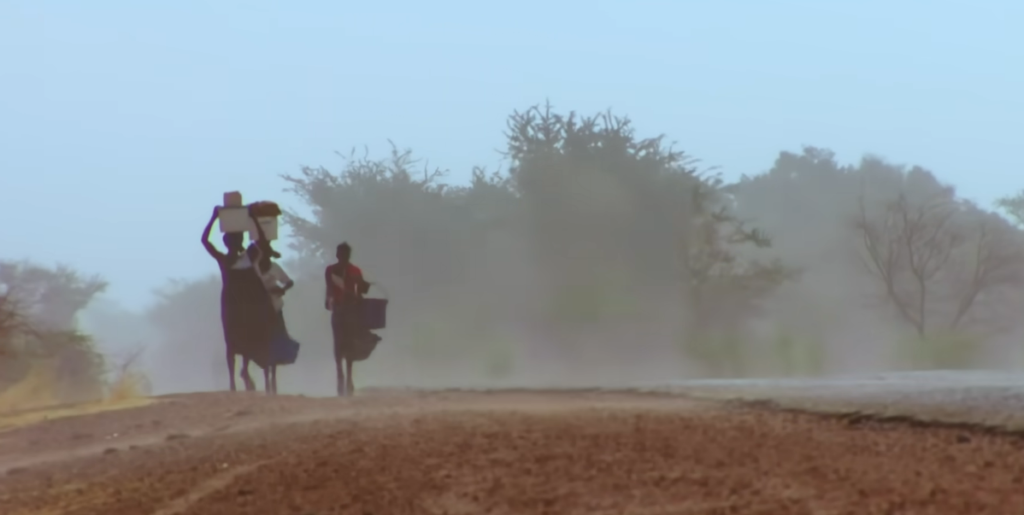
According to scientists, temperatures in the Sahel have risen steadily over the last few decades, sometimes at an astonishing rate. By the end of this century, average temperatures in the area could rise by up to 6°C, according to some projections. It’s possible that even those projections feel abstract to people outside the region. However, the shift manifests itself in more straightforward ways in rural villages, such as crops wilting earlier, wells drying sooner, and unbearably long afternoons.
A preview of this warming future was provided by the heatwave that occurred in March and April of 2024. Temperatures rose above 45°C in some areas of Burkina Faso and Mali, forcing hospitals to treat waves of heat-related illness. According to reports, Bamako doctors witnessed more deaths in a few days than they typically would in weeks. Although the precise number of lives impacted is still unknown, local health professionals believe that the true death toll may be higher than what the official figures indicate.
In the Sahel, extreme heat seldom strikes by itself. Frequently, drought is followed by abrupt floods that destroy delicate farmland. After the first rains, farmers in northern Niger occasionally plant millet, only to have the clouds vanish for weeks. In other seasons, strong storms can dump months’ worth of rain in a matter of hours. It’s difficult to avoid wondering if the climate is completely losing its previous patterns as these swings take place.
The core of the issue is food. Food insecurity affects about 33 million people in the region, and the figure varies with each erratic growing season. Grain sacks can occasionally cost significantly more than they did a year ago in markets throughout Mali and Chad. Families see the difference right away. Even minor price changes have an impact on communities that already live near the edge.
There are social repercussions of climate change that are more obvious but more difficult to quantify. Sometimes pastoral herders go farther than they used to in search of water and grass, entering farmland that was previously safely outside of grazing routes. Land and water disputes start out quietly but can occasionally get heated. Though the story is rarely straightforward, researchers studying the area have started connecting rising temperatures to an increase in resource conflicts.
Additionally, there is migration, which is gradual, steady, and frequently reluctant. Some young men leave villages for larger cities like Dakar or Abuja, hoping to find work. Others pursue diminishing pasturelands as they head north toward the Sahara’s borders. It seems as though climate change is subtly changing the geography of opportunity throughout West Africa as these movements take shape.
However, crisis is not the only thing that defines the Sahel. Farmers in northern Burkina Faso have revived traditional land restoration techniques by erecting tiny stone barriers that collect rainfall and restore crop growth. To stop encroaching desert soil, communities in some parts of Niger plant rows of trees. In comparison to the scope of the climate challenge, these efforts may appear insignificant, but they demonstrate a tenacious resilience.
An additional level of complexity is introduced by population growth. The Sahel’s population is expanding rapidly — nearly three percent each year in some areas — placing increasing pressure on land and water resources. Cities spread outward, frequently with insufficient infrastructure. Urban areas become pockets of persistent warmth long after sunset because concrete neighborhoods retain heat overnight.
The speed at which global climate initiatives will change the Sahel’s course is still unknown. Long-term scenarios and emissions targets are frequently at the center of international negotiations. Under a rising sun that seems to get stronger every year, daily life in the area goes on.
Disclaimer
Nothing published on Creative Learning Guild — including news articles, legal news, lawsuit summaries, settlement guides, legal analysis, financial commentary, expert opinion, educational content, or any other material — constitutes legal advice, financial advice, investment advice, or professional counsel of any kind. All content on this website is provided strictly for informational, educational, and news reporting purposes only. Consult your legal or financial advisor before taking any step.
