

At first, the concept seems almost ridiculous. Summers seem longer, the planet is warming, and glaciers are receding, but a more subdued question keeps coming up: what if all this heat eventually tips the system too far, sending Earth in the opposite direction?
Researchers have been simulating that possibility in a UC Riverside lab while gazing at screens that display changing carbon flows and ocean patterns. Their conclusion isn’t particularly comforting. Long-term planetary overcorrection—cooling so severe it resembles the early stages of an ice age—could be brought on by the same forces causing global warming. Not the following day. Not even in a millennium. Eventually, though.
The mechanism seems oddly natural, at least on paper. Rainfall brings more nutrients, such as nitrogen and phosphorus, into the oceans as temperatures rise. Plankton blooms are fueled by this and spread throughout the water like a faint green dust that can be seen from satellites. When these microscopic organisms die, they sink and release carbon dioxide into the deep ocean. It is a slow process that is nearly undetectable from the shore, but it builds up.
It’s difficult to believe that something so tiny could affect the planet’s climate when you’re standing close to a coastal research station and watching the waves move beneath a gloomy sky. However, scientists contend that the process feeds itself under the correct circumstances. There is more plankton when there are more nutrients. Carbon burial increases with the amount of plankton. Carbon is extracted from the atmosphere more quickly than anticipated as the system speeds up. Cooling comes next.
This seems to be more of a lurch than a seamless transition. Although the Earth’s climate is frequently described as stable, it might not be as balanced as it seems. It reacts too slowly and then too violently, much like a thermostat that is positioned in the wrong part of the room. In discussions with researchers, that metaphor is frequently brought up, sometimes with a shrug, as though even they aren’t totally convinced of its predictability.
Farther north, in colder waters, is another route. There have been indications that the Gulf Stream, that enormous heat conveyor, is slowing. Decades’ worth of measurements point to minute shifts—fresher, colder water seeping into previously warm areas. Although the change isn’t significant enough to make headlines, it still raises concerns in scientific debates.
| Category | Details |
|---|---|
| Topic | Global Warming and Potential Ice Age Trigger |
| Core Concept | Climate “overshoot” and carbon cycle feedback |
| Key Mechanisms | Ocean nutrient runoff, plankton blooms, carbon burial |
| Secondary Risk | Gulf Stream slowdown from Arctic meltwater |
| Time Horizon | Ice age unlikely soon; possible in tens of thousands of years |
| Scientific Consensus | Warming dominates near-term; cooling is long-term uncertainty |
| Key Institution | UC Riverside climate research |
| Ocean Process | Thermohaline circulation disruption |
| Reference 1 | ScienceDaily Climate Research |
| Reference 2 | YaleGlobal Climate Analysis |
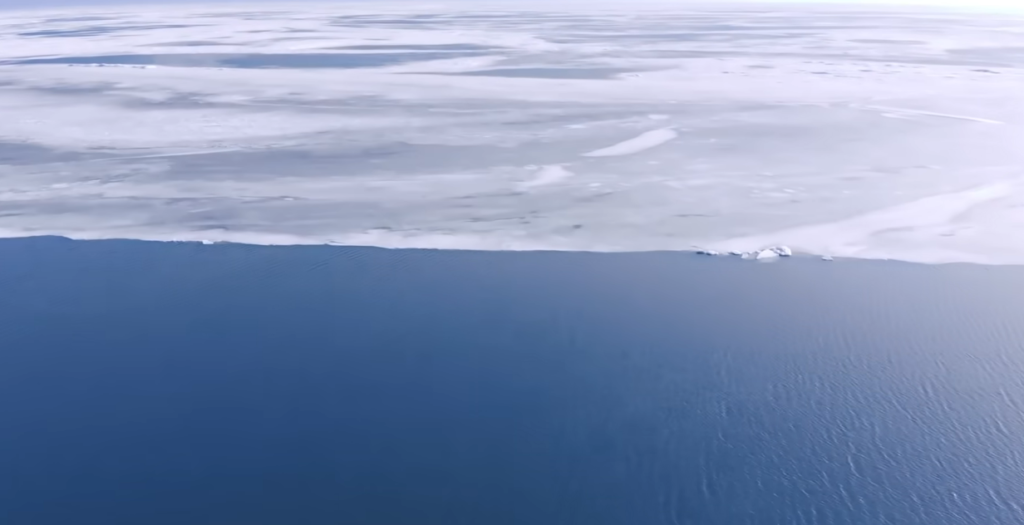
This circulation may be disrupted if sufficient freshwater from melting Arctic ice flows into the North Atlantic. That would be significant. For instance, this system is largely responsible for the mild climate of Western Europe. Winters might feel harsher and longer without it. Although it’s still unclear if this process has started in a significant way, the possibility lurks there, subtly unsettling.
A few hints, but not definitive answers, can be found in history. Parts of the Northern Hemisphere experienced a sharp decline in temperature around 10,000 years ago, during a time known as the Younger Dryas. Evidence suggests that ocean circulation is disturbed. Where the ice had started to retreat, it came back. At least in terms of geology, it happened swiftly. A faint echo of that past can be seen in the evolution of modern data.
However, the majority of scientists are hesitant to make direct comparisons between then and now. The current state of affairs is different, with human-caused emissions contributing to temperatures rising at a rate rarely observed. The next natural ice age may actually be postponed by tens of thousands of years due to these emissions, according to numerous models. Confusion is increased by this paradox—warming that inhibits cooling.
It’s difficult to ignore how this argument develops outside of scholarly circles. Climate change is frequently presented in public discourse as a single direction—hotter, drier, more extreme. The concept of an abrupt reversal in temperature is almost cinematic, evoking scenes from disaster movies in which cities freeze overnight. Naturally, reality moves more slowly. more irregularly.
However, the way scientists discuss it is tense. Heatwaves, rising sea levels, and disturbed ecosystems are among the immediate hazards that some highlight. Others who study long-term cycles appear to be more concerned with what will occur in centuries to come. Although they are rarely discussed together, both viewpoints seem legitimate.
It is evident that uncertainty is ingrained in the system when strolling down a university hallway lined with climate maps—blue, red, shifting gradients. Although data is growing and models are getting better, the future is still somewhat uncertain. That does not imply that there are no risks. It indicates that they unfold at varying rates and are layered.
Observing this develop gives me the impression that humanity is conducting an experiment that it does not fully comprehend. We are exerting pressure on a system that has its own rhythms and thresholds by adding carbon to the atmosphere, changing the chemistry of the ocean, and reshaping landscapes. It absorbs the change at times. It reacts occasionally.
Researchers take a cautious approach to the question of whether global warming could actually cause the next ice age. The fact that the planet doesn’t always react in a straight line seems more obvious. It adjusts, it bends, and sometimes it surprises.
Disclaimer
Nothing published on Creative Learning Guild — including news articles, legal news, lawsuit summaries, settlement guides, legal analysis, financial commentary, expert opinion, educational content, or any other material — constitutes legal advice, financial advice, investment advice, or professional counsel of any kind. All content on this website is provided strictly for informational, educational, and news reporting purposes only. Consult your legal or financial advisor before taking any step.
