

Inside Argentina’s Esperanza research station, there was a subtle smell of damp wool and diesel, the kind of smell that clings to places designed more for survival than comfort. The Antarctic landscape, white, silent, and supposedly freezing, stretched on forever outside. However, thermometers recorded an almost unimaginable 18.3 degrees Celsius on February 6, 2020. Ironically, it’s warm enough for snow to melt and fall from metal railings.
That number felt more like a contradiction than weather in a place where average interior temperatures can drop as low as minus 60 degrees. There, scientists didn’t celebrate. As they gazed at the instruments, they kept checking and rechecking, wondering if the readings were accurate.
The record was eventually confirmed to be accurate and not an exaggeration by the World Meteorological Organization. Only five years ago, the previous Antarctic high of 17.5°C was surpassed. It seems as though records here are now recurring warnings rather than isolated occurrences as this pattern develops.
| Category | Details |
|---|---|
| Continent | Antarctica |
| Verified Record Temperature | 18.3°C (64.9°F), Esperanza Station, Feb 6, 2020 |
| Monitoring Authority | World Meteorological Organization |
| Warming Trend | Antarctic Peninsula warmed ~3°C over last 50 years |
| Major Research Stations | Esperanza Base, Concordia Station, Vernadsky Station |
| Ice Coverage | Holds about 90% of the world’s freshwater ice |
| Key Concern | Accelerated warming, ice melt, global sea-level risk |
| Official Reference | https://wmo.int |
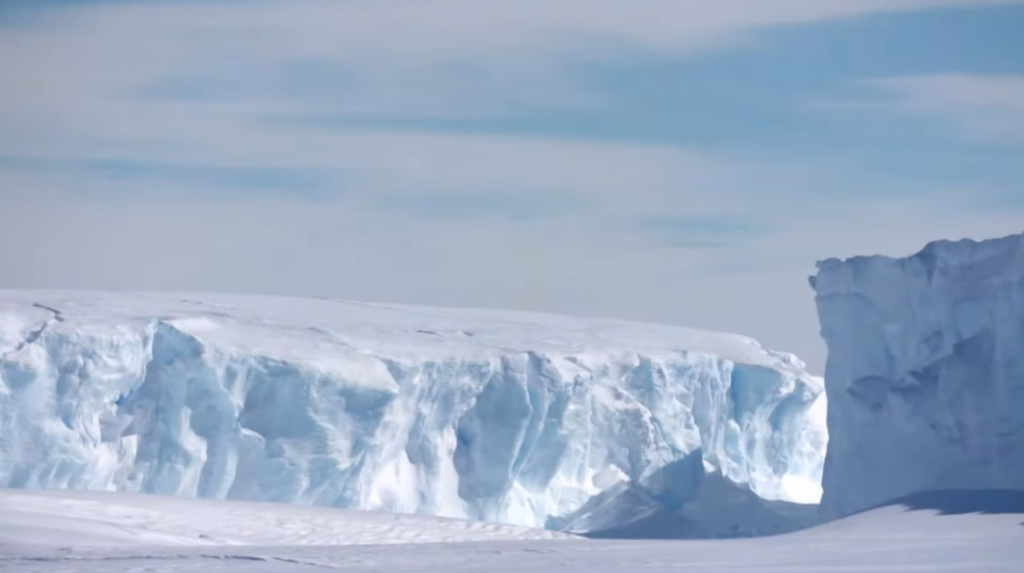
One of the planet’s fastest-warming regions is Esperanza, which is located on the Antarctic Peninsula, a finger of land that juts out toward South America. Temperatures have increased by about 3°C over the last 50 years. That might not seem like much, but in polar climates, even minor changes can have huge effects, causing ice shelves to become unstable and ecosystems that have developed over thousands of years to change.
Inside research stations, scientists follow measurement-based routines. They log numbers, check sensors, and keep an eye on minute changes in the atmosphere. The work is repetitive. essential labor. However, those figures have begun to paint a different picture in recent years.
Temperatures at Concordia Station, located deep in East Antarctica, rose an incredible 38.5°C above seasonal averages in March 2022. Until one imagines the Antarctic equivalent of a winter day abruptly acting like spring, that type of jump seems almost abstract. Heat may be moving further south than it used to due to anomalous atmospheric rivers, which are streams of warm, humid air.
The wind blows endlessly across the seemingly permanent ice plains outside Concordia. However, assuming permanence is getting more difficult.
About 90% of the world’s freshwater ice is found in Antarctica; if it melted, the sea levels would rise by about 60 meters. Scientists don’t think that will happen anytime soon. Even a small amount of ice loss, however, has the potential to change coastlines, flooding cities and uprooting millions of people. It’s difficult to ignore how something so far away could subtly affect locations thousands of kilometers away.
The temperature isn’t the only change. After decades of stability, the sea ice around Antarctica has started to drastically decrease. Once reliable in their breeding habits, emperor penguin colonies have experienced disastrous collapses due to premature ice platform collapses. Scientists report discovering fewer women than anticipated, a lack that seems more significant than statistics alone.
The most unnerving aspect is probably the uncertainty. There is still little historical data on Antarctica’s vast and intricate climate system. Scientists have relatively short records because many research stations have only been in operation for a few decades. Whether recent extremes indicate a permanent shift or an acceleration phase of something larger is still up in the air.
Technology has made observation better. Today, satellites provide remarkably accurate measurements of atmospheric circulation, ocean temperatures, and ice thickness. However, prediction is still challenging despite improved tools. Those who have dedicated their lives to studying the continent continue to be amazed by it.
When discussing tipping points—the points at which change accelerates on its own—some scientists use caution. Others would rather be patient and avoid dramatic conclusions. Both responses point to a deeper truth: in science, uncertainty is not a sign of weakness. It’s sincerity.
In the past, Antarctica was thought to be remote from the outside world, shielded by cold and distance. It’s a fading illusion. Warm air moves. Everything is connected by oceans.
Disclaimer
Nothing published on Creative Learning Guild — including news articles, legal news, lawsuit summaries, settlement guides, legal analysis, financial commentary, expert opinion, educational content, or any other material — constitutes legal advice, financial advice, investment advice, or professional counsel of any kind. All content on this website is provided strictly for informational, educational, and news reporting purposes only. Consult your legal or financial advisor before taking any step.
