

The Hang Seng Index had dropped 350 points, or about 1.3 percent, and the Hang Seng Tech Index had dropped more than two percent by Wednesday at noon in Hong Kong. The turnover for the morning session was HKD 122.9 billion, not a low-volume decline. This was intentional, active selling. Reports that Sinopec Hong Kong intended to drastically reduce its holdings caused CATL, the leading battery manufacturer in China and one of the most closely watched stocks in the index, to drop more than 5%. JD Health saw a 4.3% decline. One of the year’s momentum stories, the jewelry brand Laopu Gold, saw a nearly 5% decline. Over 5% was lost by New Oriental Education. The market commentary cited Donald Trump’s extension of a ceasefire with Iran as the reason for all of this.
The reasoning sounds backwards at first, so it needs to be briefly explained. An extension of the ceasefire ought to be soothing. However, the Hang Seng’s sensitivity to this circumstance stems from China’s unique energy dependence and oil. China imports most of its energy from Middle Eastern suppliers, and an ongoing conflict that keeps crude prices high even in the event of a ceasefire affects Chinese corporate margins, industrial costs, and the general economic confidence that influences equity valuations. The market’s response to the ceasefire extension was less about the truce itself and more about what it meant for the upcoming weeks when it was accompanied by language that made it clear the conflict wasn’t resolved, just paused, and when Trump concurrently made remarks suggesting he hadn’t ruled out resuming operations. Any Asian market is uncomfortable with oil prices at $90 per barrel and the possibility of fresh fighting close to the Strait of Hormuz, but Hong Kong is especially uncomfortable because the city serves as a conduit for capital flows into and out of mainland China.
IMPORTANT INFORMATION — HANG SENG INDEX (HSI)
| Field | Details |
|---|---|
| Index Name | Hang Seng Index (HSI) |
| Trading Symbol | HSI / ^HSI |
| Exchange | Hong Kong Stock Exchange (HKEX) |
| Index Type | Market-capitalisation-weighted, free float adjusted |
| Number of Constituents | 88–90 stocks |
| Current Level | 26,163.24 (April 22, 2026) |
| Daily Change | -324.24 (-1.22%) |
| 52-Week High | 28,056.10 |
| 52-Week Low | 21,191.02 – 21,712.10 |
| 1-Year Return | +21.34% |
| 3-Month Return | -1.75% |
| 6-Month Return | +1.48% |
| 5-Year Return | -9.01% |
| YTD Return | Approximately flat to slightly positive |
| Day’s Range | 26,073.45 – 26,303.60 |
| Half-Day Turnover (April 22) | HKD 122.9 Billion |
| Hang Seng Tech Index (April 22) | -2.19% to -2.2% |
| Top Loser (April 22) | CATL (-5.03%); also JD Health, Laopu Gold, New Oriental Education |
| Top Gainer (April 22) | Lenovo Group (+5.73%); also Geely, PetroChina |
| Key Macro Driver (April 22) | US-Iran ceasefire extension; oil price concerns |
| Related Indices | SSE Composite (+0.52%), SZSE Component (+1.30%), Nikkei 225 (+0.40%), KOSPI (+0.46%) |
| Index Compiler | Hang Seng Indexes Company Limited |
| First Published | November 24, 1969 |
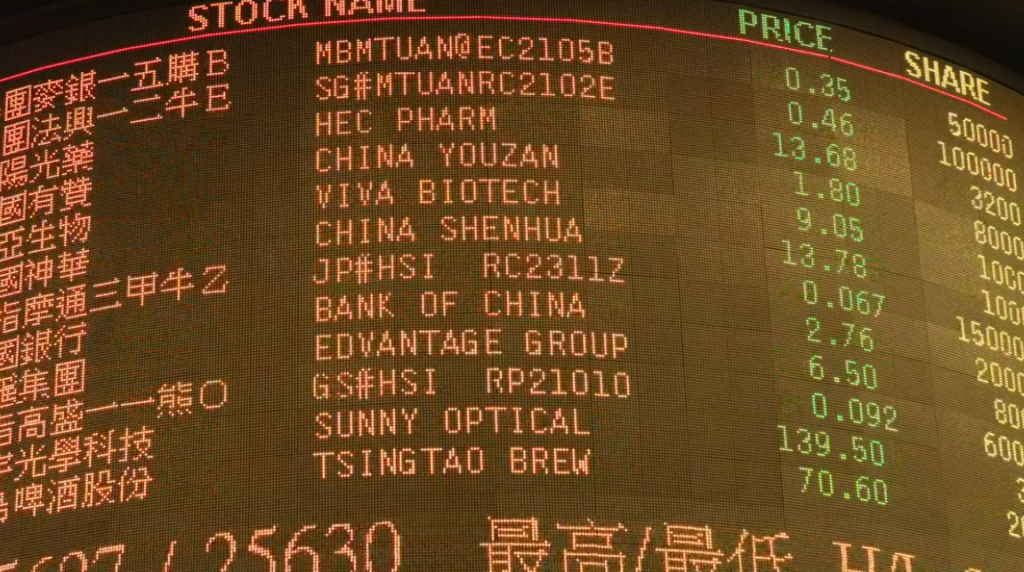
The events of Wednesday were somewhat ironic. Other Asian markets moved in different ways while the Hang Seng declined. The Nikkei increased by 0.4%. The KOSPI increased by 0.46 percent. The Shanghai Composite increased by 0.52 percent. The divergence indicates how the market is interpreting various forms of exposure, and Hong Kong was the obvious outlier. The sectoral weights of the Japanese and Korean indices differ, as does how they react to changes in the price of oil. The mainland Chinese indices, which are influenced by various investor bases and are subject to capital controls, frequently diverge from Hong Kong’s events. Global shocks are more directly absorbed by the Hang Seng, which is open to foreign capital and heavily weighted toward financials, technology, and energy.
Not everything failed. Expectations surrounding China’s Pre-6G network development and its implications for hardware demand helped Lenovo Group rise 5.73 percent. 2.13 percent was added by Geely Automobile. One of the few instances in which the Iran situation results in a clear winner rather than a loser within the same index, PetroChina saw a 2 percent increase, directly benefiting from higher oil prices. One of the things that makes the Hang Seng truly fascinating to watch is this kind of internal divergence, where the top winner and the top loser can both be traced back to the same geopolitical event.
Compared to the single-day move, the technical picture is a little more promising. Before the decline on Wednesday, the index rose from a low of roughly 24,225 in late March to a high of about 26,480 on Tuesday. There is some support from the 50-day and 100-day exponential moving averages, which are currently below the current level. The near-term test is still the 27,000 level, which analysts have been pointing to as the next significant resistance. What happens with oil, the US-Iran situation, and China’s quarterly economic data flow—all of which are moving simultaneously and in unpredictable directions—will probably determine whether the index can surpass that level.
It’s difficult to ignore the fact that the Hang Seng has outperformed the S&P 500 by 21% in the last year, despite being frequently referred to as a challenging or troubled market in Western financial commentary. It is possible for both to be true. The narrative does not look nearly as good as the one-year chart. A different picture of how the political and regulatory developments of the last five years have affected the market’s long-term trajectory can be seen in the five-year chart, which shows a loss of about 9%. Separating the noise of a single session from the signal of where the underlying businesses are truly headed is the same task for investors who watch it every day from a Central trading terminal.
Disclaimer
Nothing published on Creative Learning Guild — including news articles, legal news, lawsuit summaries, settlement guides, legal analysis, financial commentary, expert opinion, educational content, or any other material — constitutes legal advice, financial advice, investment advice, or professional counsel of any kind. All content on this website is provided strictly for informational, educational, and news reporting purposes only. Consult your legal or financial advisor before taking any step.
