

In some parts of the Amazon, the air used to feel comfortingly heavy—thick with moisture, humming with insects, alive. That heaviness has now shifted in some areas close to the southern borders. It lingers in a different way, carrying a hint of smoke and dust. The silence seems almost unnatural as I stand close to a cattle-only clearing. Not quite empty. Simply… thinner.
Although scientists have been discussing a tipping point for years, the discourse has recently changed. It’s no longer just a remote possibility. The Amazon rainforest may already be approaching a point at which a recovery is improbable. According to some estimates, a combination of deforestation, rising temperatures, and recurrent drought could put almost half of the forest under extreme stress by 2050. That figure, 47%, seems abstract until you observe how quickly green transforms into something else.
The forest seems to be losing its rhythm. The first, and possibly most obvious, communities to notice it are Indigenous. fruits that ripen too soon. Fish migrate in erratic ways. Harvests of honey are getting smaller, from buckets to tiny bottles. On their own, these incidents aren’t particularly dramatic, but when taken as a whole, they point to a more profound issue: an ecosystem that is becoming out of balance. It’s difficult to ignore the cumulative effect of these minor adjustments.
| Category | Details |
|---|---|
| Ecosystem | Amazon Rainforest |
| Location | South America (Brazil, Peru, Colombia, Ecuador, Bolivia) |
| Size | ~6 million square kilometers |
| Biodiversity | ~10% of Earth’s known species |
| Carbon Storage | Equivalent to 15–20 years of global emissions |
| Current Risk | Up to 47% under severe stress by 2050 |
| Main Threats | Deforestation, climate change, fires, drought |
| Tipping Threshold | ~20–25% deforestation or 2–3°C warming |
| Population | ~40 million people (including Indigenous communities) |
| Reference 1 | Nature Climate Study on Amazon |
| Reference 2 | Amazon Frontlines Tipping Point Report |
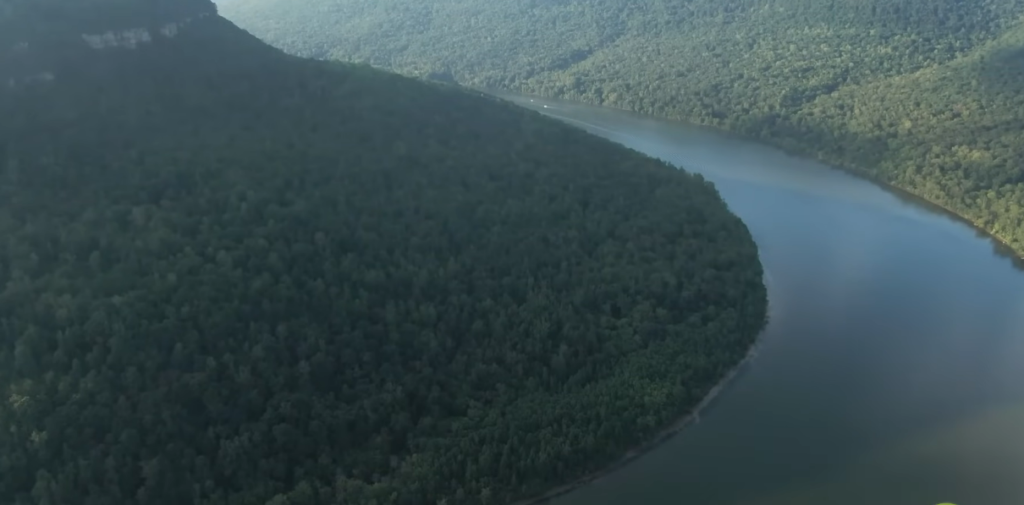
Naturally, the most obvious cause is still deforestation. Large tracts of forest are still being cleared, frequently by burning, leaving behind dry soil that fractures in the sun. Over the past few decades, millions of hectares have been lost in Brazil alone. The fact that the effects go beyond those cleared areas, however, is more disturbing. In addition to decreasing the amount of forest cover, tree removal upsets the water cycle that supports the entire area.
After all, the Amazon produces its own climate. Scientists sometimes refer to the water that trees extract from the earth and release into the atmosphere as “flying rivers.” Those rivers become weaker when enough trees are lost. Rainfall decreases. Seasons that are dry last longer. Fires, which are frequently started on purpose, are more likely to spread farther than anticipated. Looking at satellite photos over time, the pattern appears more like a slow unraveling than isolated damage.
Everything is made more difficult by climate change. The region’s temperatures have increased, and droughts that were previously uncommon now occur unsettlingly frequently. The forest’s ability to swiftly adjust to these changes remains uncertain, particularly in light of human activity. It’s possible that some regions have already switched from absorbing carbon to releasing it, especially in the southeast Amazon. Even though it hasn’t been fully acknowledged in public discourse, that reversal feels important.
Additionally, there is an almost mechanical feedback loop at work. Drought increases as the temperature rises. Fires increase when there is more drought. Carbon emissions from fires contribute to additional global warming. The cycle quietly gains momentum as it feeds itself. In practical terms, this means that the forest may start to change more quickly than anticipated. Scientists refer to this as a self-reinforcing system.
However, the concept of “irreversible change” is still hard to understand. It’s not a one-time event or a catastrophic breakdown. The forest is gradually becoming thinner, drying out, and becoming more like a savanna. This process might already be in progress in some southern areas. The canopy lifts. The forest floor is more directly exposed to sunlight. The underbrush dries out. Fires become more manageable. It’s persistent but not abrupt.
This is a historical irony. The Amazon has withstood climate change for millions of years, enduring circumstances that would have altered less complex ecosystems. However, the current mix of pressures—rapid global warming on top of industrial deforestation—seems different. quicker. less tolerant. Resilience itself may have its limitations.
However, there are indications that the plot isn’t totally set in stone. Deforestation rates are typically lower and ecological stability is higher in areas under Indigenous community management. The forest frequently feels intact, even vibrant, when strolling through those areas. It implies that only some forms of human presence are intrinsically harmful. Another question is whether that model can scale rapidly enough.
The consequences are hard to overlook on a global scale. Large volumes of carbon are stored in the Amazon, and its depletion could hasten climate change in ways that extend well beyond South America. Continental variations in rainfall patterns are possible. The effect may be felt by agricultural systems. However, those results still seem far off in comparison to the immediate, noticeable changes taking place on the ground.
As you watch this happen, you get the impression that the world is changing more slowly than the forest. Policies are discussed. Goals are established. In the meantime, dry seasons lengthen, trees fall, and fires burn. There is a noticeable disparity in pace.
Uncertainty still exists, though. Reduced deforestation and restoration initiatives, according to some scientists, could help the Amazon recover from its impending collapse. Some are less hopeful, speculating that some thresholds might already be too near for comfort. It’s hard to predict which point of view will be right.
Disclaimer
Nothing published on Creative Learning Guild — including news articles, legal news, lawsuit summaries, settlement guides, legal analysis, financial commentary, expert opinion, educational content, or any other material — constitutes legal advice, financial advice, investment advice, or professional counsel of any kind. All content on this website is provided strictly for informational, educational, and news reporting purposes only. Consult your legal or financial advisor before taking any step.
