

As is often the case, the cold came stealthily. Overnight, sidewalks solidified into glass, automobile windshields became opaque, and breath hung in the air like smoke. People in Chicago automatically pulled their coats tighter when they saw the ghostly swirls of steam rising off Lake Michigan. It’s difficult to ignore how intimately cold weather feels, how it clings to your skin and won’t go away. However, the Earth is warming at the same time.
People have been uneasy about that contradiction for years. Politicians have made fun of it, neighbors have debated it over dinner, and even scientists, at least in the beginning, have had difficulty providing intuitive explanations. How can the bitter, occasionally record-breaking cold persist on a warming planet?
| Item | Details |
|---|---|
| Topic | Extreme cold events in a warming global climate |
| Key Scientific Mechanism | Weakening polar vortex and distorted jet stream |
| Main Phenomenon | Arctic amplification causing unstable weather patterns |
| Key Regions Affected | North America, Europe, Asia |
| Key Institutions | National Oceanic and Atmospheric Administration (NOAA), NASA Climate Science Division |
| Key Term | “Warm Arctic, Cold Continent” paradox |
| Reference Links | NASA Climate Evidence • NOAA Polar Vortex Explanation |
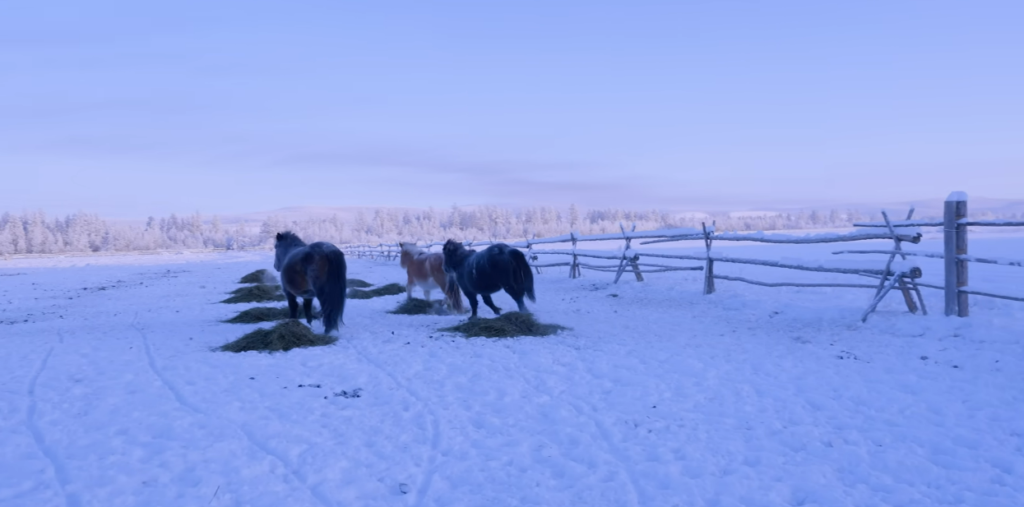
It turns out that the Arctic is changing more quickly than any other place on Earth, and the answer starts thousands of miles north.
Scientists refer to this phenomenon as Arctic amplification, whereby the Arctic is warming at a rate that is about four times faster than the global average. Researchers have reported that meltwater pools in odd, unfamiliar patterns while standing atop thinning sea ice, reflecting sunlight rather than reflecting it away. The previously predictable atmospheric structures have started to be upset by the additional heat rising from the darker ocean surfaces.
The polar vortex is one of those structures.
The polar vortex, in spite of its dramatic name, is not a recent phenomenon. It is a ring of powerful winds that circles the Arctic at great altitudes, containing the cold like a fence. It worked in silence for decades, spinning with icy accuracy. However, that fence is now beginning to sway as the temperature differential between the Arctic and lower latitudes narrows.
And cold seeps out when it wobbles.
The reality feels anything but casual, despite the scientists’ almost casual description of the cold air spilling southward. In 2021, temperatures in Texas fell so low that water pipes inside homes burst and power grids failed. The grocery shelves were empty. To stay warm, families set fire to furniture. The infrastructure itself seemed unprepared for a type of cold that it thought belonged somewhere else.
Although it’s still unclear if these occurrences will intensify globally, it’s getting more difficult to ignore the trend.
Another high-altitude current of swiftly moving air, the jet stream, is also changing in behavior. It has started to sag and twist rather than flow smoothly around the planet, creating deep dips that let Arctic air plunge southward. It’s like watching a river lose its banks and meander in an unpredictable way when you look at satellite maps of these patterns.
Once imprisoned, Cold now roams.
Scientists have not overlooked the irony here. In fact, a warmer Arctic may make severe winter weather more likely in regions like North America and Europe. There is no magic in the mechanism. There is an imbalance. Extreme fluctuations are made possible by a weakening of atmospheric stability as temperature differences decrease. It appears that the weather loses its discipline.
Global averages are still increasing at the same time. Heat is absorbed by oceans. The summers get longer. Overall, winters get shorter. However, when cold does arrive, it may persist longer than anticipated, enclosing cities in protracted freezes. Slower jet streams enable weather systems to stall, trapping cold air for days or even weeks, according to research. People may be experiencing more unpredictable cold instead of more extreme cold.
The general public’s perception has not changed. Many people naturally wonder about warming when they stand in snowbanks. It makes sense that there would be confusion. While weather is experienced in real time, climate is measured over decades. It doesn’t feel like we live on a warmer planet when we have to shovel snow at dawn. One gets the impression that climate change is affecting more than just temperature changes as this disconnect develops. Expectations are changing.
Scientists take care not to simplify things too much. Overall, the frequency of extreme cold events is declining. In many instances, climate change actually lessens their intensity. However, disappearance and elimination are not the same thing. There is still enough variation in the atmosphere to create harsh winters when the right circumstances are present. And those circumstances remain the same.
Instruments continue to record quiet shifts in research stations in northern Canada, Alaska, and Norway. Snow comes in a different way. Later, ice forms. Wind patterns waver, then pick up speed. Every anomaly contributes a piece to an unfinished puzzle.
It seems as though the climate system is losing its predictability and compliance with past trends that people once relied on.
Disclaimer
Nothing published on Creative Learning Guild — including news articles, legal news, lawsuit summaries, settlement guides, legal analysis, financial commentary, expert opinion, educational content, or any other material — constitutes legal advice, financial advice, investment advice, or professional counsel of any kind. All content on this website is provided strictly for informational, educational, and news reporting purposes only. Consult your legal or financial advisor before taking any step.
