

In the world of finance, Sunday nights are characterized by a certain suspended uneasiness that sets in before the first numbers of the week begin to move. Unlike most Sundays, this one felt heavier. During early Asian trading hours, S&P 500 futures opened lower, falling about 0.6% to reach a seven-month low of 6,360 to 6,370. That type of number is circled on a trading floor. When combined with five weeks of losses, the Dow’s recent official entry into correction territory, and the S&P 500 cash index closing Friday at a seven-month low of 6,368.85, it doesn’t necessarily warrant concern on its own.
The obvious surface cause is that the Iranian conflict, which is currently in its fifth week, is not acting in accordance with the optimistic timeline that markets have been subtly incorporating into their prices since early March. Over the weekend, Trump told the Financial Times that the United States could “take the oil”—referring specifically to Iran’s main export hub, Kharg Island—while also implying that a deal could be reached “fairly quickly.” The markets have discovered—sometimes at great expense—that both scenarios are theoretically possible and that neither one offers a short-term solution. Oil has reacted appropriately, rising above $115 per barrel, and energy expenses are consistently finding their way into inflation projections, making it genuinely challenging to predict the Federal Reserve’s trajectory.
| Category | Details |
|---|---|
| Full Name | E-mini S&P 500 Futures Contract |
| Ticker Symbol | ES=F (front month); ESW00 (continuous) |
| Exchange | Chicago Mercantile Exchange (CME) — Globex Platform |
| Underlying Index | S&P 500 (500 large-cap U.S. companies) |
| Index Founded | 1957 |
| Managed By | S&P Dow Jones Indices (S&P Global) |
| Headquarters | New York City, USA |
| Contract Size | $50 × S&P 500 Index value |
| Trading Hours | Nearly 24 hours, Sunday–Friday |
| Recent Futures Low (Mar 2026) | ~6,360–6,370 (seven-month low) |
| S&P 500 Cash Close (Mar 28) | 6,368.85 (fifth straight weekly decline) |
| Open Interest (Mar 30) | ~1,894,278 contracts |
| Current Futures (Early Mar 30) | ~6,418–6,432 (recovering slightly) |
| Key Risk Factors | Iran war, oil prices, Fed policy, 10-year Treasury yield |
| Reference Links | CNBC S&P 500 Futures Live | Investing.com S&P 500 Futures |
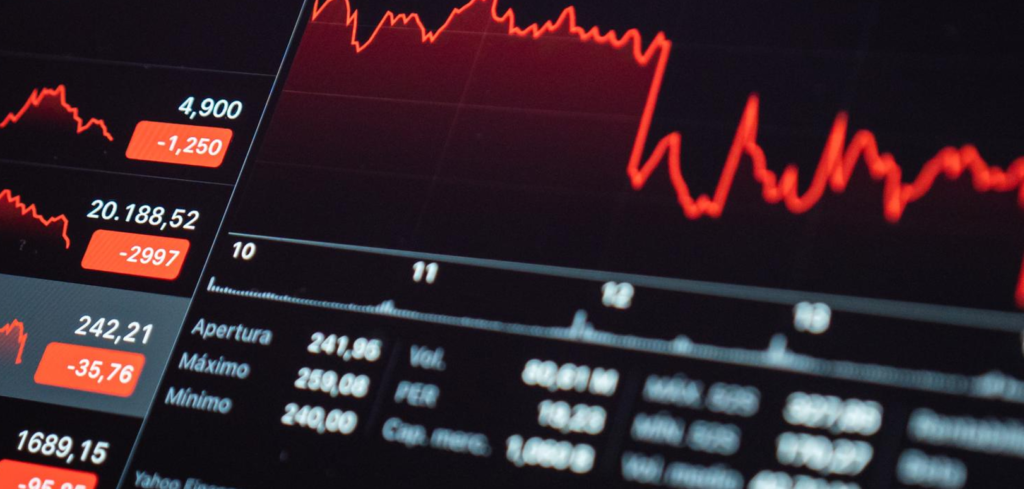
Futures had partially recovered by Monday morning. S&P 500 contracts were up about 0.28%, while Dow and Nasdaq futures saw comparable increases. The atmosphere was reportedly measured rather than panicked on the New York Stock Exchange floor, where traders in March frequently display an expression torn between cautious optimism and quiet dread. On CNBC’s Closing Bell last week, Cameron Dawson of NewEdge Wealth did a good job of explaining that the selloff has been so correlated that quality names are now being sold alongside weaker ones, with stocks in all sectors declining simultaneously regardless of their individual fundamentals. That is a convincing argument. Additionally, it’s the type of argument that seems most plausible just before things start to get a little worse.
The current arrangement has a tension that is difficult to fully describe. For extended periods, the so-called fear gauge, the VIX, has been trading in the historically muted 12 to 13 range. One of two things is happening when implied volatility is that low in the context of declining futures and war-related news: either the market is genuinely optimistic that this will end soon, or enough institutional players have become so used to the noise that they are no longer pricing it seriously. Neither interpretation feels totally at ease. A low VIX with declining futures is similar to a smoke alarm that hasn’t been checked in months; it’s technically still operational and reassuring, but it’s not quite reliable when certainty is needed.
The next week will have a significant impact on the future direction of S&P 500 futures. On Monday, Jerome Powell will speak. Earlier in the week, the JOLTS report and ADP payroll data are released. On Wednesday, the ISM Manufacturing PMI is released. The Labor Department then releases the March jobs report on Friday, Good Friday, when the market is closed. Following the startling loss of 92,000 jobs last month, Wall Street anticipates a recovery to about 45,000 jobs. Under normal circumstances, that number wouldn’t be significant, but in the current setting, it might serve as a floor or a new source of anxiety. Concerns about a recession would increase with a poor print. A strong one might reduce expectations for rate cuts, renewing pressure on yield-sensitive components of the index, such as growth stocks, real estate, and technology.
Whether the futures market is accurately pricing in the range of potential outcomes is still up for debate. A ceasefire framework, oil retreating toward $80, the Fed finding room to cut, and a relief rally that pushes the S&P back toward its earlier highs are all signs of a relatively quick diplomatic resolution. Conversely, you have a summer-long conflict, Capital Alpha analysts’ 35 percent odds that the war will last until 2027, Brent crude challenging $130, and an earnings season where all companies with supply chain exposure to energy costs begin lowering their guidance. S&P 500 futures are attempting to find a fair value between those two poles, and the truth is that they probably won’t be able to, at least not yet, given this degree of uncertainty.
There is currently a distinct rhythm to watching this develop over the course of the trading week: morning optimism, midday headlines, and afternoon retreats. Every dip, the retail investors who purchase SPY do so with conviction. There is a different kind of conviction in the institutional desks that silently load options before any possible escalation. Even if both groups are correct about the long-term value of the index, their immediate circumstances may differ greatly. The S&P 500 has bounced back from lower levels. Everyone is aware of that. However, recovery schedules are contingent upon the actual end of the uncertainty, which is currently unknown.
Disclaimer
Nothing published on Creative Learning Guild — including news articles, legal news, lawsuit summaries, settlement guides, legal analysis, financial commentary, expert opinion, educational content, or any other material — constitutes legal advice, financial advice, investment advice, or professional counsel of any kind. All content on this website is provided strictly for informational, educational, and news reporting purposes only. Consult your legal or financial advisor before taking any step.
