

When a cherished location does something subtly unsettling, there’s a certain kind of friction. Disneyland has always been adept at creating the appearance of seamless operations, with lines disguised as experiences, crowds moving smoothly, and an overall nostalgic atmosphere that discourages people from asking too many questions. Therefore, it’s important to pay attention when someone does inquire and when that inquiry turns into a federal class-action lawsuit that seeks damages of at least $5 million.
Lead plaintiff Summer Christine Duffield, a California parent who traveled to Disneyland and Disney California Adventure with her kids, filed the lawsuit in May 2026 in a California federal court. She claims that Disney has been implementing facial recognition technology at park entrances since April without providing sufficient notice or getting meaningful consent. As visitors enter, the system takes pictures of their faces and compares them to pictures taken when the ticket or annual pass was first used. Disney refers to these images as “unique numerical values.” Disney claims that unless the information is kept for legal or fraud prevention purposes, it is deleted within 30 days. Given how the matching system operates, the lawsuit questions whether that timeline is even technically possible.
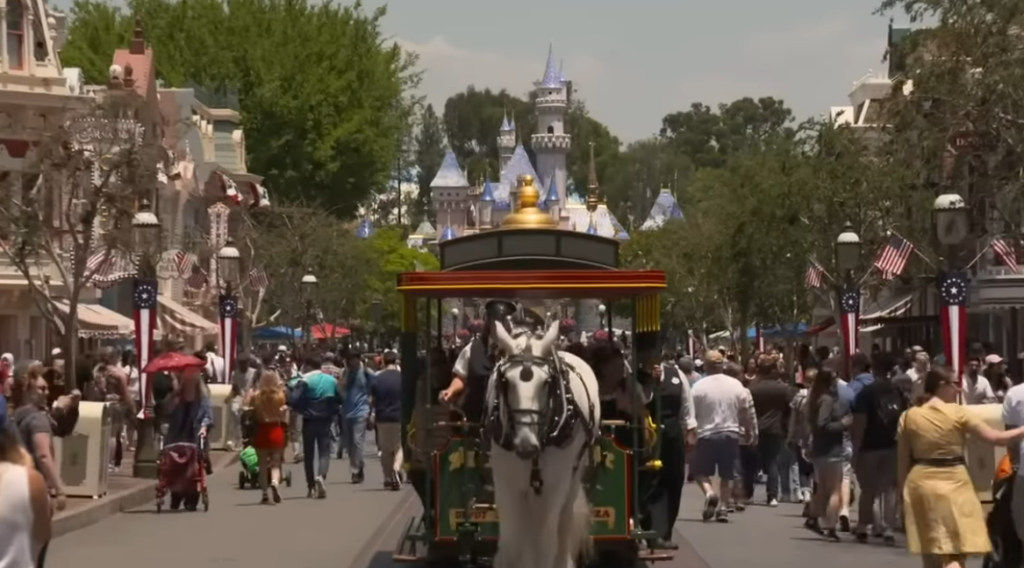
On the surface, Disney’s stated justifications—faster entry, less fraud, and improved crowd control—seem plausible. For a park that receives millions of visitors annually, those are actual operational issues. The technology’s functionality is not the issue raised by the lawsuit. It’s whether or not the individuals passing through those gates—many of them families with kids who were unaware that a camera was examining their faces—were ever truly informed. The complaint claims that the signage, which is displayed at four different entrances along the Esplanade, consists of a small icon that is a slash through a head and shoulders silhouette. The opt-out is that. When you’re juggling strollers, tickets, and a seven-year-old who just spotted a Mickey pretzel on a busy Saturday morning, it’s difficult to ignore how simple it would be to miss that.
In the filing, Blake Hunter Yagman, the proposed class’s attorney, stated clearly that the visitor should not bear the burden of protecting their right to privacy. That is a significant ethical and legal argument that challenges a trend that is spreading surprisingly quickly through important venues. Facial recognition technology is used in sports stadiums to expedite entry. It has been used by arenas to identify and ban people. It has been used by some performers to identify known stalkers in concert audiences. Because the technology is effective and has legitimate applications that are difficult to refute, it is becoming more and more popular. However, the Disneyland lawsuit is specifically challenging the way it spreads—quietly, through systems that most people ignore.
California law allows businesses to use facial recognition technology, but it also requires disclosure and gives customers the option to restrict how their data is shared and used. New Jersey, Washington, and Illinois go one step further and demand express opt-in consent. Disney seems to have determined that the signage they put up complied with California’s regulations. According to the lawsuit, that conclusion is incorrect from a legal and practical standpoint. The main point of contention is the discrepancy between what Disney considers to be sufficient notice and what a reasonable visitor would actually comprehend. It’s still unclear if a court will concur.
Beyond the immediate legal outcome, this case is worth keeping an eye on because of its implications for the future of the biometric data discourse. Disney also gathers biometric information through its PhotoPass photography program and Magic Band system, creating what the lawsuit refers to as comprehensive customer profiles across various business divisions. Disney’s strategy at the gates might just be the most obvious aspect of something much bigger. Regardless of the outcome, there’s a sense that this lawsuit comes at the perfect time, when regulations pertaining to facial recognition technology are still being drafted and the businesses using it are still determining how much information they must disclose to you.
Disclaimer
Nothing published on Creative Learning Guild — including news articles, legal news, lawsuit summaries, settlement guides, legal analysis, financial commentary, expert opinion, educational content, or any other material — constitutes legal advice, financial advice, investment advice, or professional counsel of any kind. All content on this website is provided strictly for informational, educational, and news reporting purposes only. Consult your legal or financial advisor before taking any step.
