

They are redefining what it means to have a vacation, not just creating a hotel. Voyager Station, which is scheduled to debut in 2027, appears to be an experience that falls halfway between an orbiting boutique resort and an opulent cruise. Orbital Assembly Corporation created the station, which will spin gently above the planet to create artificial gravity so that guests can eat, stroll, and unwind without drifting away.
Space shouldn’t feel clinical or chilly, according to the design brief, which was quite clear from the beginning. The sterile look of vintage science fiction movies was purposefully avoided by architect Tim Alatorre and his crew, who instead surrounded visitors with cozy textures and organic color schemes. The tone? Instead of space lab, think alpine lodge.
A triple-deck bar with an apparently physics-defying water feature, fine-dining restaurants that promise meals on par with Earth’s top locations, and suites ranging from small 30-square-meter rooms to large villas big enough to hold a family gathering are all located inside. These are immersive settings designed for wonder and comfort rather than claustrophobic chambers.
Voyager Station will use centrifugal force to mimic gravity by rotating its outer ring. Gravity will be more noticeable the farther you are from the center. There will be a towering gym that doubles as a music venue at night, where guests may play low-gravity games, take a shower as usual, and sleep in regular beds. It’s an environment created for enjoyment as well as escape.
| Feature | Description |
|---|---|
| Name | Voyager Station |
| Developer | Orbital Assembly Corporation |
| Scheduled Opening | 2027 |
| Capacity | Up to 440 people |
| Notable Amenities | Luxury villas, hotel suites, bars, restaurants, gym, concert venue |
| Artificial Gravity | Achieved through rotating wheel design |
| Construction Start | 2026 |
| Former Name | Von Braun Station |
| Reference | CBS News Article on Voyager Station |
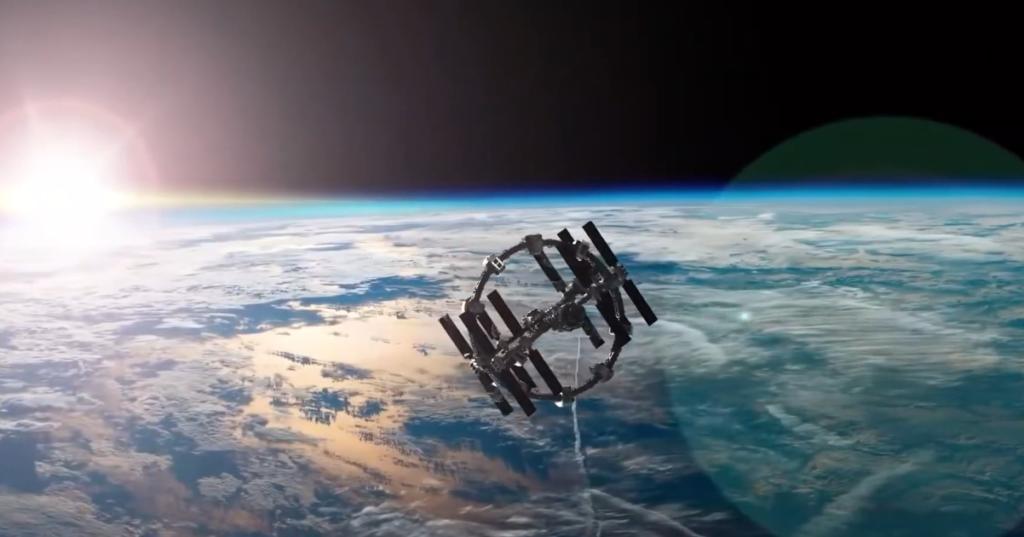
The way Voyager’s construction manages gravity is quite creative. Gravity is replicated around the hotel’s exterior by means of a revolving ring that moves similarly to a revolving bucket of water. Because of this technical achievement, many of the everyday activities that visitors take for granted, such as drinking coffee or getting dressed, will feel virtually natural.
In recent years, the vision has evolved. The hotel was renamed from its original name, the Von Braun Station, in order to disassociate itself from complex historical ties. While allowing visitors to envision themselves as contemporary pioneers, the current moniker, Voyager Station, reflects its spirit of exploration.
An early adopter’s stay won’t be inexpensive. Although prices have not yet been made public, comparisons with Virgin Galactic’s $250,000 suborbital trips indicate that space hospitality will, for the time being at least, remain the purview of wealthy travelers. The developers, however, amazingly talk of future affordability, seeing a time when space vacations will be “just another option,” similar to a Mediterranean cruise or Disneyland.
It’s remarkable how varied the entertainment options are. There will be an activity area where visitors may enjoy the excitement of low-gravity sports in addition to the three-tiered bar and fine dining establishments. These unusual bodily experiences, such as leaping twice your height or effortlessly lifting weights, will operate as subliminal reminders of the hotel’s cosmic location.
The goal of Voyager Station’s careful planning and smart engineering is to create a sense of familiarity and grandeur in space. It’s not just for visitors, either. The modular architecture facilitates long-term habitation, crew training, and scientific research in the future. These goals suggest that space will eventually be inhabited rather than just visited.
I was impressed by how grounded everything felt despite the orbital altitude when I walked through the computer representations. There are legs on the dining chairs. There are linens on the mattresses. The walls have curved shapes, soft lighting, and wood and stone-like finishes. It had an oddly domestic feel.
This project is framed differently by its developers than by some detractors who view it as a playground for the ultra-rich. They think Voyager will pave the way for a “starship culture”—a way of life where living, working, and unwinding in space becomes a common goal rather than a spectacle. The station’s marketing, budget, and schedule all reflect that confidence.
John Blincow, the founder of Orbital Assembly, highlighted the importance of 2026 in recent interviews. Construction is scheduled to start at that point. Techniques already in development will be used to assemble the hotel’s docking hub, central ring, and truss system. Within a year, customers might be making reservations for rooms if the schedule holds.
Based on advancements in prefabrication and robotics, the business thinks it can quickly expand the technology. Research stations, manufacturing outposts, or even spaceports for deeper interplanetary travel may eventually be constructed using the same parts.
Regarding extended space travel, Voyager Station serves as a trial run for a somewhat typical orbital lifestyle. Its success might have an impact on how we build habitats on Mars or the Moon. It may even change public perceptions of what is feasible by offering a concrete, cozy example of space living.
However, the station’s completion and the arrival of its first visitors continue to be the key priorities. There are still technological obstacles to overcome, investors to court, and testing to be completed. However, unlike many ostentatious ideas, Voyager Station has a real plan, a construction schedule, and a staff that is working gradually toward completion.
Voyager Station is creating an experience that people will want to revisit rather than merely creating a new frontier by making space welcoming rather than terrifying. And it might have accomplished it more than anything else.
Disclaimer
Nothing published on Creative Learning Guild — including news articles, legal news, lawsuit summaries, settlement guides, legal analysis, financial commentary, expert opinion, educational content, or any other material — constitutes legal advice, financial advice, investment advice, or professional counsel of any kind. All content on this website is provided strictly for informational, educational, and news reporting purposes only. Consult your legal or financial advisor before taking any step.
