

At first glance, the trading screen appeared nearly serene. A modest gain that hardly registers in a Nasdaq market accustomed to daily fluctuations was made by Workday as it ended the regular session at $130.23. Then the numbers after hours started to flash red. While executives were still on the earnings call, Workday’s share price dropped more than 9% in a matter of minutes, wiping out billions of dollars in market value.
Investors weren’t alarmed by the quarter itself. Almost as anticipated, revenue increased 14.5% year over year to $2.53 billion. Earnings per share exceeded projections. Profit margins increased. It was respectable on paper. even solid. However, markets tend to focus on the future and rarely trade on the past.
| Category | Details |
|---|---|
| Company Name | Workday Inc. |
| Stock Ticker | WDAY (NASDAQ) |
| Recent Closing Price | $130.23 |
| After-Hours Move | -9% (approx.) |
| Market Capitalization | ~$34 Billion |
| 52-Week High | $281.00 |
| 52-Week Low | $125.83 |
| Headquarters | Pleasanton, California |
| CEO | Carl M. Eschenbach |
| Reference | NASDAQ WDAY Quote |
| Reference | Workday Investor Relations |
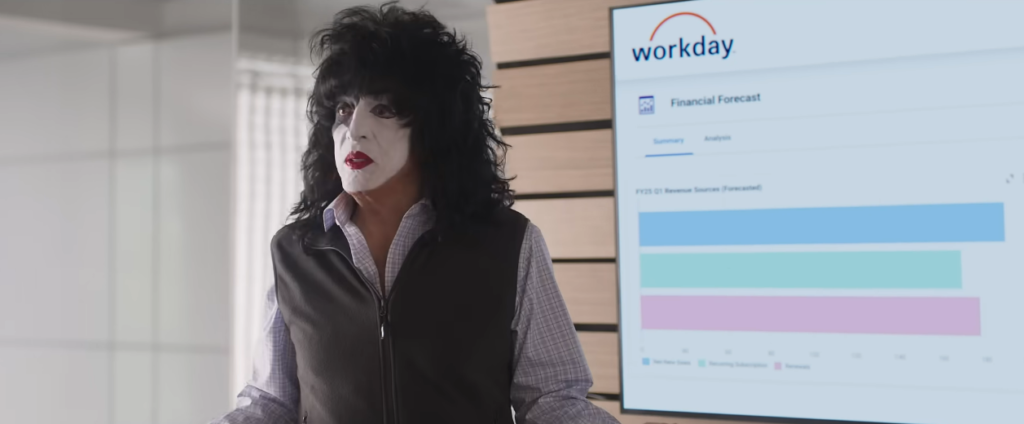
Guidance was the problem. Workday predicted that its fiscal 2027 subscription revenue would be marginally less than what Wall Street had projected. The miss wasn’t particularly dramatic. However, even a slight sway can feel like a fissure in a sector that is based on steady, recurring growth. Software companies appear to be under pressure from investors to either speed up or risk repricing.
The campus of Workday’s headquarters in Pleasanton, California, is still neat and tidy, with low buildings surrounded by well-kept lawns. Workers with laptops move quickly between offices with glass walls as they talk about product roadmaps and AI improvements. That calm and the volatility taking place on trading platforms thousands of miles away are difficult to reconcile.
The larger context is important. Large enterprise software deals have been slowed by tighter corporate budgets and higher interest rates. The closing of some contracts is taking longer. That information lingered in the air after being brought up during the earnings call. It’s possible that businesses aren’t signing multi-year cloud contracts with the same fervor they did during the digital rush caused by the pandemic.
The share price of Workday has already made significant progress. In the last year, the stock once hit $281. It is currently just above its 52-week low. It seems like investors are completely readjusting their expectations for cloud software based on that arc. Similar scrutiny has been directed at Salesforce and its peers, indicating that this is more about a maturing cycle than it is about a single company.
The narrative isn’t wholly defensive, though. Workday is developing tools to automate financial planning, analytics, and HR workflows as it continues to push the boundaries of artificial intelligence. Executives talk confidently about “agentic AI,” or systems that can manage intricate business tasks on their own. It’s still unclear if that innovation will result in quicker revenue growth.
Whether this guidance miss represents short-term deal timing or something more structural is still unknown. Growth in subscription revenue is anticipated to be slower in the low teens than it was during the company’s high-growth years. That slowdown feels significant in a market used to top-tier SaaS companies expanding by 20% or more annually.
Additionally, there is a psychological element. Software stocks have come to represent optimism for the future. The response can be quick and harsh when predictions become less accurate. It’s difficult not to notice how rapidly sentiment shifts from confidence to caution when observing the after-hours drop. Months of operational execution can be outweighed by a few lines of forward guidance.
The reset was long overdue, according to investors who prefer valuation metrics. Workday traded at premium multiples during previous peaks, indicating confidence in long-term double-digit growth. The balance now appears more complex, with growth slowing but the price-to-earnings ratio remaining high. In relation to its long-term potential, is the stock inexpensive? Or is the market at last setting realistic prices?
Analysts questioned the pipeline’s strength, federal spending, and the health of its higher education clients on earnings day. These markets are not insignificant. Revenue timing changes and short-term visibility is impacted when big business clients put off making decisions. The majority of deals, according to management, are still ongoing, just taking longer. If those contracts come to pass next quarter, investors will be closely monitoring the situation.
It seems as though Workday is at a turning point. In enterprise software, it is no longer a tenacious rival. It is well-known, lucrative, and extensively used. However, the days of easy growth might be coming to an end. The level of competition is rising. There are new startups that are AI-native. Even major industry leaders like Oracle and Microsoft are making rapid forays into HR and financial management platforms.
However, volatility is not the same as decline. The business has a healthy free cash flow. The margins are now better. The clientele is still large and loyal. As this plays out, one gets the impression that the market is struggling with expectations rather than the collapse of fundamentals.
The transition is reflected in the Workday share price. The transition from hyper-growth darling to stable operator. from recipient of the pandemic to recalibration after the pandemic. Execution over the upcoming quarters will determine whether the current pullback turns into a long-term opportunity or a warning sign.
Disclaimer
Nothing published on Creative Learning Guild — including news articles, legal news, lawsuit summaries, settlement guides, legal analysis, financial commentary, expert opinion, educational content, or any other material — constitutes legal advice, financial advice, investment advice, or professional counsel of any kind. All content on this website is provided strictly for informational, educational, and news reporting purposes only. Consult your legal or financial advisor before taking any step.
