

Education starts to resemble exploration more than memorization when homework is eliminated and artificial intelligence replaces it. Students’ learning, comprehension, and creative processes are being revolutionized by AI tutors. They do more than just assign tasks; they engage, adjust, and reply, providing feedback that feels incredibly intimate.
Because AI tutors are intended to supplement human educators rather than replace them, the idea is especially novel. AI frees up teachers’ time by automating administrative or repetitive tasks, allowing them to focus on more in-depth conversations, original ideas, and practical problem-solving. This hybrid model, which has been significantly enhanced by emotional intelligence algorithms, guarantees the peaceful coexistence of technological accuracy and human empathy.
Students now interact with AI tutors that adapt lessons to their pace and learning preferences rather than enduring tedious assignments. While a student who learns best through analysis might be given structured reasoning tasks, a visual learner might be given animations or simulations. The experience can change in real time and is very adaptable. This flexibility helps students feel seen and not left behind, which increases their confidence and comprehension.
Teachers have already noticed that class time becomes exponentially more productive when AI manages foundational lessons. Teachers lead discussions, present opposing viewpoints, and create original projects rather than reciting facts. The learning environment has significantly improved, favoring curiosity over conformity. Instead of taking tests, students learn to think.
Table – Profile Overview: AI Tutors and Creative Learning
| Category | Details |
|---|---|
| Concept Focus | AI Tutors and Creative Learning |
| Core Innovation | Personalized, adaptive, and emotion-aware virtual teaching systems |
| Introduced In | Early 2020s, developed by EdTech innovators and AI researchers |
| Primary Goal | Replace repetitive homework with creative, individualized learning experiences |
| Impact on Teachers | Frees educators from grading to focus on creativity, empathy, and mentorship |
| Impact on Students | Encourages curiosity, critical thinking, and project-based exploration |
| Technological Foundation | Generative AI, Natural Language Processing, Emotional Recognition |
| Ethical Considerations | Data privacy, bias prevention, and equitable access |
| Industry Examples | Adobe Express for Education, Stanford HAI, Harvard Gazette, EdSurge Reports |
| Reference | www.edtechmagazine.com |
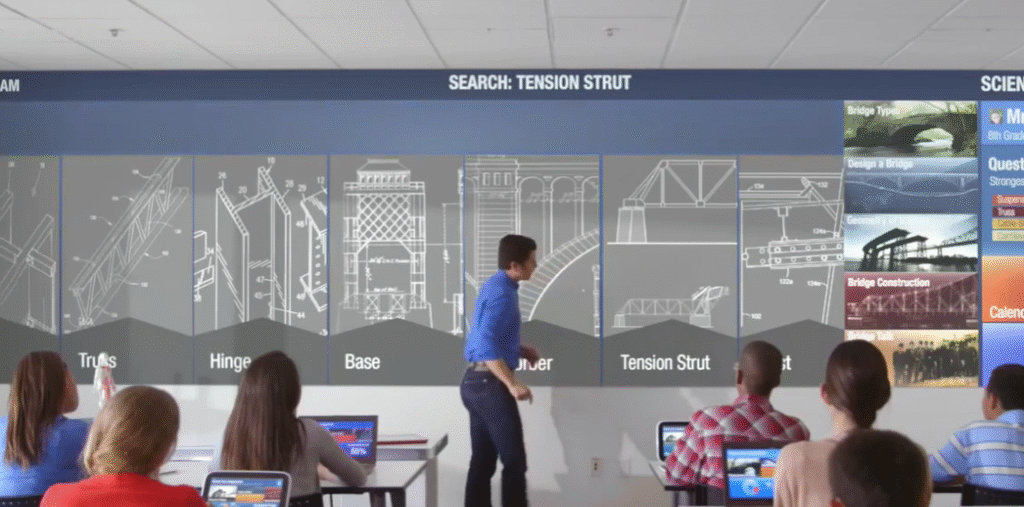
AI can serve as a creative partner rather than a taskmaster, according to Brian Johnsrud of Adobe Education. He refers to it as a “thought partner” that aids pupils in overcoming the blank page paralysis. The AI may offer themes, examples, or limitations that direct the process—without prescribing the outcome—if a student finds it difficult to get started. It’s a very successful method of combining freedom and structure.
This partnership is especially advantageous for educators. They can focus on emotional mentoring instead of endless paperwork and grading, which AI, despite its intelligence, cannot do. Teachers are becoming experience facilitators who help students think, question, and improve. Instead of getting lost in the din of tests, their knowledge becomes the center of learning once more.
As they would with their peers, students are also learning how to work together with AI. The AI provides immediate feedback that is supportive rather than critical, giving the interaction a conversational feel. This ongoing conversation maintains motivation. Errors turn into opportunities rather than obstacles. The method is very effective, generating levels of engagement that are rarely attained by traditional homework.
This change is not without its difficulties. Students who rely too much on AI may become dependent, and educational gaps could widen as a result of unequal access. The next ten years of educational innovation will be characterized by ensuring balance, privacy, and fairness. To maintain creativity at the forefront of advancement, policymakers, educators, and technologists must work together.
Globally, the trend toward AI-powered creative learning is accelerating in spite of reservations. Students are starting to work on immersive projects, such as creating virtual worlds, using virtual reality to recreate historical events, or modeling actual scientific phenomena. Through these exercises, active exploration takes the place of passive learning. Students experience a tangible emotional reward as they discover new things.
The most significant contribution of AI is that it makes creativity quantifiable. Teachers can gain new insight into each learner’s cognitive process by using it to analyze how students approach problems, respond to feedback, and generate ideas. It shows how creativity develops rather than ranking it. This change may reinterpret what “achievement” in education means.
The need for these skills is already being indicated by employers. According to research from the World Economic Forum and Microsoft, the most important skills for future hires will be creative thinking and AI literacy. Businesses are looking more and more for people who can work creatively and empathetically with technology. Today’s AI tutoring students will probably grow up to be tomorrow’s creative leaders, able to confidently handle both data and creativity.
It’s interesting to note that this development is also relieving the emotional exhaustion in education. Students feel less stressed and more satisfied when their assignments are designed to pique their curiosity rather than to satisfy requirements. Teachers rediscover their mission. Parents see their kids learn with excitement rather than fear. Instead of dictating, the classroom turns into a forum for discussion.
Across international pilot programs, a remarkably similar pattern emerges: students think more critically, express themselves more authentically, and retain information longer. Creativity turns into the main indicator of advancement. AI enhances education rather than weakens it. It allows people to do what they do best—dream, create, and discover—by directing foundational learning.
This approach to education is especially motivating since it views learning as a journey rather than a system. AI tutors substitute relevance for repetition when they take the place of homework. A history lesson devolves into an online argument between historical personalities. An architectural challenge arises from a mathematical problem. Every topic turns into a call to imagination.
Teachers become the creators of that imagination rather than being replaced. Their function changes from teaching to motivating. They provide the framework, and AI makes sure that all students, regardless of ability, have the resources they need to engage in meaningful learning. It is very evident how technology and humanity work together to provide precision and purpose, respectively.
Disclaimer
Nothing published on Creative Learning Guild — including news articles, legal news, lawsuit summaries, settlement guides, legal analysis, financial commentary, expert opinion, educational content, or any other material — constitutes legal advice, financial advice, investment advice, or professional counsel of any kind. All content on this website is provided strictly for informational, educational, and news reporting purposes only. Consult your legal or financial advisor before taking any step.
