

A movement of educators who are changing the definition of learning is embodied by Dr. Misty Paterson. These fearless educators are turning classrooms into creative studios, which are more like design labs than conventional lecture halls. Making learning an act of creation rather than consumption is their remarkably straightforward but incredibly ambitious goal.
By transforming conventional classrooms into vibrant studios, these educators are fusing rigorous academic study with artistic inquiry. One particularly creative example is Dr. Paterson’s Pop-Up Studio initiative. It rethinks the classroom as a collaborative studio where curiosity drives every lesson and the teacher as a designer. Because it substitutes experimentation, reflection, and teamwork for strict instruction, the method is very effective at keeping students’ attention.
Profile Information
| Name | Dr. Misty Paterson |
|---|---|
| Occupation | Educator, Researcher, Founder of Pop-Up Studio |
| Education | Ph.D. in Arts Education, University of British Columbia |
| Expertise | Inquiry-based learning, conceptual teaching, creative pedagogy |
| Organization | Pop-Up Studio |
| Publications | Pop-Up Studio: Responsive Teaching for Today’s Learners |
| Professional Milestones | Youngest vice principal to lead an IB World School in Western Canada; Program Advisor for the Vancouver Biennale; International speaker and workshop leader on creative education |
| Reference | https://popupstudioed.com/about |
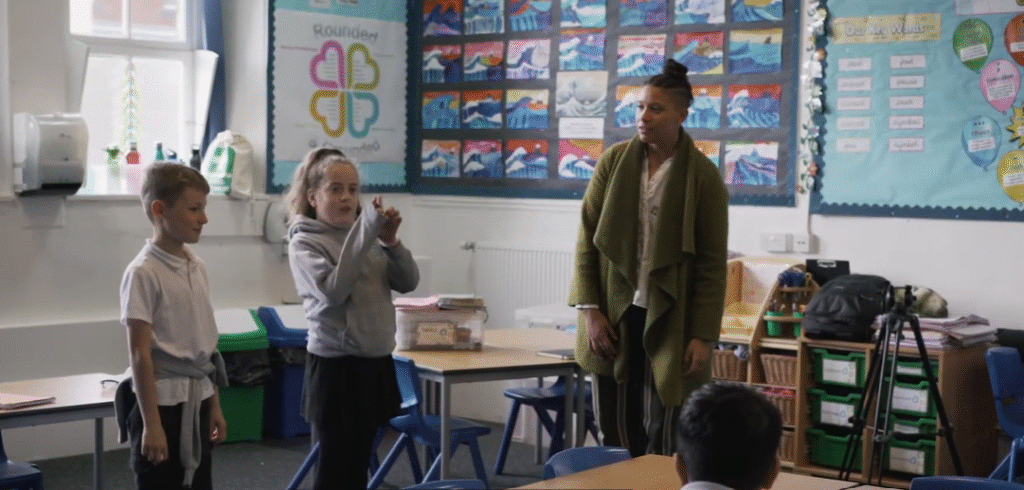
Children are not merely learning in this environment; they are creating. A science unit might be told through sound design or sculpture, while a history class might turn into a documentary. Deeper connections between knowledge and experience are created by this subject-matter exchange. It has significantly increased student confidence and retention, demonstrating that creativity doesn’t undermine academic success but rather supports it.
Teachers in this movement are utilizing frameworks from innovation labs and professional studios. They now use design thinking as their compass, which includes empathy, definition, ideation, prototyping, and testing. This method teaches students to solve problems with empathy and creativity, just like inventors do. In one classroom, students might create environmentally friendly packaging for nearby companies; in another, they might create prototypes of tools that help individuals with disabilities with everyday tasks. Every project cultivates both technical proficiency and emotional intelligence by fusing artistry and purpose.
Paterson’s description of teachers as “pedagogical artists” aptly encapsulates the essence of this revolution. She sees teaching as an artistic endeavor that strikes a balance between spontaneity and structure. Failure is celebrated as a step toward mastery rather than feared in her studio-based classrooms. This mentality change has been incredibly successful in encouraging students to take risks and be resilient. Drafts, edits, and continual reinvention are all part of the process, which is similar to how actual artists work.
Instead of using technology as a distraction, these creative classrooms frequently use it as a tool for expression. Teachers at California’s Compton High School have implemented adaptable “learning studio” areas furnished with tablets, virtual reality headsets, and adjustable seats. A geography lesson could turn into an immersive virtual tour that lets students experience different cultures and landscapes up close. In Kuala Lumpur, on the other hand, teachers utilize augmented reality to allow students to explore historical architecture or visualize molecular structures. These immersive techniques have greatly enhanced understanding and memory, demonstrating the usefulness and transformative power of creative technology integration.
However, technology is just one aspect of this development. The atmosphere these studios foster, both intellectually and emotionally, is what really sets them apart. Instructors are shifting their focus from lecturing to facilitating. They are facilitating conversations, encouraging inquiry, and allowing students to direct their own research. There is a noticeable shift in the atmosphere in these classrooms; there is more lively exploration and less silent compliance. Learning is now not only educational but also emotionally satisfying thanks to the studio mindset.
This change is in line with more general cultural movements that value creativity as a life skill. These days, employers value problem-solving, empathy, and flexibility just as highly as technical expertise. Teachers are preparing students for this new reality by adopting a studio-style approach to instruction. Schools frequently “kill creativity,” according to the late Sir Ken Robinson, who was a well-known advocate for creativity in education. Instead, the educators who adhere to Paterson’s philosophy are revitalizing it and preparing students to prosper in an uncertain future.
This change is being recognized by international organizations. While UNESCO promotes artistic inquiry as a way to develop global competency, the OECD has highlighted creative pedagogy as a key force behind contemporary education. Research indicates that classrooms with creative teachers have better academic results and more engaged students in all subject areas, not just the arts. A study conducted in Malaysia even discovered a direct correlation between teacher innovation and quantifiable student success, underscoring the importance of creativity as a fundamental component of education rather than a gimmick.
This philosophy is carried beyond individual classrooms by the Pop-Up Studio model. Dr. Paterson teaches educators to rethink their roles through mentorship programs and workshops. Teachers describe her approach as “healing” and “transformative,” leaving her sessions with a sense of empowerment and vigor. Many rediscover their original motivation for teaching: to encourage curiosity rather than conformity. By helping teachers rediscover the joy and artistry of their work, her training has proven to be incredibly successful in lowering burnout.
The social impact of the movement extends well beyond educational institutions. These educators are contributing to the development of communities based on empathy and cooperation by encouraging young students’ creativity and compassion. In addition to analyzing, students also learn to imagine and view challenges as opportunities rather than challenges. For marginalized students, who frequently find freedom in the flexible, expressive nature of studio learning, this has especially increased their self-confidence.
Additionally, creative classrooms have been reflected in larger cultural endeavors. The guiding principle of both musician Pharrell Williams’ Yellow education program and filmmaker Ava DuVernay’s ARRAY Creative Academy is to empower young people via creativity. The same goal—education that creates kind, creative citizens—is reflected even in Michelle Obama’s artistic endeavors. These connections between cultural activism and education show how creativity can act as a link between individual development and social advancement.
The studio classroom model has subtly influenced public policy debates, corporate training initiatives, and academic institutions. While engineering programs now prioritize collaborative design thinking, business schools are embracing improvisational exercises that were previously only used in theater classes. This momentum across disciplines demonstrates how education can easily adjust to shifting demands when it is based on creativity.
Disclaimer
Nothing published on Creative Learning Guild — including news articles, legal news, lawsuit summaries, settlement guides, legal analysis, financial commentary, expert opinion, educational content, or any other material — constitutes legal advice, financial advice, investment advice, or professional counsel of any kind. All content on this website is provided strictly for informational, educational, and news reporting purposes only. Consult your legal or financial advisor before taking any step.
