

Children are naturally fascinated by the world, but social pressure and organized education can eventually stifle that curiosity. Psychologists and educators agree that the key is to maintain that spark by setting an example, being open, and encouraging others.
The growth mindset theory developed by psychologist Carol Dweck continues to be a powerful tool for understanding why some kids flourish while others retreat. She noticed that kids who receive praise for their hard work grow to be persistent, whereas kids who receive praise for their skill frequently grow afraid of failing. Parents foster a lifelong love of learning that transcends classrooms by reorienting the emphasis from outcomes to resilience.
According to Jacqueline Brassey, director of learning innovation at McKinsey, lifelong learning is a mindset rather than just a skill. According to her, flexible learners constantly ask for feedback, welcome discomfort, and maintain their curiosity in the face of failure. Children learn to evolve by seeing every obstacle as a chance to improve, which is a habit that works very well for them throughout their lives.
Parents are the first teachers and have a tremendous amount of influence. According to author and Kids Discover educator Jacquie Fisher, curiosity is a muscle that needs to be regularly exercised in order to remain strong. Parents demonstrate that learning is a fun, collaborative process when they provide thoughtful answers to questions, engage kids in everyday problem-solving, and show excitement about new discoveries.
Lifelong Learning – Expert Insights
| Field | Details |
|---|---|
| Concept | Lifelong learning is the continuous, self-driven pursuit of knowledge and skills throughout life. |
| Key Components | Curiosity, growth mindset, self-motivation, and resilience. |
| Core Philosophy | Learning should never stop after school; it evolves with personal growth and changing interests. |
| Advocates | Carol Dweck (psychologist), Jacqueline Brassey (McKinsey), Jacquie Fisher (Kids Discover), and Bill Burnett (Stanford). |
| Developmental Focus | Building curiosity, creativity, adaptability, and self-directed learning. |
| Parental Role | Modeling enthusiasm for learning, celebrating effort, and encouraging exploration. |
| Educational Application | Inquiry-based learning, problem-solving, and reflection-based approaches. |
| Psychological Basis | Learning rewires the brain through neuroplasticity, strengthening creativity and cognitive flexibility. |
| Societal Relevance | Lifelong learners adapt better to changing industries and lead with empathy and innovation. |
| Reference | McKinsey & Company – https://www.mckinsey.com/capabilities/our-insights/seven-essential-elements-of-a-lifelong-learning-mind-set |
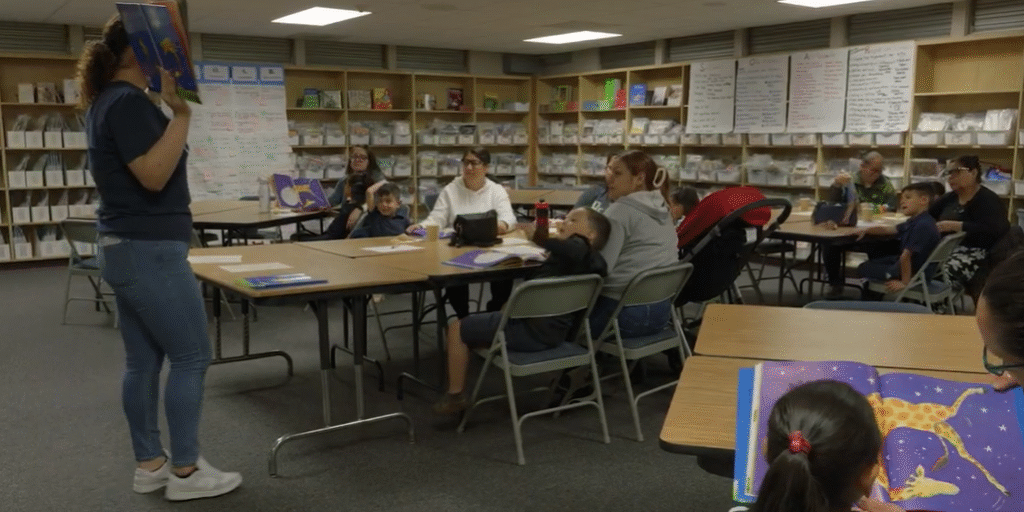
There are numerous opportunities to teach this philosophy in daily life. Cooking turns into a chemistry, measurement, and observational science experiment. An outdoor stroll transforms into a biology lesson, revealing the interplay between ecosystems. Because they seamlessly integrate learning into daily life, these moments are especially advantageous. As opposed to being a chore to be accomplished, the process normalizes curiosity as a component of identity.
Teaching emotional resilience—the capacity to fail gracefully and bounce back fast—is equally important. Youngsters who realize that errors are opportunities rather than failures grow to be incredibly self-assured. They gain flexibility and resourcefulness when they try a puzzle more than once or modify a project after failing. Acknowledging their perseverance rather than the outcome fosters character that endures longer than any academic achievement.
Engagement is noticeably higher in schools that use curiosity-driven frameworks. For instance, the Chaman Bhartiya School in Bangalore transforms straightforward inquiries into in-depth research using inquiry-based learning. Wonder Wednesday and other weekly curiosity sessions turn natural wonder into organized learning by encouraging students to investigate subjects like pollination and thunder. This method has shown to be especially creative and inventive in fostering independent thought.
Nonetheless, parents continue to be at the forefront of this movement. The founders of Stanford University’s Designing Your Life program, Bill Burnett and Dave Evans, suggest that families use experimentation to set an example for lifelong learning. They contend that children internalize the idea that learning is about progress rather than perfection when parents embrace small victories, freely try new pastimes, and acknowledge their ignorance. Children, who naturally mimic what they see, can clearly see this modeling of curiosity and humility.
Complexity is increased by technology. Though passive scrolling can stifle curiosity, children now have access to information never before possible. True learning, experts stress, comes from interacting with data—questioning, testing, and creating—rather than merely consuming it. A balanced strategy that fosters curiosity both digitally and physically is provided by structured screen time and outdoor exploration.
The significance of emotional agility in learning is further supported by McKinsey research. They found that curiosity, self-awareness, resilience, purpose, connection, adaptability, and vitality are the seven key characteristics of lifelong learners. A cycle of ongoing personal growth is created as each quality feeds the one before it. These characteristics enable people to learn new skills much more quickly and collaborate and innovate more effectively in a professional setting.
Disclaimer
Nothing published on Creative Learning Guild — including news articles, legal news, lawsuit summaries, settlement guides, legal analysis, financial commentary, expert opinion, educational content, or any other material — constitutes legal advice, financial advice, investment advice, or professional counsel of any kind. All content on this website is provided strictly for informational, educational, and news reporting purposes only. Consult your legal or financial advisor before taking any step.
