

Although education has always changed to meet the demands of society, emotional learning is a particularly novel development that reinterprets what it means to be educated. Previously, schools used essays and mathematics to gauge students’ intelligence, but today they teach something much more complex: how to recognize, control, and communicate human emotion. The emergence of emotional learning, also known as social and emotional learning or SEL, is a societal shift that is incredibly successful in influencing the next generation. It is not only an intellectual fad.
The idea dates back to the 1960s, when Yale professor Dr. James Comer postulated that a child’s emotional milieu had a significant impact on their academic performance. His method acknowledged that education was impossible without emotional stability and linked the home and school. That realization was formalized decades later in 1994 with the establishment of CASEL, which signaled the beginning of a concerted effort to make emotional learning a core component of education.
More than half of the states in the United States currently have SEL programs in place. The Learning Policy Institute claims that these initiatives greatly boost student behavior, increase academic results, and improve school climates in general. It’s a very evident example of research having practical implications. Once thought to be “soft,” emotional intelligence has shown out to be a hard indicator for success in life, impacting mental health, civic participation, and employability.
| Information Type | Details |
|---|---|
| Central Topic | How Emotional Learning Became the New Core Curriculum |
| Featured Expert | Dr. Stephanie M. Jones |
| Position | Professor of Childhood Development and Education |
| Institution | Harvard Graduate School of Education |
| Key Contributor | Collaborative for Academic, Social, and Emotional Learning (CASEL) |
| Concept Focus | Social and Emotional Learning (SEL) |
| Origin Year | 1994 (CASEL founded) |
| Core Competencies | Self-Awareness, Self-Management, Social Awareness, Relationship Skills, Responsible Decision-Making |
| Key Research Source | Learning Policy Institute – https://learningpolicyinstitute.org |
| Public Impact | Enhanced student well-being, improved academic outcomes, and stronger mental health awareness |
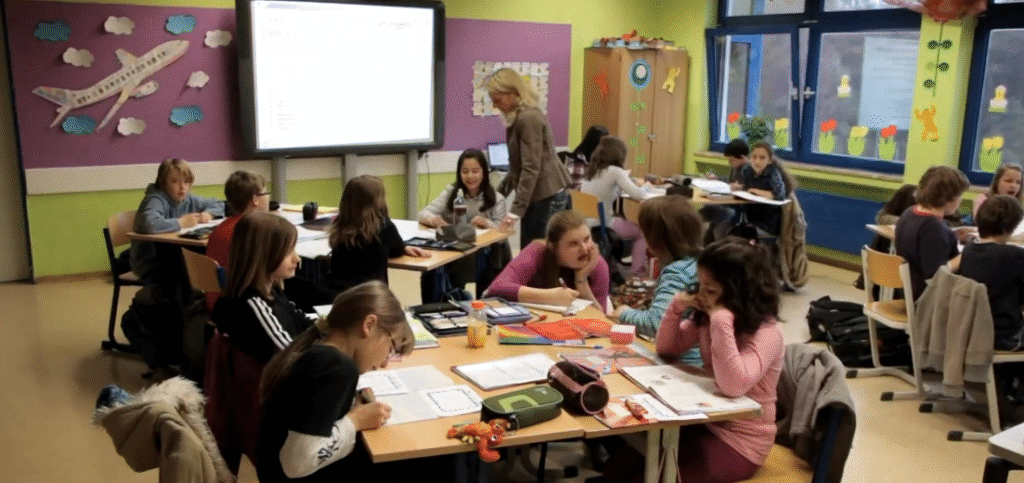
One of the most vocal supporters of SEL has been Dr. Stephanie M. Jones of Harvard. According to her, emotional learning works similarly to “a hidden curriculum for life.” In addition to teaching emotional management, schools are fostering human adaptability by assisting kids in navigating disappointment, teamwork, and empathy. Based on decades of developmental psychology, her work has been incredibly successful in persuading politicians that compassion education can improve test scores just as much as tutoring ever could.
Crucially, during and after the epidemic, there was a remarkable surge in support for emotional learning. Teachers and students alike faced an emotional crisis that academic resources alone were unable to resolve when schools were closed. Stress, worry, and loneliness were exacerbated by isolation. Teachers started making writing, mindfulness exercises, and “calm rooms” part of their everyday routines—not as extravagances, but as necessities. This change was made possible by federal relief money, which gave districts the ability to recruit social workers and create initiatives that were especially focused on restoring emotional resilience.
According to grit researcher Angela Duckworth, perseverance without emotional control is like “running on broken legs.” The reason emotional learning has become essential is explained by that analogy. In addition to being better intellectually, students who understand how to deal with failure are also more likely to stick with their studies, work well with others, and perform well under duress. This change is especially advantageous because it emphasizes how emotional intelligence is the foundation of all success metrics.
However, there has been some controversy surrounding the movement. SEL is criticized for allegedly incorporating social ideas into education, particularly in places with polarized political systems. A number of laws have sought to limit or reinterpret its wording, claiming that conversations about empathy or emotions deviate from conventional academic discourse. National surveys, however, present a different picture. According to the Fordham Institute, more than 90% of parents are in favor of teaching their kids communication, empathy, and emotional self-control, even though many would rather use phrases like “life skills” or “character education.”
This semantic gap highlights an intriguing paradox: almost everyone thinks that emotional learning is beneficial, but there is disagreement over the term for it. “Parents teach these values every day—they just don’t realize schools call it SEL,” says Dr. Adam Tyner, head of research at Fordham. Because it draws from the universal human experience of coexistence, cooperation, and caring, it is a very resilient concept.
The evidence supporting SEL’s efficacy is especially strong. Students who take part in structured SEL programs have fewer behavioral issues and greater academic engagement, according to studies released by the Learning Policy Institute. Across demographics, meta-analyses covering hundreds of classes show medium to large favorable effects. Since educational interventions rarely exhibit this consistency, SEL is among the most academically supported changes in contemporary education.
Teachers also gain a great deal. Teacher well-being has significantly increased as a result of programs that emphasize self-awareness and mindfulness, which has decreased turnover and burnout. It serves as a reminder that emotional intelligence is an essential talent for instructors handling the day-to-day complexity of human relationships, not only for pupils. According to the American Psychological Association, fostering teachers’ emotional competency has a cascading effect that results in classrooms that are calmer, more compassionate, and do better academically.
Celebrity supporters have contributed to the transformation of emotional learning from a specialized academic field into a popular culture. As part of her Reach Higher campaign, Michelle Obama has emphasized the value of teaching compassion and empathy on numerous occasions. Calling emotional literacy “the truest form of empowerment,” Oprah Winfrey has funded trauma-informed education initiatives that incorporate it into classrooms. Pop culture has also adopted this strategy, with children’s shows, podcasts, and television programs increasingly highlighting empathy, collaboration, and mindfulness as qualities of intelligence rather than weakness.
Surprisingly, technology has also been extremely important. Teachers may now monitor students’ emotional development in addition to their academic progress thanks to digital platforms like Mosaic by ACT. These technologies evaluate communication, teamwork, and engagement, providing teachers with real-time insights to assist them modify their classes for emotional preparation. Schools are using analytics to transform empathy into quantifiable progress, making emotional growth as measurable as mathematical ability.
Disclaimer
Nothing published on Creative Learning Guild — including news articles, legal news, lawsuit summaries, settlement guides, legal analysis, financial commentary, expert opinion, educational content, or any other material — constitutes legal advice, financial advice, investment advice, or professional counsel of any kind. All content on this website is provided strictly for informational, educational, and news reporting purposes only. Consult your legal or financial advisor before taking any step.
