

Simulation labs, which blur the line between reality and replication, are reshaping medical education instead of textbooks or lecture halls. Aspiring physicians practice operations that feel as authentic as an emergency room at midnight in these painstakingly created settings, yet here, a mistake becomes a lesson rather than a catastrophe. These labs have developed into the melting pot where empathy, technology, and knowledge meet.
For many years, medical education was based on two extremes: actual patients and textbooks. Both had risks and limitations, but they both provided priceless value. That gap has been skillfully closed by the development of simulation labs. Now, students can repeatedly perform complex procedures, give injections, or perform cardiac resuscitation until their movements become automatic. Not only is the approach incredibly successful, but it also fosters confidence before competence meets consequences.
This development is best illustrated by Dr. Gabo Arora’s Lightshed.Health program at organizations such as Johns Hopkins University. Students see realistic circumstances with virtual patients that react, respond, and even emote when mixed reality is incorporated into simulation instruction. Despite taking place in a digital world, the encounter feels incredibly human. Teaching empathy—something no textbook can replicate—benefits greatly from this blend of technological accuracy and emotional realism.
Additionally, simulation labs are changing the definition of “practice.” They expose students to uncommon and important situations that they might not come across in a typical rotation. Learners must handle uncertain situations that require both technical competence and great judgment, such as trauma triage and obstetric emergency. It’s a very obvious educational philosophy that values preparedness over repetition and fortitude over rote knowledge.
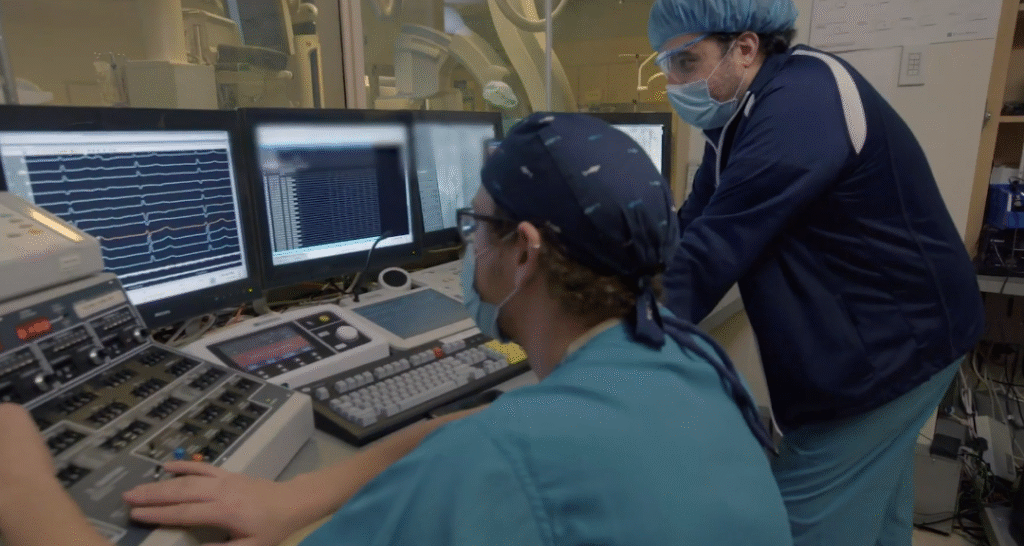
These encounters are now more immersive because to developments in virtual and augmented reality. Trainees can sense the tiny tremor of a failing heart, the resistance of tissue, or the pulse beneath a needle thanks to haptic feedback. These days, AI-powered simulations evaluate each student’s response in real time, increasing in complexity as their skill level increases. The teaching becomes extremely flexible, adaptable enough to challenge even the most experienced residents and customized to each learner’s unique learning curve.
The combination of mixed reality and AI is “a shift from passive learning to active, empathetic engagement,” according to healthcare AI expert Dr. Harvey Castro. The spirit of this movement is encapsulated in his words. Simulation labs develop a generation of professionals with the ability to think clinically and feel empathy by fusing human sensitivity with technological precision. Medical graduates’ cautious, cooperative, and remarkably composed handling of actual crises already demonstrates the effects of this strategy.
Surgeons and critical care professionals are not the only ones who can benefit from simulation-based learning. The methodology is being adopted by emergency responders, nursing schools, and even administrative healthcare initiatives. Nursing students can experience life-threatening scenarios at Michigan Medicine’s Clinical Simulation Center without really running the danger of getting hurt. At the University of Arizona Health Sciences, simulation rooms imitate whole hospital departments, putting communication and teamwork to the test just as much as procedural knowledge.
The outcomes are quantifiable. Simulation-based training dramatically lowers clinical errors and improves long-term memory of procedural skills, according to National Institutes of Health studies. During emergencies, students who receive training in high-fidelity labs demonstrate noticeably better decision-making skills and quicker reaction times. More significantly, they exhibit improved empathy and communication skills, which are necessary for both healing and curing.
Additionally, simulation labs have shown themselves to be very effective educational initiatives. Without the unpredictability of clinical exposure, a single high-fidelity simulator can be utilized hundreds of times to provide reliable learning chances. When combined with AI, these systems offer ongoing feedback loops that improve performance metrics by tracking verbal communication, stress reactions, and gaze patterns. This progression reflects the accuracy of aviation training, where flight simulators were essential before pilots even set foot in a cockpit.
An additional level of sophistication is being added by wearable technology. During simulations, devices measure heart rate, sweat, and reaction time, providing teachers with quantifiable information regarding student participation. Teachers can pinpoint stress sites and customize solutions by examining these physiological indicators. This approach is quite effective in teaching students how to control their emotions, which is an important but frequently disregarded aspect of medical professionalism.
What distinguishes contemporary simulation from previous models is its emotional realism. Trainees follow a patient from diagnosis to discharge in projects like Arora’s “Mr. Jones” scenario, where they engage with worried family members and encounter moral conundrums that mimic actual practice. It is a method that greatly humanizes technical instruction by fusing science and storytelling. In addition to being more proficient, students also become more self-aware, which is uncommon in a field that is sometimes overburdened by time and stress.
Accessibility concerns are also being addressed by virtual reality simulations. Medical students in underprivileged areas can now receive top-notch instruction without the infrastructure of large hospitals thanks to cloud-based solutions that enable remote participation. By traveling to rural locations, mobile simulation units—basically, hospitals on wheels—bring advanced education to pupils who might not otherwise have access to such equipment. These models are very creative in extending medical education’s worldwide reach.
The business community has noticed. Universities are working with businesses like HealthySimulation.com and Education Management Solutions (EMS) to incorporate VR modules, AI analytics, and standardized curricula. Through this partnership, future medical professionals from a variety of backgrounds will receive training that meets consistent quality standards. It’s a subtle but significant move in the direction of medical education equity.
All of this also has a philosophical component. Simulation labs represent a change in how failure is viewed in medicine. Where a mistake was once dreaded, it is now examined, practiced, and fixed until mastery is achieved. The procedure fosters confidence and humility, two qualities that are becoming more and more important in a time of
Disclaimer
Nothing published on Creative Learning Guild — including news articles, legal news, lawsuit summaries, settlement guides, legal analysis, financial commentary, expert opinion, educational content, or any other material — constitutes legal advice, financial advice, investment advice, or professional counsel of any kind. All content on this website is provided strictly for informational, educational, and news reporting purposes only. Consult your legal or financial advisor before taking any step.
