

The moment when one of the biggest tech companies in the world decides to give a $135 million check to the very people whose phones it was allegedly using against them is almost quietly remarkable. Not dramatically, not with real-time headlines flashing across screens, but subtly, in the background, as those same phones lounged on American office desks and kitchen counters.
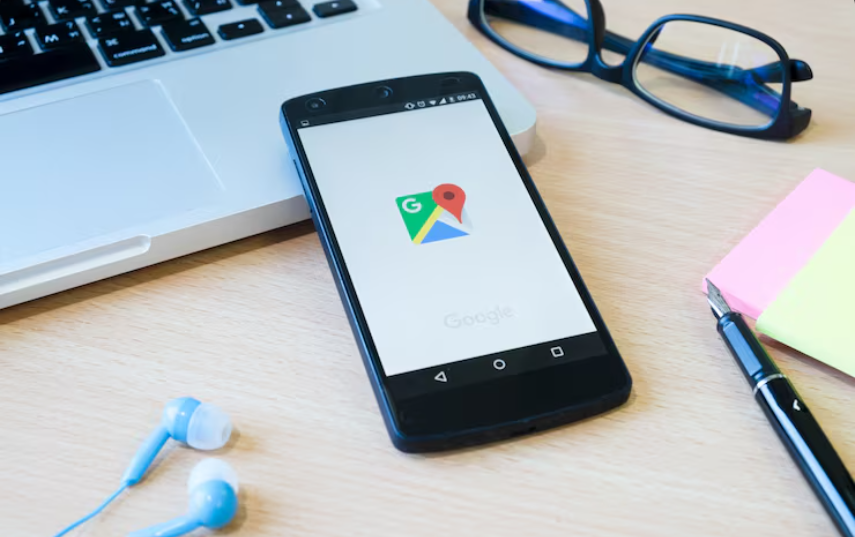
The class action lawsuit Taylor v. Google LLC essentially boiled down to that. In order to address allegations that it used Android devices to send data to its servers without users’ consent, using their cellular data in the process, Google agreed to a $135 million settlement.
| Case Name | Taylor, et al. v. Google LLC — Case No. 5:20-cv-07956-VKD |
| Court | U.S. District Court, Northern District of California |
| Settlement Amount | $135 million |
| Google’s Position | No admission of wrongdoing |
| Eligible Users | Approx. 100 million U.S. Android users |
| Eligibility Period | November 12, 2017 — date of final court approval |
| Maximum Individual Payout | $100 per person |
| Estimated Average Payout | ~$1 to $1.50 per person |
| Objection/Exclusion Deadline | May 29, 2026 |
| Final Approval Hearing | June 23, 2026 |
| Administrator Contact | 1-844-655-4255 |
| Official Settlement Website | www.FederalCellularClassAction.com |
| Excluded Parties | Class members in Csupo v. Google LLC (California-specific case) |
| Post-Settlement Obligation | Google must update its Help Center and certain Android setup screens |
Top-Rated Activities For its part, the business has denied any misconduct; at this point, this denial seems almost scripted. However, the settlement is in place. The funds are genuine.
The plaintiffs’ attorneys claimed that these transfers occurred even when phones were not in use and that Google could have waited for a Wi-Fi connection to transfer this data, but instead opted to use cellular data. TechRepublic The thing that stings a little is the decision to use cellular data instead of Wi-Fi.
It implies deliberateness, which is completely different from carelessness. Google may have had technical issues that were never disclosed to the public. However, it’s also possible that user cost was just subordinated to the ease of continuous connectivity.
According to José Castaneda, a spokesman for Google, the company is “pleased to resolve this case, which mischaracterized standard industry practices that keep Android safe,” and it will make more disclosures to help people understand how its services operate. NBC Chicago The term “standard industry practices” is carrying a lot of weight.
It’s the type of language that doesn’t acknowledge anything and provides little explanation. There’s a certain déjà vu feeling when these corporate statements are released following settlements. The words are altered. Seldom does the structure.
Approximately 100 million users may be included in the class, and although $135 million is a substantial sum, it must be distributed in a number of ways. The remaining funds will be distributed among qualified class members after legal fees, administrative expenses, and taxes are covered. Individual payouts may be small, perhaps between $1 and $1.50 per person, according to early estimates. TechRepublic That figure is almost purposefully unimpressive.
The majority of people will shrug when they hear it. In Manhattan, a minute of parking is hardly worth a dollar and change. However, the justification for taking part is not so much about the money as it is about the act of claiming it, which is a brief, official statement that something occurred here and you were involved.
The eligibility requirements are quite broad in order to be eligible. A class member must be a natural person in the United States who used an Android-powered mobile device with a cellular data plan at any point between November 12, 2017, and the date the settlement is finalized.
They cannot be a class member in the related California lawsuit, Csupo v. Google LLC. ClassAction.org. The final requirement is crucial: double-dipping is not an option, and California had its own parallel case with a $350 million settlement.
A notice ID and confirmation code were sent by mail or email to those involved in the claim; individuals who are uncertain about their eligibility may call the settlement administrator at 1-844-655-4255. NBC Chicago If this is new to you, it would be worthwhile to check your email inbox from a few weeks ago. Since most of the stuff that ends up in that folder is junk mail, it makes sense that many people would discard the notice. However, this one was real.
The settlement administrator may redistribute any money that is left over after distribution to class members who have already received successful payments; if this is not economically feasible, the money will be given to a court-approved organization. Top-Rated Activities The practical outcome of class action settlements is fairly straightforward: register before the deadline, and if approved, something will be sent electronically. However, the mechanics can seem complicated. Not transformative. but in the present.
The deadline for objections or exclusion from the settlement is May 29, 2026, and the final approval hearing is scheduled for June 23, 2026. NBC Chicago In other words, there is still time. There isn’t much, but enough for a Sunday afternoon reader to access the settlement website and spend the necessary few minutes. It’s the kind of thing that seems simple to put off, but all of a sudden it’s too late.
Apart from the specific money and deadlines, there’s a bigger picture to consider. Despite their flaws, cases like this one—wide-ranging, sluggish, and nearly undetectable until the settlement announcement—are among the few ways to challenge the size of corporations like Google.
Each person receives a small payout. The sum isn’t. Additionally, the fact of settlement speaks its own language, regardless of what Google publicly says about standard practices. This was worth paying to get rid of, it says. It is up to judges and attorneys to determine whether that implies guilt. However, it has significance.
It’s difficult to ignore how well this fits into a longer pattern. Large user base, background data behavior, class action, settlement, big tech, and no acknowledgement of fault. Now, the script is practically familiar. How many people will actually claim what they’re owed this time, and whether that number is large enough to make future data decisions feel slightly more expensive than before, are the less well-known and potentially more significant stories.
Disclaimer
Nothing published on Creative Learning Guild — including news articles, legal news, lawsuit summaries, settlement guides, legal analysis, financial commentary, expert opinion, educational content, or any other material — constitutes legal advice, financial advice, investment advice, or professional counsel of any kind. All content on this website is provided strictly for informational, educational, and news reporting purposes only. Consult your legal or financial advisor before taking any step.
