

The idea that running on two legs—something that feels so uniquely human—was tried, abandoned, and reimagined long before mammals even found their footing is subtly unsettling. Scattered bones in the dusty quarries of Germany and the fossil beds of Arizona point to an ongoing evolutionary experiment. It seemed as though nature kept asking itself the same question over and over: what if speed required balance rather than stability?
At first glance, Eudibamus cursoris’s skeleton, which is hardly longer than a sheet of paper, doesn’t appear dramatic. However, the proportions convey a different message. A tail extended like a counterweight, short forelimbs, and long hind legs. There’s a feeling that these creatures weren’t just walking—they were testing something—when you stand in a museum gallery and gaze at their reconstructions. He shifted his weight, leaned forward, and nearly fell into motion. We might be witnessing a trial moment rather than a stable design.
| Category | Details |
|---|---|
| Topic | Evolution of Bipedalism in Prehistoric Reptiles |
| Time Period | Permian to Late Triassic (≈290–216 million years ago) |
| Key Species | Eudibamus cursoris, Sonselasuchus cedrus |
| Discovery Locations | Germany, Arizona (Petrified Forest National Park) |
| Key Traits | Long hind limbs, short forelimbs, strong tail muscles |
| Evolutionary Insight | Bipedalism evolved multiple times independently |
| Scientific Contributors | University of Alberta, University of Washington |
| Reference Link 1 | ScienceDaily – Evolution of Bipedalism |
| Reference Link 2 | IFLScience – Crocodile Ancestor Discovery |
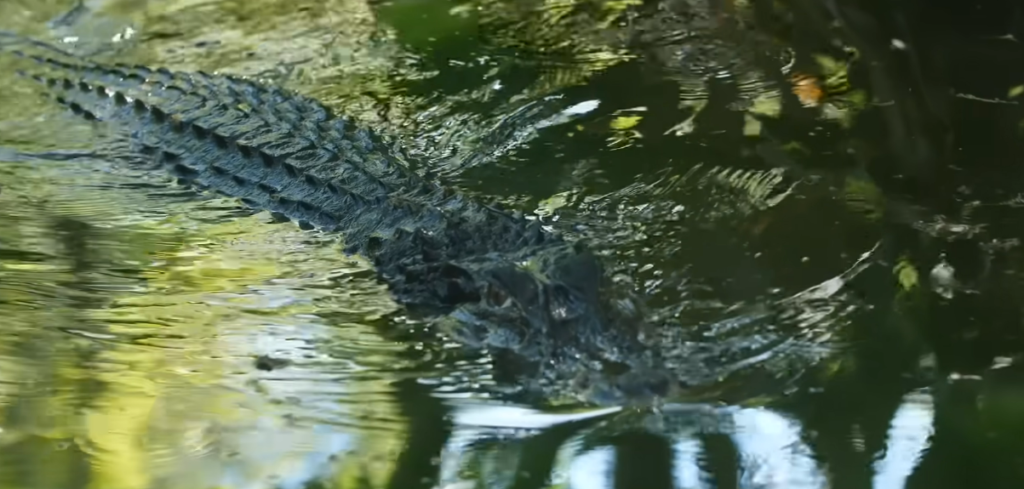
The early occurrence of this change is noteworthy. Some reptiles were already experimenting with upright locomotion some 290 million years ago, long before dinosaurs took over the landscape. It’s not perfect or permanent, but it’s sufficient to imply pressure or intent. Predators moved more quickly. Environments were evolving. Standing up became helpful at some point during that tension.
There is a propensity to believe that evolution proceeds in a straight line, with each form becoming better than the previous. These fossils, however, defy that tidy explanation. Certain species, such as the crocodile-line reptile that was later given the name Sonselasuchus, seem to have had four legs at birth and only switched to two as they grew older. That particular detail seems strangely familiar. Growth is both enlargement and transformation. It’s difficult to ignore remnants of that ancient behavior when observing contemporary animals, such as lizards darting across hot stone and momentarily lifting onto their hind legs.
This shift’s mechanics are surprisingly physical. Early bipedal movement appears to have been powered by powerful tail muscles that functioned almost like a hidden engine. Although it doesn’t receive much attention outside of scholarly publications, this detail alters the scene’s appearance. These weren’t clumsy, unsteady beings. They were driven, balanced, and nearly streamlined. The tail wasn’t ornamental. Infrastructure was involved.
The issue of speed comes next. Longer strides from longer hind limbs allowed for quicker pursuit or escape. Interestingly, though, not all of these early bipeds were hunters. The typical narrative is complicated by the fact that some were plant-eaters. They were probably running from something if they weren’t pursuing prey. There’s a feeling that evolution may have advanced here more out of fear than ambition.
Why this tactic didn’t work for every lineage is still unknown. For example, mammals never adopted bipedal sprinting to the same extent. Despite being designed for speed, horses and cheetahs still have four legs. There is a subterranean explanation, at least in part. Strong forelimbs and shorter tails were preferred by early mammalian ancestors as they adapted to burrowing. It’s possible that this decision, which was made more than 250 million years ago, silently blocked a different evolutionary route.
It’s simple to picture these animals moving through dense forests, swerving between conifers, and changing their bodies as they accelerated when you’re standing in a reconstructed prehistoric landscape, at least in your mind. Something in between crocodiles and dinosaurs. uncertain, experimental, and transitional. There’s a sense that evolution was more concerned with surviving in the present than with perfection.
The frequency with which similar solutions emerged in various groups is startling. Beak-like features, hollow bones, and bipedalism all evolved separately in different lineages. It implies that some ecological pressures consistently led to the same conclusions. Physics has a plan, not evolution. Energy efficiency, balance, and weight distribution are all fixed constraints.
Observing this pattern develop over millions of years serves as a silent reminder that things that seem unique are frequently not. Yes, humans walk on two legs. However, we’re not the first to attempt it. Not even near. We are a part of a long, uneven history of creatures experimenting with what works, discarding what doesn’t, and sometimes stumbling upon something enduring.
Disclaimer
Nothing published on Creative Learning Guild — including news articles, legal news, lawsuit summaries, settlement guides, legal analysis, financial commentary, expert opinion, educational content, or any other material — constitutes legal advice, financial advice, investment advice, or professional counsel of any kind. All content on this website is provided strictly for informational, educational, and news reporting purposes only. Consult your legal or financial advisor before taking any step.
