

It’s simple to consider bones to be silent—just a framework for movement. However, an increasing amount of evidence indicates that our bones may be remarkably expressive in how they affect our memories, emotions, and even fear, despite their hard appearance. By delivering strong biochemical signals to the brain, rather than directly storing memories.
A protein known as osteocalcin lies at the heart of this tale. It is secreted by cells that make bones and functions more like a hormone with effects that extend well beyond the skeleton than a structural consequence. Dr. Gérard Karsenty was initially interested in bone density when he started researching osteocalcin about twenty years ago. Instead, he discovered a multi-system communicator with both physiological and psychological impacts.
In addition to experiencing metabolic problems, osteocalcin-deficient mice also showed signs of anxiety, social disengagement, and difficulty with basic memory skills. Their behavior significantly improved after receiving an osteocalcin injection. They became more relaxed. They did additional exploring. They performed noticeably better on tests of spatial memory. These discoveries were revolutionary, not simply fascinating.
| Concept | Detail |
|---|---|
| Key hormone | Osteocalcin – produced by bone cells |
| Role of osteocalcin | Influences memory, mood, and cognitive performance |
| Communication path | Bone-to-brain via blood; osteocalcin crosses blood-brain barrier |
| Key brain regions affected | Amygdala (emotion), Hippocampus (memory), possibly others |
| Notable animal model findings | Mice without osteocalcin showed anxiety, memory issues, and low fertility |
| Human correlation (tentative) | Two men with osteocalcin receptor mutation were infertile and glucose-insensitive |
| Implication for aging | Bone mass decline may relate to memory loss, anxiety, or depression |
| Core idea | Bones don’t store emotional memories—but help regulate how they are formed and felt |
| Reference study | Gérard Karsenty et al., published in Cell (2025) |
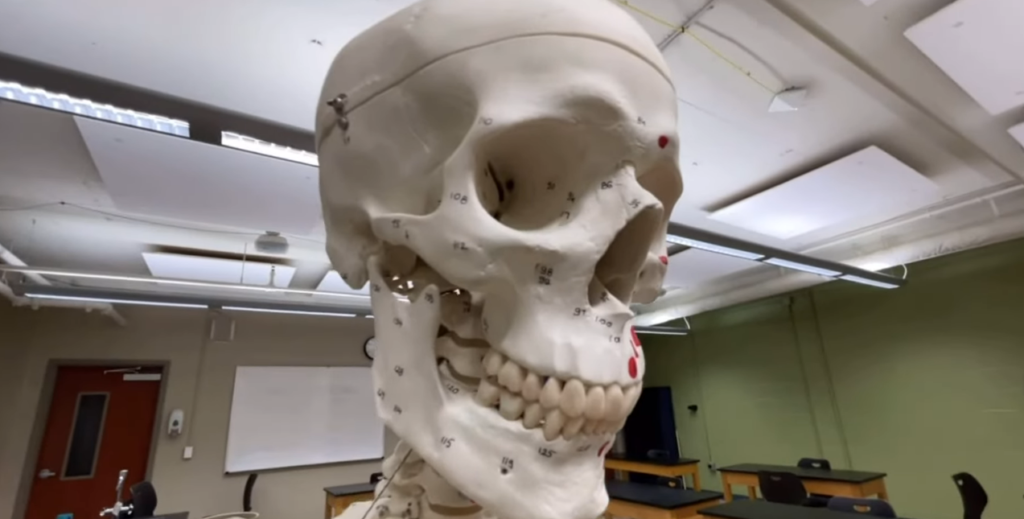
This tiny protein enters the brain and interacts with key areas that process emotions and memories, such as the hippocampus and amygdala. The foundation of our mental and emotional timelines is made up of these areas, which have long been known to anchor emotionally charged memories. However, the way that osteocalcin affects them changes our perspective on how the body and mind interact.
Osteocalcin transcends its role as a messenger by influencing the neurotransmitter systems of dopamine, serotonin, and GABA. It modulates the registration and retrieval of emotional memories. It now seems that bones have an active role in the brain’s processing of meaning, memory, and mood rather than just a passive frame.
The fact that osteocalcin levels appear to affect embryonic brain development is very intriguing. Maternal osteocalcin helps mold the neural architecture of the offspring in mice by crossing the placenta. That detail lingered in my mind for days; it was personal and strangely reassuring to think that something in my mother’s skeleton might have shaped my future perceptions of joy or dread.
This research’s connection between emotional resilience and physical deterioration is particularly noteworthy. Osteocalcin levels decline with age along with bone mass. This is in line with older persons’ heightened vulnerability to anxiety, sadness, and memory loss. These aren’t merely distinct aging symptoms; they might be linked biologically. This kind of thinking changes the way we think about osteoporosis, making it seem like a silent cause of cognitive decline as well as a threat to mobility.
The ramifications go beyond mouse models. Similar to the results observed in mice, two male humans with a genetic mutation that inhibits osteocalcin signaling were found to be infertile and to have trouble regulating their blood sugar levels. The genetic similarity is particularly strong, even if the emotional implications in people are still being studied.
Long praised for its positive effects on mental health, exercise may have some bone-related benefits. Exercise promotes bone health, which increases the synthesis of osteocalcin. We might be enhancing our emotional and cognitive resilience by fortifying the skeleton. The statement isn’t a metaphor. Physiology is that.
It’s hopeful that this research may lead to the development of new medicines. Consider a skeletal hormone that is used to treat mild depression or early-stage memory loss. Though still hypothetical, this is a route that is being actively pursued. Such therapies may be both incredibly efficient and unexpectedly gentle because they target a material that the body naturally produces.
Osteocalcin isn’t a panacea, researchers warn. It is a single actor in a complicated neurological and hormonal network. However, its function is very specialized and challenging to duplicate. When osteocalcin is eliminated in mice, no other hormone appears to be able to make up for it. No system can completely fill the gap left by its absence.
Many scientists now view the body as a system of reciprocal talks rather than as a collection of separate organs. Karsenty once observed, “No organ is an island,” and it seems especially applicable in this situation. It makes sense that the skeleton would react if the brain sent signals to it.
We still have a lot of questions. Is it possible to employ osteocalcin therapeutically in humans without experiencing adverse effects? Does it have a different effect on men and women? Which other tissues could be a part of this signaling loop? These are not pointless inquiries. They hint at a time when mental health treatment might develop both from the neck up and from the neck down.
Nevertheless, a more comprehensive and more effective ecology of the body is beginning to take shape. Once thought to be static, bones now play a dynamic role in mental life. By controlling the brain’s emotional filters rather than storing feelings, their subliminal cues influence how we perceive the present and understand the past.
This finding offers some hope to those of us negotiating the difficult terrain of aging, stress, or trauma. It serves as a reminder that resilience can be developed literally in the bone marrow as well as in the mind.
Disclaimer
Nothing published on Creative Learning Guild — including news articles, legal news, lawsuit summaries, settlement guides, legal analysis, financial commentary, expert opinion, educational content, or any other material — constitutes legal advice, financial advice, investment advice, or professional counsel of any kind. All content on this website is provided strictly for informational, educational, and news reporting purposes only. Consult your legal or financial advisor before taking any step.
