

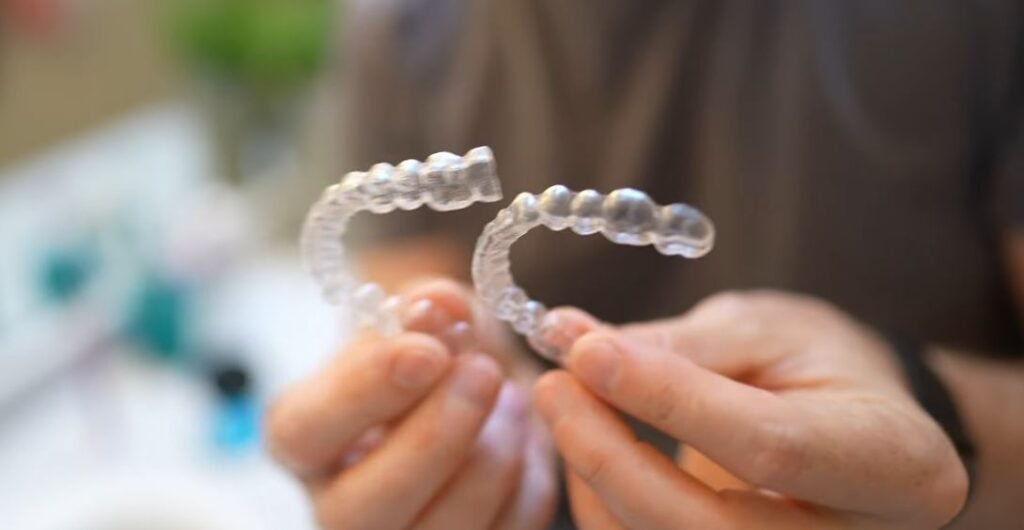
The intense accusations made against Align Technology, the manufacturer of the well-known Invisalign transparent aligners, have drawn national attention to the Invisalign Class Action Lawsuit. According to the lawsuit, the business entered into an anticompetitive contract with SmileDirectClub, which reportedly increased rates while reducing the number of options available to customers looking for reasonably priced smile correction.
Align Technology Inc. is accused of breaking antitrust laws by dividing the market, according to the case Snow v. Align Technology Inc., which was filed in the U.S. District Court for the Northern District of California. By agreeing not to directly compete in the consumer aligner market, SmileDirectClub was able to maintain its dominance and high prices. Align obtained a minority ownership and a portion of SmileDirectClub’s earnings in return; plaintiffs contend that this arrangement was intended to stifle free competition.
| Category | Information |
|---|---|
| Company | Align Technology, Inc. |
| Product | Invisalign Clear Aligners |
| Lawsuit | Snow v. Align Technology Inc. |
| Allegation | Antitrust violations and price-fixing conspiracy |
| Settlement Amounts | $27.5 million (2024) and $31.75 million (2025) |
| Eligible Consumers | Purchasers of SmileDirectClub aligners between Oct. 22, 2017 – Aug. 18, 2022 |
| Estimated Payout | $25–$60 or up to $6,000 in documented losses |
| Filing Deadline | October 27, 2025 |
| Final Hearing Date | November 20, 2025 |
Align reached a $27.5 million settlement in April 2024 and a $31.75 million settlement in July 2025, both of which are pending final court approval. Compensation may be awarded to qualified customers who bought or repaid SmileDirectClub aligners between October 22, 2017, and August 18, 2022. Most class members receive payments between $25 to $60, while individuals who have confirmed losses may be eligible to receive up to $6,000.
These settlements have been seen as incredibly successful attempts to hold large dentistry corporations responsible. The most recent arrangement substituted an all-cash incentive scheme for previous proposals that included product vouchers, which the judge condemned for possibly strengthening Align’s purported monopoly.
Despite Align’s denials of any misconduct, court files and documentation show a common trend in the field of digital dentistry: innovation closely linked to market dominance. The San Jose-based business has long controlled the orthodontic aligner market thanks to its incredibly effective blend of in-house scanning and aligner technologies. Its iTero intraoral scanners, which digitally map patients’ teeth, are frequently linked to Invisalign procedures, which detractors claim excludes rivals and drives up prices for both patients and dentists.
Experts in the field say the lawsuit is especially important because it highlights the conflict between innovation and accessibility in addition to its substantial financial value. Align’s hold on digital orthodontics has sparked serious debate about how much power one business should have over a crucial customer service, much like what Apple faced with app distribution or what Google faced with search engine dominance.
The function of SmileDirectClub adds even more intricacy. Once hailed as a trailblazer for introducing orthodontics into the era of telehealth, the business abruptly shut down operations in December 2023 after declaring bankruptcy. These cases and its demise serve as a warning about the tech-driven health sector, where effective governance frequently lags behind rapid expansion.
The action serves as a warning to consumers about the price of convenience, in addition to a monetary settlement. Accessibility and aesthetics have long been the main draws of clear aligners, but the absence of competition may have subtly weakened those claims. According to court documents, Align’s internal tactics made sure SmileDirectClub stayed its “partner, not rival,” so eliminating any significant competition in an industry that was expanding quickly.
Consumer rights activists have criticized Align for maintaining pricing control and brand prestige by taking advantage of market exclusivity. Legal scholars have pointed out that this structure hindered consumers’ capacity to look for less expensive options and drastically decreased chances for smaller businesses.
Additionally, the case is indicative of a larger trend in healthcare litigation: consumers are becoming more capable of opposing tech-driven monopolies. Similar to class actions involving medical devices or pharmaceutical price-fixing lawsuits, the Invisalign case demonstrates how digital healthcare ecosystems can hide restrictive agreements under layers of branding and innovation.
The leadership of Align has continuously underlined the company’s dedication to moral business conduct. The business maintains that its settlements are intended to be strategic agreements to put a stop to expensive litigation, not as confessions of guilt. However, detractors contend that the company’s economic model has a deeper structural problem that emphasizes control above accessibility, as evidenced by the recurring antitrust investigation across several instances.
Despite being relatively modest in terms of money when compared to other industry cases, the class action settlements have already significantly increased market transparency for dental technology. In order to give orthodontists more freedom in choosing aligner brands and increase consumer choice, rival businesses are starting to invest in highly adaptable open-platform scanners and AI-based modeling systems.
The use of celebrity endorsements has also been reexamined. Actors and influencers have marketed Invisalign as a lifestyle enhancement rather than a medical treatment for the last ten years. Many of those same sponsorships are now under fire for possibly hiding exclusivity or cost-manipulation tactics. The public now views Invisalign as a case study of corporate domination cloaked in digital sophistication, rather than as a slick cosmetic invention.
This lawsuit is seen by consumer advocates as an especially creative time for health technology accountability. It establishes a standard for openness in sectors where technology and personal health converge by making big players face the moral ramifications of their alliances.
Complete guidelines for qualified claimants to submit their applications by October 27, 2025, are available on the official settlement website, sdcalignersettlement.com. Claimants who have evidence of purchase can mail paper forms or upload supporting paperwork online. November 20, 2025 is the date of the final approval hearing; payments will be made following court confirmation.
According to legal experts, this case may change the orthodontics industry’s financial environment for years to come. Breaking exclusive contracts could lead to the emergence of new rivals, which would lower costs and significantly increase patient access to cutting-edge dental care. For consumers, the settlement is a little but incredibly clear reminder that innovation should empower rather than exploit—it is a symbol of justice and progress.
Disclaimer
Nothing published on Creative Learning Guild — including news articles, legal news, lawsuit summaries, settlement guides, legal analysis, financial commentary, expert opinion, educational content, or any other material — constitutes legal advice, financial advice, investment advice, or professional counsel of any kind. All content on this website is provided strictly for informational, educational, and news reporting purposes only. Consult your legal or financial advisor before taking any step.
