

A Harvard undergraduate started creating what would eventually become the most powerful social network in the world while sitting in his Kirkland House dorm room in the fall of 2003. He required cash. To be honest, he didn’t understand business, so he needed someone who did. He discovered both in his friend Eduardo Saverin, an economics student from a wealthy family who was born in Brazil. Saverin was well-known on campus for wearing a suit and tie to class and for having made $300,000 in oil futures by forecasting hurricane patterns when he was still a teenager. Saverin appeared to be the ideal individual to assist in transforming a promising concept into a successful business.
The 2009 settlement that closed the legal chapter of one of Silicon Valley’s most well-documented and contentious founding stories is still sealed under a non-disclosure agreement. The general outline of what transpired is known. The exact terms are still confidential.
These are the fundamental facts. Saverin helped launch Facebook in early 2004 by contributing about $18,000 and paying for significant server expenses. In exchange, he owned about 30% of the business, while Mark Zuckerberg owned about 65% and Dustin Moskovitz, an early employee, owned about 5%. For a while, that arrangement was in place. Then, beginning in the summer of 2004, as Zuckerberg and Moskovitz decamped to Palo Alto to run the company, Saverin stayed on the East Coast for an internship at Lehman Brothers. Frustrations grew on both sides as the friendship deteriorated due to the distance.
Due in part to internal emails that surfaced in subsequent litigation, the legal mechanics of what transpired next are now fairly well documented. As is customary for a startup looking for venture capital, Zuckerberg reorganized the business from a Florida LLC into a Delaware C-Corporation. Saverin’s signature was necessary for the restructuring, and some accounts of what transpired later claim that the document he signed lacked the necessary clarity. As a result of the issuance of new shares to compensate active employees, his percentage ownership was drastically reduced. Saverin’s stake fell from about 30% to a fraction of that by January 2005, when Zuckerberg issued over nine million extra shares as a stock option pool for those who were actively employed by the company, which Saverin was not.
Eduardo Saverin Settlement: The $18,000 That Nearly Got Stolen — and the Deal That Made Him a Billionaire Anyway
| Category | Details |
|---|---|
| Full Name | Eduardo Luiz Saverin |
| Date of Birth | March 19, 1982 |
| Birthplace | São Paulo, Brazil |
| Citizenship | Brazilian; former US citizen (renounced 2011) |
| Education | Harvard University — BA in Economics, magna cum laude, 2006 |
| Role at Facebook | Co-Founder and Chief Financial Officer (2004) |
| Initial Investment in Facebook | $1,000 (initial) + ~$18,000 (additional) + ongoing server costs |
| Original Ownership Stake | Approximately 30% |
| Stake After Dilution (2005) | Reduced to less than 5% |
| Settlement Year | 2009 |
| Settlement Terms (Public) | 4–5% ownership retained; co-founder title restored; NDA signed |
| Estimated Settlement Stake Value at IPO | ~$2 billion (Facebook IPO, May 2012) |
| Current Net Worth | ~$33.5 billion (Forbes, March 2026) |
| Current Residence | Singapore (relocated 2009) |
| Current Venture | B Capital Group — co-founder and co-CEO (with Raj Ganguly) |
| Film Portrayal | Played by Andrew Garfield in “The Social Network” (2010) |
| Book Basis | “The Accidental Billionaires” by Ben Mezrich (2009) |
| Settlement Confidentiality | Terms sealed under NDA — specific amounts never publicly confirmed |
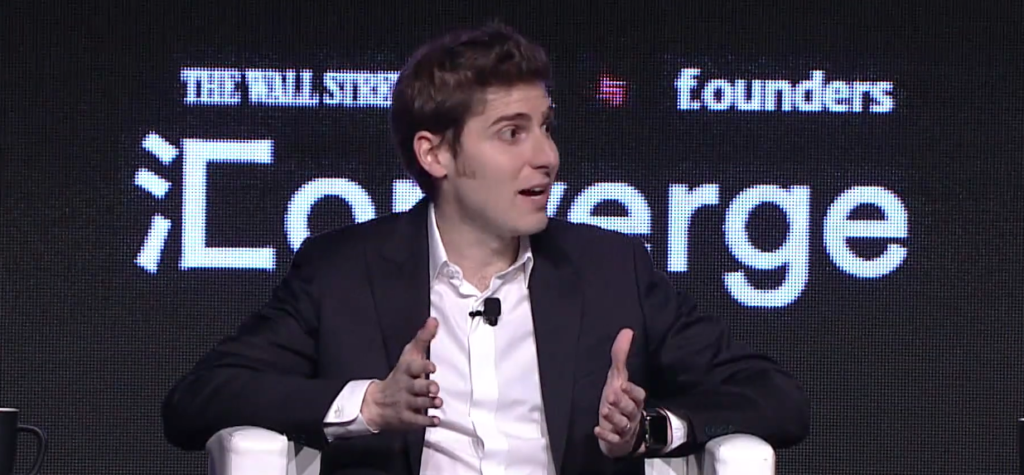
In a 2013 speech at Y Combinator’s Startup School, Zuckerberg specifically discussed this time frame. He claimed that when Peter Thiel became an early investor and demanded that all founders have a vesting schedule, he was 19 years old and had no idea what one was. Saverin had not relocated to California. According to Zuckerberg, he was virtually not involved in the company’s day-to-day activities. In reference to the poorly managed equity situation, Zuckerberg remarked, “That mistake probably cost me billions of dollars, but it’s fine.” The casualness of that last statement has endured in Silicon Valley’s public memory ever since, as Saverin was essentially a non-entity in the company he had helped found at the time due to what cost Zuckerberg billions in equity adjustments.
Saverin retaliated. He reportedly forced Zuckerberg’s family to pay $85,000 in expenses until Peter Thiel’s investment arrived by freezing a Florida bank account that contained Facebook’s operating funds. He sued, claiming that there had been a breach of fiduciary duty. Regarding a 2005 stock-purchase agreement, Facebook filed a countersuit. In January 2009, the parties finally met and reached a settlement. The terms were sealed, and the parties moved on without disclosing the evidence to the public.
The settlement’s public outcomes were modest but significant. Saverin maintained his status as a co-founder of Facebook, a title that had been taken away from him and that was obviously important to him. At the time of the settlement, he retained an estimated 4 to 5 percent of the business. Additionally, he signed an NDA that has since kept the precise financial terms confidential. That stake was valued at about $2 billion when Facebook went public in May 2012. Saverin is the richest person in Singapore, where he has resided since moving there in 2009, and the richest Brazilian on the planet, according to Forbes, which estimated his net worth at $33.5 billion by March 2026 after Meta’s stock price had increased significantly over the previous years.
When you try to evaluate the story in terms of justice, it has a peculiar quality. Saverin began with a thirty percent stake in what would grow to be one of the most valuable companies in human history. That stake was reduced to a fraction through a combination of corporate restructuring, his physical absence from the operation, and what some accounts characterize as intentional exploitation of his trust. He filed a lawsuit. He made up his mind. In any case, he received billions. Facebook might never have developed into what it is today without the dilution and Peter Thiel’s investment, which came with vesting schedules and professionalized governance. Additionally, 30% of something much smaller is far less valuable than 4% of something enormous.
There’s a sense that this story doesn’t neatly end in either heroism or villainy, which is likely why the 2010 film The Social Network, which dramatized it, continues to spark sincere debates about who was wronged and how much. Saverin was portrayed by Andrew Garfield as a devout Christian deceived by his closest friend. A more ambiguous conclusion than the film permits is suggested by the sealed settlement and the billions that followed.
Saverin has hardly ever discussed it. In interviews over the years, he has consistently stated that he has no animosity toward Zuckerberg when questioned. Considering that Zuckerberg is currently valued at $33.5 billion and operates a profitable venture capital firm out of Singapore, it is genuinely hard to claim that the settlement put him at a disadvantage. For sixteen years, the NDA has kept the question of whether it left him on the right side of what he was owed a secret.
Disclaimer
Nothing published on Creative Learning Guild — including news articles, legal news, lawsuit summaries, settlement guides, legal analysis, financial commentary, expert opinion, educational content, or any other material — constitutes legal advice, financial advice, investment advice, or professional counsel of any kind. All content on this website is provided strictly for informational, educational, and news reporting purposes only. Consult your legal or financial advisor before taking any step.
