

Classrooms that once reverberated with lectures and chalk dust are subtly being converted into interactive spaces where science, history, and imagination coexist harmoniously. With its ability to make abstract lessons tangible and experiences intensely personal, virtual reality has become a remarkably effective teaching tool. Instead of using whiteboards, teachers can now watch their students perform intricate experiments, examine virtual specimens, and explore ancient ruins without ever leaving their seats.
The immersive power of virtual reality is what makes it so beautiful. It produces incredibly clear and emotionally impactful learning environments by appealing to a variety of senses. Students participate in historical battles rather than merely studying them. They travel through the bloodstream, witnessing organs beating and cells dividing in front of their eyes, rather than merely reading about human anatomy. It has been shown that this degree of immersion is especially helpful for comprehending difficult concepts that are difficult to explain using conventional techniques.
Teachers have discovered that VR lessons result in noticeably higher retention rates. Because the brain interprets a simulated experience as lived reality, it leaves a more lasting impression on memory than reading from a page. VR makes sure that learning is about experiencing knowledge rather than just memorizing facts by utilizing emotional engagement. Students retain information better and apply it more successfully when they actively participate in a process rather than merely watching it happen.
Information Table
| Technology | Virtual Reality (VR) |
|---|---|
| Core Purpose | Immersive learning through 3D simulations and interactive environments |
| Key Applications | Virtual classrooms, medical simulations, virtual field trips, teacher training |
| Educational Benefits | Improved retention, engagement, empathy, and accessibility |
| Major Innovators | Meta, Google, ClassVR, Lenovo Education |
| Notable Use Cases | STEM simulations, historical recreations, special education support |
| Global Adoption | Schools and universities across the U.S., U.K., Singapore, and Scandinavia |
| Future Projection | Expected $20 billion investment in EdTech VR by 2030 |
| Reference | https://virtualspeech.com/blog/augmented-virtual-reality-education |
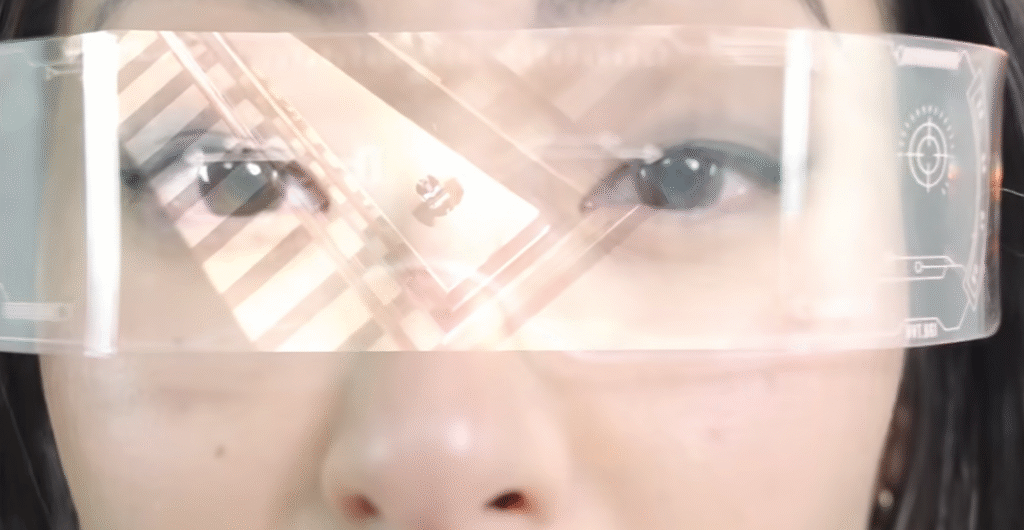
The teaching of science and engineering has been one of the most intriguing uses. Students can investigate molecular structures on a scale that was previously unattainable or perform chemistry experiments without the use of dangerous materials. These days, gravitational simulations in physics classes let students use their hands to control magnetic fields or float on the moon. Students’ confidence and comprehension have significantly increased as a result of this tactile link between learning and doing.
Perhaps the most radical change has been in medical education. Medical students can repeatedly practice complex procedures through realistic virtual reality surgeries, which enhances their accuracy and poise. In addition to being incredibly effective, these simulations are also incredibly resilient as teaching aids, enabling students to grow from their errors without putting their lives in danger. The same model, which provides an incredibly safe yet intensely engaging learning framework, is now used for nursing programs, emergency response simulations, and rehabilitation training.
Beyond technical education, virtual reality is revolutionizing the teaching of social awareness and empathy. Researchers at Stanford’s Virtual Human Interaction Lab developed experiences that allow users to experience life from viewpoints very different from their own, such as those of people who are homeless or physically disabled. These activities demonstrate that emotional intelligence can be taught through immersive experience rather than just moral theory, and they are especially creative in cultivating compassion.
Notable advancements have also been made in special education. Virtual environments can be modified to meet the learning requirements of students who struggle with attention or sensory issues. VR enables students to concentrate and advance at their own speed by establishing serene, distraction-free environments. While dyslexic students use visualization tools to make reading exercises dynamic, autistic students benefit from practicing social interactions through controlled digital scenarios. It’s an inclusive approach that seems human-centered and empowering.
This change in technology is also helping teachers themselves. Trainee teachers can practice classroom management and communication techniques in authentic settings by using simulated classrooms. Before entering actual classrooms, they gain confidence by interacting with virtual students who exhibit a variety of behaviors, from curiosity to distraction. Compared to conventional training models, this method has proven to be substantially quicker and more dependable while providing quantifiable progress and instant feedback.
Educational VR models have even inspired corporate learning. Virtual platforms are now used by large corporations for cross-cultural communication exercises, leadership development, and employee training. Professional and educational applications are remarkably similar in that they both depend on emotional engagement to guarantee long-term retention. “People remember what they feel, not just what they’re told,” as one executive stated.
Disclaimer
Nothing published on Creative Learning Guild — including news articles, legal news, lawsuit summaries, settlement guides, legal analysis, financial commentary, expert opinion, educational content, or any other material — constitutes legal advice, financial advice, investment advice, or professional counsel of any kind. All content on this website is provided strictly for informational, educational, and news reporting purposes only. Consult your legal or financial advisor before taking any step.
