

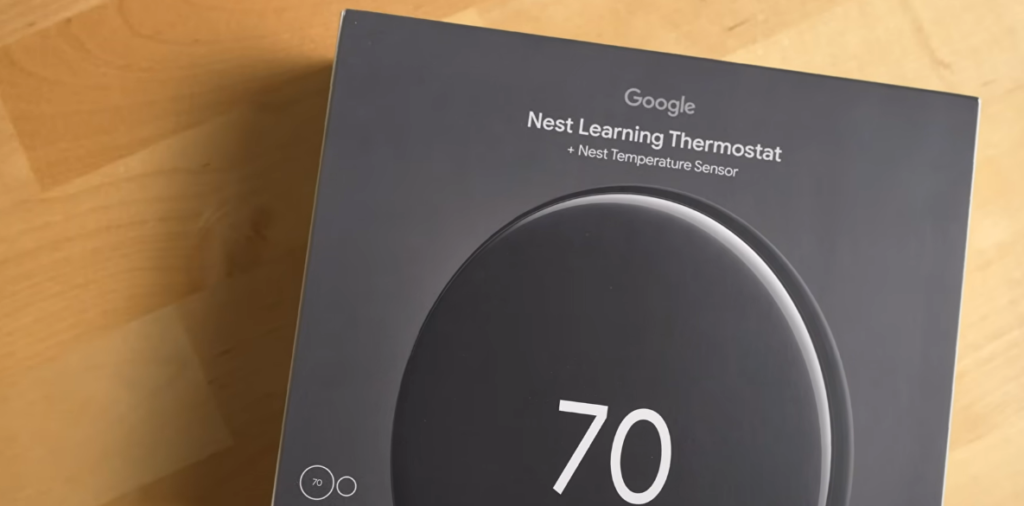
A tiny circular gadget with a glowing screen and flawless internal hardware is mounted on a wall somewhere in an Illinois home. The room temperature can still be read by it. The heat can still be turned on. However, the features that made it worth $250—the smartphone app, the Wi-Fi connection, and the flexibility to adjust it from a car, a couch, or an airport gate—are no longer there. It was taken by Google. Google’s authority to do so is currently being questioned in a federal class action lawsuit.
Alphabet Inc. and Google LLC are being sued in the U.S. District Court for the Northern District of California for their October 2025 decision to stop providing software support and Wi-Fi connectivity for Nest Learning Thermostats of the first and second generations. George Tsourdinis, the lead plaintiff for a proposed nationwide class and Illinois subclass, contends that Google failed to disclose at the time of sale that this was even a possibility—that the device’s essential features could be removed at any time, for any reason, at the company’s discretion. That is what he refers to as deception. The lawsuit refers to it as “bricking.”
There was never a basic version of the Nest Learning Thermostat available for purchase. It was marketed as being more intelligent. When the second-generation model debuted in October 2012, Google wrote a blog post outlining a pledge, or “promise,” in their own words, to keep enhancing the product and to keep updating and connecting older models. As much as they were purchasing the hardware, customers who purchased the device were also purchasing that promise. The energy monitoring, the app-based control, and the Home/Away Assist feature that recognized your schedule and made adjustments were not extras. The product was them. You won’t have a less functional smart thermostat if you remove them. You are left with a stupid one.
| Google Nest Thermostat Lawsuit — Key Information | |
|---|---|
| Defendants | Alphabet Inc. and Google LLC (headquartered in Mountain View, California) |
| Lead Plaintiff | George Tsourdinis (Illinois resident) |
| Products at Issue | 1st generation (2011) and 2nd generation (Oct. 2012) Google Nest Learning Thermostats |
| Support Termination Announced | April 2025 (effective October 25, 2025) |
| Features Lost | Wi-Fi connectivity, smartphone app control, Home/Away Assist, filter reminders, energy history |
| Core Legal Claims | Breach of contract, breach of implied covenant of good faith, Illinois Consumer Fraud Act, California UCL & CLRA, Computer Fraud and Abuse Act |
| Lawsuit Filed | Case No. 5:26-cv-01770, U.S. District Court, Northern District of California |
| Class Definition | All U.S. residents who purchased a 1st or 2nd gen Nest Learning Thermostat and still owned it as of Oct. 25, 2025 |
| Plaintiff’s Counsel | KalielGold PLLC; Wolf Popper LLP |
| Other Law Firms Investigating | Girard Sharp LLP (San Francisco); Migliaccio & Rathod LLP; Kaplan Gore LLP / Lieff Cabraser |
| Related Google Settlement | $135M settlement (Android data usage without permission); $20M patent verdict overturned (Oct. 2025) |
That is the main point of contention in the lawsuit, and it is a more serious allegation than it first seems. In addition to alleging broken promises, the filing makes reference to the Computer Fraud and Abuse Act, the Unfair Competition Law and Consumers Legal Remedies Act of California, and the Illinois Consumer Fraud and Deceptive Practices Act. It requests public injunctive relief, monetary damages, and a jury trial. Additionally, it brings up a topic that consumer advocates have been debating for years: “software tethering,” which is the practice of manufacturers controlling a connected device through software after a purchase in a way that essentially takes away the customer’s ownership rights. The Federal Trade Commission’s own guidelines on the matter are cited in the filing, which notes that the FTC has identified failure to disclose the length of software support as a potentially deceptive practice.
Reading the complaint gives the impression that this case has been developing for a while. Since at least the middle of 2025, discussions about a possible class action have been taking place in online forums devoted to Google Nest products. The announcement in April that support would be discontinued caused users who were unaware of this to become irate. One commenter put it simply: remote access was the whole point, and she had the thermostat at a house she doesn’t often visit. She can’t use the gadget in the way that was truly important without it. She declared that she would never purchase Nest products again. People who actually spent money on these devices based on what Google promised to do—and what Google later decided they no longer would—have expressed similar sentiments in comment sections all over the internet.
It’s important to take a step back and observe how commonplace this pattern has become in the tech sector. Amazon has faced similar accusations about Fire TV devices losing functionality after support ends. Samsung has been sued over smart TVs that track viewing data. Apple has been in court over AirPods. The broader question — of who controls a connected device after it’s been sold — has been quietly building in consumer product law for years, and the Nest case may be one of the cleaner examples of it yet, given the very explicit 2012 promise Google made in public. The majority of manufacturers are more cautious about what they write.
Regarding the Nest lawsuit, Google has not made any public remarks. The U.S. Supreme Court last October declined to hear an appeal in a patent case that had previously resulted in a $20 million verdict against Google, and the company has also recently been navigating a separate $135 million settlement over Android devices collecting data without user consent. To put it mildly, there is a lot of litigation going on around the company.
Any resident of the United States who possessed a first- or second-generation Nest Learning Thermostat as of October 25, 2025, may be eligible for the class, which has a fairly broad definition. Given how extensively the original Nest products were promoted in the early years of the smart home boom, that represents a sizable consumer base. It will probably take years to find out if the case is settled, goes to trial, or is dismissed due to procedural issues. Meanwhile, millions of those tiny circular gadgets continue to blink silently on American walls while they wait for a malfunctioning app.
Disclaimer
Nothing published on Creative Learning Guild — including news articles, legal news, lawsuit summaries, settlement guides, legal analysis, financial commentary, expert opinion, educational content, or any other material — constitutes legal advice, financial advice, investment advice, or professional counsel of any kind. All content on this website is provided strictly for informational, educational, and news reporting purposes only. Consult your legal or financial advisor before taking any step.
