

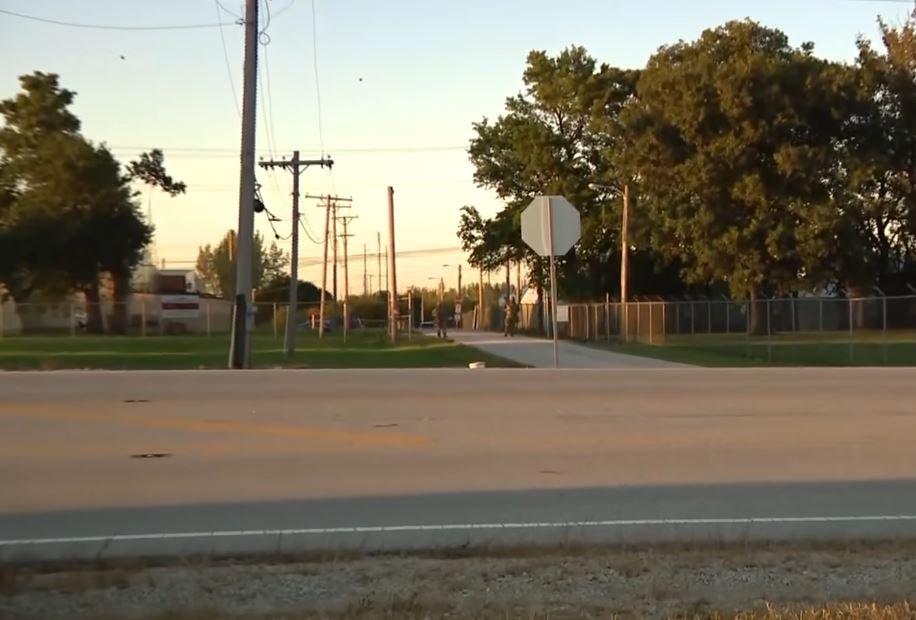
An unassuming area of rural Illinois, Elwood, Illinois, is a village of quiet resilience that has remarkably persevered through industry, war, and renewal without losing its serene sense of purpose. It is located approximately 45 miles southwest of Chicago and is a place where the rustle of prairie grass and the hum of logistics coexist in a surprisingly harmonious way. It feels both connected and refreshingly detached.
Established in 1854 and incorporated in 1869, Elwood’s history started at the intersection of agriculture and ambition. Early settlers who depended on the Joliet–Bloomington railroad to deliver their livestock and crops to larger markets benefited greatly from its construction. The railroad was eventually incorporated into the Union Pacific system. Trains, which ran through the fields like veins bringing life to a burgeoning community, came to represent movement and hope.
| Aspect | Details |
|---|---|
| Official Name | Village of Elwood |
| Location | Will County, Illinois, United States |
| Incorporated | 1869 |
| Area | 13.80 sq mi (35.74 km²) |
| Elevation | 656 ft (200 m) |
| Population (2020) | 2,229 |
| ZIP Code | 60421 |
| Area Code | 815 |
| Government Type | Village Board and Mayor |
| Known For | Midewin National Tallgrass Prairie, Abraham Lincoln National Cemetery, CenterPoint Intermodal Center |
Elwood was still a small farming community at the turn of the 20th century, with a population of just over 400. Seasons and harvests, not news stories, characterized the slow pace of life. Beneath the surface, however, was a constant flow of resolve—a silent conviction that little places could make a big difference when they refused to remain motionless.
When the federal government selected the area to build the Joliet Arsenal—later renamed the Joliet Army Ammunition Plant—in the late 1930s, that belief would be put to the test. Overnight, it transformed the local economy and created hundreds of jobs, making it one of the nation’s most important wartime production sites. But there was a price for progress. 42 people were killed in an explosion inside the plant in 1942; the tragedy left the village scarred but strengthened its unity. Locals came together and rebuilt with a sense of cohesion that continues to be a hallmark of Elwood’s character.
Nearly 20,000 people attended the town’s centennial celebration in 1954, which was a far cry from its own population and demonstrated the town’s significance in the area. Elwood remained remarkably resilient despite decades of fires, tornadoes, and industrial shifts. It grew despite hardship, adapting without ever losing its small-town elegance, much like a prairie flower that endures drought.
The most significant development occurred in the 1990s when the CenterPoint Intermodal Center was established. This enormous logistics hub made Elwood one of the most important freight and transportation hubs in the Midwest. The village unexpectedly found itself at the nexus of road and rail commerce, where American supply chains met containers from international ports. Other rural communities might have been overtaken by this rapid development, but Elwood responded with remarkable balance, updating its infrastructure while maintaining its unique identity.
However, Elwood’s core is green rather than steel or concrete. The munitions plant’s former site was repurposed in 1996 as the Midewin National Tallgrass Prairie, a nearly 20,000-acre federally protected reserve. The transition from battlefield to wilderness is remarkably symbolic: artillery fields became wildflower and bison sanctuaries. When people choose restoration over ruin, it is evident from walking its trails how remarkably effective nature can be at reclaiming space.
The Abraham Lincoln National Cemetery, which was established in 1999 on almost 1,000 acres of Elwood land, is located right next door. Designed to eventually house 400,000 veterans, it is currently one of the biggest national cemeteries in the United States. The village’s timeless character—solemn, dignified, and distinctly American—seems to be reflected in each of the white headstones there.
Even though Elwood only has a little over 2,200 residents today, its impact is much greater. A stable and steadily diversifying economy is reflected in the median household income, which is over $78,000. Although the town’s population is still primarily White, it is slowly diversifying, which is bringing fresh perspectives and vitality to the neighborhood. Families say Elwood is very dependable—a neighborhood where kids can ride bikes freely, neighbors are friendly, and local customs are still valued.
That sense of balance is reinforced by the geography. Elwood, which is tucked away between Interstates 55 and 80, has easy access to both city conveniences and rural peace. Hikers and cyclists love the Wauponsee Glacial Trail, the Illinois and Michigan Canal Trail, and McKinley Woods because they offer peaceful scenery at dawn. Culturally speaking, the town’s joyous unity is captured by the Elwood Glow Ride, an annual evening bike event. Families decked out in neon lights and laughter reverberating through peaceful streets demonstrate that community here is more than just geography—it’s belonging.
Local government functions with accuracy and openness. The mayor and village board place a strong emphasis on sustainable planning, emphasizing environmental stewardship and infrastructure over unbridled growth. This strategy has proven particularly successful in preserving quality of life while promoting steady economic growth. Elwood’s government is aware that longevity requires balance and attention, just like healthy soil.
Elwood’s economic trajectory is still shaped by the CenterPoint Intermodal complex. The regional labor landscape has changed as a result of the thousands of jobs in distribution, transportation, and logistics. The village is still wary of overdevelopment, though. Its leaders support conservation initiatives and wise zoning to prevent development from overshadowing historic sites. Elwood stands out among rural communities in Illinois for striking a balance between preservation and pragmatism.
However, the village’s daily acts—such as the way neighborhood churches plan food drives or the way firefighters continue to serve pancake breakfasts that attract whole families—are what give it its emotional pulse. On holidays, the village hall stands like a guardian of stable government, and the smell of barbecues wafts down Mississippi Avenue as houses sparkle with lights.
Elwood is a cultural symbol of Middle America’s subdued power. It gently cultivates grandeur rather than chasing it. Like its Will County neighbors, Channahon, Manhattan, and Lockport, it thrives on everyday acts of fortitude. Its inhabitants know that history need not be erased by progress; it can coexist with it, as in the case of cemeteries next to living fields or railroads next to prairies.
Elwood is ready for a deliberate evolution in the future. Metra’s Heritage Corridor extension could soon connect it directly to Chicago, opening up new opportunities and improving connectivity. This shift could be especially helpful for young families and business owners, providing urban access without sacrificing rural tranquility.
Elwood’s ability to gracefully hold contradictions is what makes it so remarkable. It is traditional but forward-thinking, peaceful yet hardworking. Its transition from a farming community to a logistical hub and natural sanctuary exemplifies a flexibility that is decidedly optimistic.
Disclaimer
Nothing published on Creative Learning Guild — including news articles, legal news, lawsuit summaries, settlement guides, legal analysis, financial commentary, expert opinion, educational content, or any other material — constitutes legal advice, financial advice, investment advice, or professional counsel of any kind. All content on this website is provided strictly for informational, educational, and news reporting purposes only. Consult your legal or financial advisor before taking any step.
