

Workers at Houston’s Johnson Space Center lined the streets outside Ellington Field early on Friday, March 27, to support the Artemis II crew as they boarded T-38 aircraft for their flight to Kennedy Space Center. Four astronauts in orange flight suits were waving as they headed toward a rocket and a place that no human has been to in more than 50 years. It was one of those moments that appears small from the outside but feels huge to everyone in attendance.
At Launch Complex 39B, that well-known stretch of Florida scrubland on Merritt Island where history has launched before, the Space Launch System rocket was already waiting. The Statue of Liberty is not as tall as the SLS. It is scheduled to lift four people off the surface of this planet and send them on a 600,000-mile journey around the Moon on April 1 at 6:24 p.m. Eastern time. The launch window runs through April 6; if necessary, there will be more opportunities on April 30. NASA has experienced enough of these countdowns to understand the importance of adaptability.
Pilot Victor Glover, Mission Specialists, and Commander Reid Wiseman Jeremy Hansen and Christina Koch will be strapped into the Orion capsule atop that rocket, making them the first humans to travel anywhere close to the Moon since Gene Cernan climbed back into the lunar module in December 1972 and the first crew to ride SLS into deep space. It takes a moment to process the historical significance of that figure—53 years. Men and women who were not yet born the last time humans left the immediate vicinity of Earth will be among those watching this launch. It feels really different to watch this happen than to watch a standard launch. The International Space Station is near. This isn’t.
| Key Information | Details |
|---|---|
| Mission Name | Artemis II (also known as Exploration Mission-2 / EM-2) |
| Target Launch Date | No Earlier Than (NET) April 1, 2026 — with backup windows April 3–6 and April 30 |
| Launch Time | 6:24 p.m. EDT (2224 GMT) on April 1, 2026 |
| Launch Site | Kennedy Space Center, Launch Complex 39B, Merritt Island, Florida |
| Launch Vehicle | Space Launch System (SLS) — generating 8.8 million pounds of thrust at liftoff |
| Spacecraft | Orion capsule |
| Crew | Reid Wiseman (Commander, NASA); Victor Glover (Pilot, NASA); Christina Koch (Mission Specialist, NASA); Jeremy Hansen (Mission Specialist, Canadian Space Agency) |
| Mission Duration | Approximately 10 days |
| Total Distance | Approximately 600,000 miles |
| Mission Goal | First crewed test of SLS/Orion; validate life-support systems; fly around the Moon without landing |
| Historical Context | First crewed deep-space mission since Apollo 17 in December 1972 — 53+ years |
| Last Milestone | Artemis I — uncrewed test flight, November 2022 |
| Safety Systems | Emergency Egress System (1,335-ft cable); Launch Abort System (44-ft tower atop Orion); free-return trajectory option if needed after lunar departure |
| Reference Links | NASA — Artemis II: NASA’s First Crewed Lunar Flyby in 50 Years / Kennedy Space Center Visitor Complex — Artemis II Launch Information |
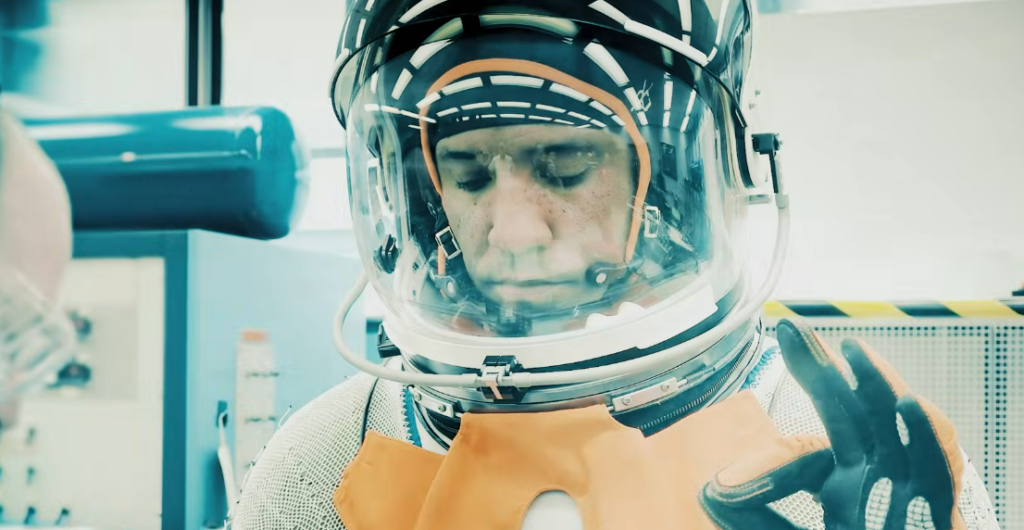
There will be no lunar landing by the Artemis II mission. It’s crucial to comprehend this distinction, which occasionally irritates those who question why NASA keeps adding steps prior to the landing. The answer is that before anyone can defend placing those same humans on the surface, the systems must be tested with humans on board. In November 2022, Artemis I validated the hardware by flying the Orion capsule and SLS without crew. In addition to testing the crew’s ability to survive and function inside Orion during a prolonged deep-space mission, Artemis II will validate the life-support systems and showcase the docking capabilities that will be essential for future lunar landers. In the words of planetary scientist and Artemis II project scientist Barbara Cohen: “We no longer need to test the rocket or the capsule.” The life support systems and the crew’s living and working conditions within the capsule are currently being tested.
No human, not even the Apollo astronauts, has ever truly seen the view from those windows, Cohen continued. The crew will have an unprecedented view of the lunar surface thanks to Artemis II’s unique orbit, and NASA intends to investigate how the human eye and brain interpret this view—information that will be useful for future surface operations. A detail like that has a subtle quality. Not one of the twelve humans who visited the Moon saw it from this specific angle. The first will be Wiseman, Glover, Koch, and Hansen.
There have been some difficulties along the way to April 1. In order to address problems with the helium system on the upper stage and to review concerns regarding heat shield performance, NASA moved the rocket back to the assembly building. This is the kind of engineering detour that the agency’s detractors point out, and the agency’s supporters correctly point out is exactly the right thing to do before flying people. During the Flight Readiness Review in March, NASA’s SLS Program manager John Honeycutt told reporters that his teams had spent months analyzing risks related to every aspect of the mission. He stated, “We didn’t find any new integrated risks,” but he conceded that surprises could still happen because SLS was only on its second flight and its first crewed mission.
There is a comprehensive emergency architecture in place for those unforeseen events. If something goes wrong prior to liftoff, a 1,335-foot cable system at the launch pad can transport astronauts in four tiny baskets down to safety. If necessary, a 44-foot Launch Abort System tower atop Orion can quickly separate the spacecraft from the rocket once it is inside the capsule. The mission can be canceled and the crew returned if problems occur prior to the burn to high Earth orbit after launch. The physics of the free-return trajectory, which uses the Earth’s and Moon’s gravity to arc the spacecraft home, is their only choice once they are committed to the Moon. According to Honeycutt, NASA won’t unwind “until we get Reid and Victor and Christina and Jeremy safely home.”
The fact that over 5 million people have already entered their names to fly on an SD card inside Orion is a tiny but significant detail. The Kennedy Space Center’s launch viewing packages were sold out weeks ago. On April 1, nearly 500,000 people might attempt to get in close proximity to Pad 39B. Brevard County’s traffic advisories advise departing much earlier than you believe is necessary. The SLS will be visible and audible for miles in all directions. Regular rocket launches don’t attract that kind of crowd. When the object on the pad moves in a way that causes people to pause and sense the distance, it gathers.
