

When viewing old hurricane footage from the 1970s and 1980s, there is a moment when something seems a little strange, and it takes a moment to recognize what it is. The storms shift. They weaken, disperse, churn inland, and make landfall. They act in a manner that is largely consistent with expectations. What is currently taking place in the Atlantic is not the same. slower. heavier. more difficult to forecast and more difficult to survive.
Hurricane patterns are changing due to global warming in ways that scientists have predicted for decades, and many of these predictions are coming to pass more quickly than expected. Hurricanes are heat engines, which is a simple basic mechanism. Warm ocean water provides them with energy. Storms can draw in more energy, water vapor, and fuel as sea surface temperatures rise, and in the Atlantic, they have increased dramatically. Stronger peak winds, significantly more rainfall, and an increasing percentage of storms that reach the Category 4 and 5 thresholds—which infrastructure and evacuation plans were never really designed to handle—are the outcomes. The data from the last ten years hasn’t done much to allay the National Oceanic and Atmospheric Administration’s long-standing projections of this change.
Key Facts: Atlantic Hurricanes & Climate Change
| Topic | Atlantic Hurricane Patterns and Climate Change |
| Key Agencies | NOAA, NASA, World Meteorological Organization (WMO), Environmental Defense Fund (EDF) |
| Atlantic Hurricane Season | June 1 – November 30 (officially) |
| Long-term average storms/year | ~11 tropical storms; ~6 become hurricanes (1966–2009 baseline) |
| Major hurricane increase | Proportion of Category 3+ storms has roughly doubled since 1980 |
| Rainfall increase projected | 10–15% more precipitation per storm in a warmer climate |
| Costliest hurricane on record | Hurricane Katrina (2005) — over $186 billion in 2022 dollars |
| 2024 finding | Climate change made 2024 Atlantic hurricanes roughly one full category stronger on average |
| Wind speed boost (2019–2023) | Average peak winds boosted by approximately 19 mph due to warming |
| Sea level rise since 1900 | Over half a foot globally; expected to rise 1–2.5 more feet this century |
| Reference Links | Hurricanes and Climate Change – C2ES · How Climate Change Makes Hurricanes More Destructive – EDF |
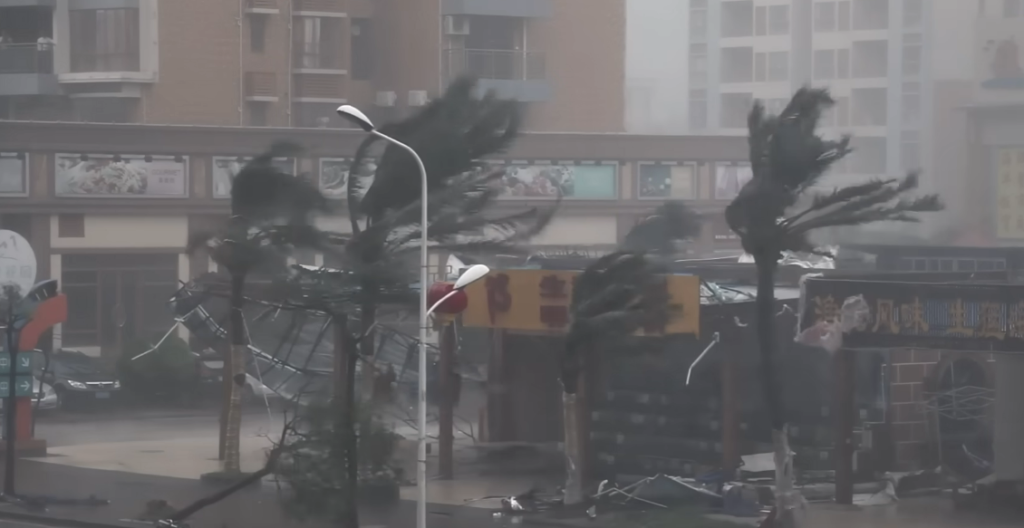
Some areas of Texas received more than 60 inches of rain during Hurricane Harvey in 2017. In 2018, Florence brought more than 35 inches to the Carolinas. In 2019, Imelda, a catastrophic event that most people hardly remember, added 44 inches to southeastern Texas. These didn’t just happen. Researchers have determined that these storms were significantly wetter due to climate change, and the mechanism is important in this case. The atmosphere retains more moisture as air temperatures rise. As storms move, more water evaporates due to rising ocean temperatures. As a result, communities that still have storm drainage systems built for a different era experience rainfall totals that would have been deemed practically impossible in the middle of the twentieth century.
Another phenomenon that receives little attention outside of meteorological circles is the slowing down of storms. Once passing through a coastal area in twelve or fifteen hours, a hurricane may now linger for twenty or twenty-five. The effect is uncontested, but the precise cause is still up for debate. The prevailing theory suggests that changes in the steering winds that direct tropical systems may be related to Arctic warming. Longer durations of severe wind, longer storm surges, and catastrophic rainfall concentrated over a single area are all signs of a stalling storm. There was more to Harvey’s flooding than just the amount of rain. It had to do with how long Harvey sat there letting it fall.
The other aspect of this that worries emergency managers is the phenomenon of rapid intensification. Coastal communities have very little time to evacuate when a storm intensifies from a Category 1 to a Category 4 in just twenty-four hours. In 2018, Hurricane Michael made landfall in the Florida Panhandle as a Category 5 after intensifying at a rate that surprised many locals. Similar damage was caused off the Pacific coast of Mexico by Hurricane Otis in 2023. Although rapid intensification has always occurred, warmer ocean waters are making it possible for it to occur more frequently, closer to shore, and more quickly. Climate change increased peak wind speeds by an average of about 19 miles per hour during Atlantic storms from 2019 to 2023, according to research. An additional destructive force of one category, essentially due to warming alone.
It’s simple to ignore the quiet harm that sea level rise is doing to the equation until a storm surge occurs. Since 1900, average sea levels have already increased by more than half a foot on a global scale, and this increase is accelerating. In 2022, Hurricane Ian was traveling across an ocean surface that began several inches higher than it would have a generation ago when its surge reached fifteen feet at Fort Myers Beach. Research on Hurricane Katrina revealed that flood elevations during the storm were 15 to 60 percent higher than they would have been in 1900 due to higher sea levels. It’s not a small difference. That is the distinction between a neighborhood that has been destroyed and a street that has flooded.
It’s difficult to avoid thinking about what’s already in the way of these storms as you watch all of this happen. Within an eighth of a mile of the U.S. coastline are nearly 50 million residences. assets worth at least $1.4 trillion. Between 1970 and 2010, America’s coastal population increased by about 35 million due to beaches, mild winters, and waterfront views. However, the possibility that the Atlantic would eventually alter the terms of that agreement was not given much thought. Over 1,800 people were killed by Hurricane Katrina. In Puerto Rico, Maria killed close to 3,000 people. An entire island was rendered powerless by Fiona. These are not statistical abstractions; rather, they are the result of poor planning in the face of storms that outgrew the capacity of the systems intended to manage them.
The precise way that hurricane tracks will change as global warming persists is still unknown. As sea surface temperatures rise along the U.S. East Coast, scientists have noticed a northward drift in peak storm intensity in the Pacific, and there is growing evidence that Atlantic storms may be forming in more northern waters. Cities and areas that have traditionally viewed themselves as low risk may find themselves inside the cone of uncertainty more frequently than anyone currently anticipates if that pattern continues. Although it’s not a given, the data is pointing in that direction.
Disclaimer
Nothing published on Creative Learning Guild — including news articles, legal news, lawsuit summaries, settlement guides, legal analysis, financial commentary, expert opinion, educational content, or any other material — constitutes legal advice, financial advice, investment advice, or professional counsel of any kind. All content on this website is provided strictly for informational, educational, and news reporting purposes only. Consult your legal or financial advisor before taking any step.
