

On any given Wednesday afternoon, a professional muralist and a twelve-year-old are crouched next to each other in a building on Milwaukee’s north side, staring at the same partially completed wall as if they were trying to solve the same puzzle. There is no sign of the instructor. In a way, that’s the point.
For years, Milwaukee has been conducting one of the nation’s more genuinely fascinating experiments in arts education, but it hasn’t received nearly the national attention it merits. Working artists and arts organizations are being directly integrated into public schools and youth-serving spaces throughout the city through the Partnership for the Arts & Humanities, a program run by Milwaukee Recreation and supported by $1.7 million in funding from the Milwaukee Board of School Directors. not as invited speakers. Not as visitors to a one-day workshop. as inhabitants. financially supported to be there, creatively involved, and consistently present.
A significant portion of this has been driven by the Greater Milwaukee Foundation, which has made deepening arts education for kids from birth to high school and artists-in-residence in community-based settings explicit among its arts and culture priorities. It’s possible that nobody outside of this ecosystem truly understands how well-coordinated it has become. This isn’t a single program with a single vision; rather, it’s a network of organizations operating in the same city with somewhat similar goals, each doing something slightly different.
One of the more well-known companies in the field, Arts @ Large, places local artist-educators in classrooms for extended periods of time. Throughout the academic year, their Artist in Residence Academy is divided into two six-week Saturday sessions, and their Community Center in Walker’s Point functions as a sort of creative hub, a physical location where young people in grades three through eight can come and create things under the supervision of professionals. The artists who work there are not volunteers working on the weekends. They are paid and given studio space. It may not seem important, but that distinction is crucial. A paid artist is a professional carrying out their duties. Children notice the difference.
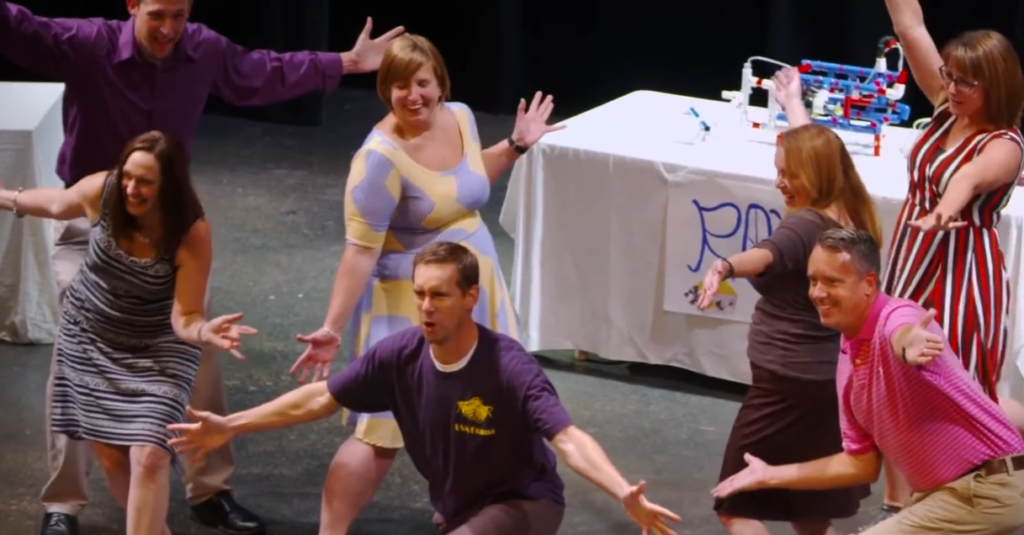
A Truck Studio, which is exactly what it sounds like—a mobile art space that rolls into parks and playgrounds during the summer months and offers free programming to children as young as four—is an almost theatrical addition to Artists Working in Education’s approach. AWE’s artist-in-residence model operates out of Doerfler School during the academic year, where young people participate in programming for an average of three hours each visit. That number has a subtly radical quality. Most adults don’t dedicate three hours a week to any one creative endeavor.
Because it doesn’t rely on a single theory of what art education should accomplish, the larger Milwaukee model is worth observing. Certain programs, such as ArtWorks for Milwaukee, specifically focus on preparing students for the workforce through paid internships, portfolio building, and professional development workshops on financial literacy and resume writing. Others, such as the Healing Arts Programming at the Sojourner Family Peace Center, target children who have been traumatized and homeless by using artistic expression as a means of achieving something more elusive and difficult to quantify: a sense of agency. A section of Hope House is transformed into a youth art gallery by Hope Illustrated, which operates out of Hope House with artist Marina Lee. Giving children without stable homes a wall that is temporarily theirs is a thoughtful gesture that is difficult to ignore.
It seems as though Milwaukee has been quietly constructing this infrastructure for decades, adding pieces here and there, and that the current network is more developed than most cities have been able to. Professional touring artists participate in free programming at the Marcus Center for the Performing Arts. Second through fourth graders can take free ballet lessons from Milwaukee Ballet. Founded in 2015, Bembé Drum and Dance is a year-round public performance company that uses Afro-Latino percussion culture to foster intergenerational relationships. Black Arts MKE uses musical theater, drumming, and chorus to introduce young people to African American artistic traditions. Each of these is an independent organization with its own resources, personnel, and goals. However, when you consider the entire list of programs that the Partnership for the Arts & Humanities is currently funding, the overall impact begins to seem greater than the sum of its parts.
It’s still unclear if this model can withstand the political pressures that eventually erode funding for the arts in American cities. The funding cycle for 2025–2027 is now set, with awards given for both years. However, the application period won’t reopen until 2027, and the state of school-based arts programming has been inconsistent across the country. Milwaukee appears to have discovered, at least for the time being, that putting a working artist inside a school building for an extended length of time—not just a day or a week, but an entire academic year—can alter the way that learning can feel for children who might not otherwise experience it. The part worth watching is whether or not that lesson extends outside of the city.
Disclaimer
Nothing published on Creative Learning Guild — including news articles, legal news, lawsuit summaries, settlement guides, legal analysis, financial commentary, expert opinion, educational content, or any other material — constitutes legal advice, financial advice, investment advice, or professional counsel of any kind. All content on this website is provided strictly for informational, educational, and news reporting purposes only. Consult your legal or financial advisor before taking any step.
