

The air surrounding Cape Canaveral has a subtle rocket fuel and salt odor early on a humid Florida morning. The Apollo missions’ former launch facilities are traversed by workers wearing reflective vests. After the space shuttle was retired, some of those same launch pads remained silent for years while rust gradually spread across the metal buildings. They’re back to work now. Trucks rumble by. Engineers travel between hangars with coffee cups and laptops. The peculiar thing is that a large number of them are not employed by the government.
Ownership of space exploration has subtly shifted.
National governments controlled almost all of space for the majority of the twentieth century. NASA was in the United States. The Soviet Union had a vast program of its own. Massive, costly, and intensely political were the missions. The launch of rockets was associated with a sense of patriotism. The image appears differently today.
Rockets, satellites, cargo transportation, and the increasing number of astronauts in flight are all being built by private companies. The change occurred gradually, almost silently at first, and then suddenly. It’s possible that historians will view this as the start of a completely different space age, one that is fueled by corporate aspirations, investors, and entrepreneurs in addition to governments. SpaceX is the company that most exemplifies this change.
| Category | Information |
|---|---|
| Topic | Rise of private companies leading modern space exploration |
| Leading Company | SpaceX |
| Founder | Elon Musk |
| Major Competitor | Blue Origin |
| Key Government Partner | NASA |
| Emerging Sector | Commercial space stations, satellite launches, space tourism |
| Reference Sources | MIT Media Lab discussion on private space exploration • Space.com coverage of commercial spaceflight |
The early years of the company were nearly chaotic. Its initial rockets failed numerous times in the mid-2000s, exploding into the Pacific following millions of dollars’ worth of launch attempts. In an effort to solve issues before the next launch window, engineers slept on office floors in a warehouse close to Los Angeles. The business seemed on the verge of failing at one point.
At last, a rocket entered orbit.
It’s difficult to ignore how unlikely the outcome seemed when looking back at those early launches. Elon Musk, the project’s founder, had invested a large portion of his personal wealth in it. Investors had doubts. Veterans of the aerospace industry secretly questioned whether a startup could compete with firms that had been producing rockets for decades.
However, once the company started returning its rockets to Earth, something changed.
When reusable boosters first appeared on video screens, their slow descent onto floating platforms in the ocean appeared almost surreal. However, the impact was felt right away. Launch expenses started to decline. The frequency of missions increased. Smaller businesses or academic institutions could suddenly launch satellites into orbit that previously required enormous government budgets.
The economics of space might have changed as a result of this one invention.
Soon after, more competitors joined the race. In the West Texas deserts, Blue Origin started testing its own rockets, launching visitors into space for brief periods of time on suborbital flights. Smaller launchers that could carry small satellites were created by Rocket Lab. Startups started discussing commercial space stations, asteroid mining, and orbital manufacturing.
Some of those concepts still seem theoretical. However, the amount of money entering the industry indicates that many people think there is a genuine opportunity.
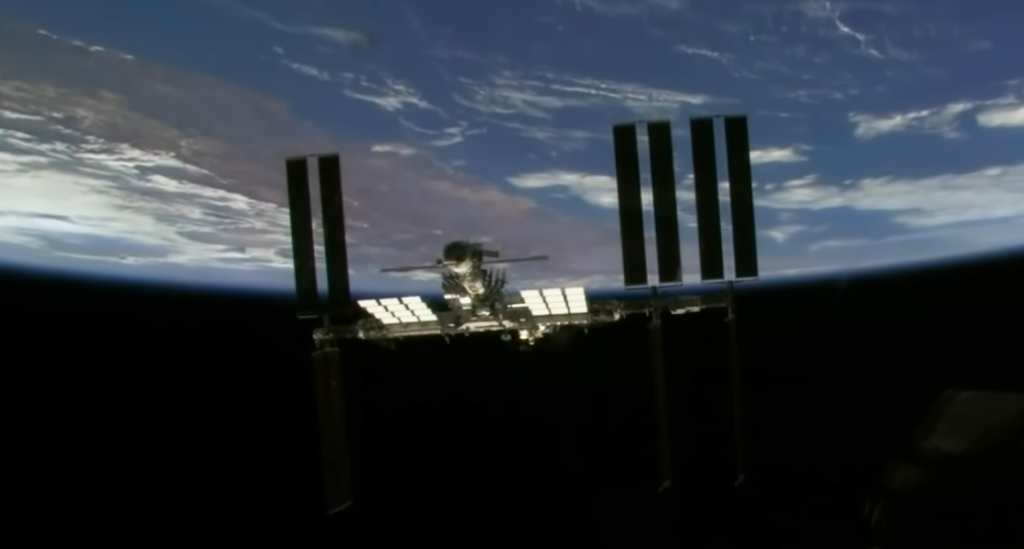
Behind the scenes, a more profound structural change is also taking place. These days, governments don’t construct all of the rockets themselves. Rather, organizations such as NASA now buy launch services from private companies. Commercial spacecraft are used for cargo missions to the International Space Station. Vehicles created by private companies are becoming more and more important for astronaut transportation.
It feels strangely different to be inside mission control during one of those launches than the recordings from the Apollo era. It uses more informal language. National flags are displayed next to company logos. NASA representatives are seated next to engineers in startup hoodies who are keeping an eye on telemetry streams.
The line separating private and public exploration has become more hazy.
There is some tension in this arrangement. Governments built most of the space infrastructure, including tracking networks, launch pads, and decades of engineering expertise. These days, private businesses function within that ecosystem, occasionally profiting from taxpayer-funded contracts. Every now and then, critics question whether the balance is too much in favor of corporate interests. Competition has also altered the rate of advancement.
Due to political constraints and protracted procurement cycles, the previous government model frequently moved slowly. Private businesses have a different rhythm: they test rapidly, fail in public, and try again. Rockets detonate. Engineers acquire knowledge. Months later, new designs emerge.
As this develops, it appears that aerospace experimentation has resumed.
The goals are expanding even further beyond Earth’s orbit. Through the Artemis program, NASA is getting ready to send humans back to the Moon, using commercial spacecraft in part. In the meantime, businesses openly discuss lunar mining operations, orbital hotels, and Mars missions.
It will likely take decades to complete some of those plans. Others might never occur.
However, the industry’s energy is hard to ignore. Satellite startups are now funded by venture capital firms. Experimental payloads are launched by universities. Engineers who used to aspire to work for NASA are now employed by private rocket companies.
Disclaimer
Nothing published on Creative Learning Guild — including news articles, legal news, lawsuit summaries, settlement guides, legal analysis, financial commentary, expert opinion, educational content, or any other material — constitutes legal advice, financial advice, investment advice, or professional counsel of any kind. All content on this website is provided strictly for informational, educational, and news reporting purposes only. Consult your legal or financial advisor before taking any step.
