

When New Zealand originally proposed a humanitarian visa with a climate focus in 2017, Pacific Island governments responded with consideration but hesitancy. They reminded us that migration is about identity, heritage, and dignity, not just about relocating people. Now, since time is running out and the oceans are rising noticeably quicker, the idea has come back. This time, it has both structure and urgency.
New Zealand’s 2030 aim is not arbitrary. It is consistent with scientific predictions that sea level rise may cause several low-lying Pacific countries to lose vital infrastructure by the next ten years. Farming and drinking water have already been impacted by saltwater intrusion in Tuvalu and Kiribati, two extremely susceptible countries. Adaptation is becoming more and more important for islanders to survive.
A humanitarian visa specifically intended for Pacific Islanders displaced by climate change is at the heart of New Zealand’s revised proposal. This visa seeks to be protective rather than selective, giving priority to people whose homes are not only threatened but gradually destroyed, in contrast to the Pacific Access Category or seasonal labor programs.
This strategy, however, is more than just paperwork.
New Zealand is trying a multipronged strategy by supporting regional adaption plans, improving legal migration routes, and stopping deportations to countries that are severely impacted. It’s important to stabilize communities before forced migration becomes the only choice, not only to take in migrants.
| Detail | Description |
|---|---|
| Policy Focus | Humanitarian visa and legal pathways for climate-affected Pacific Islanders |
| Goal Year | By 2030 |
| Lead Country | New Zealand |
| Target Communities | Tuvalu, Kiribati, and other vulnerable Pacific nations |
| Main Challenges | Sea-level rise, legal gaps, cultural displacement, and refugee status laws |
| Proposed Actions | Dedicated visas, adaptation aid, labor mobility, managed relocation |
| Notable Advocates | Amnesty International, Pacific Island leaders, New Zealand policymakers |
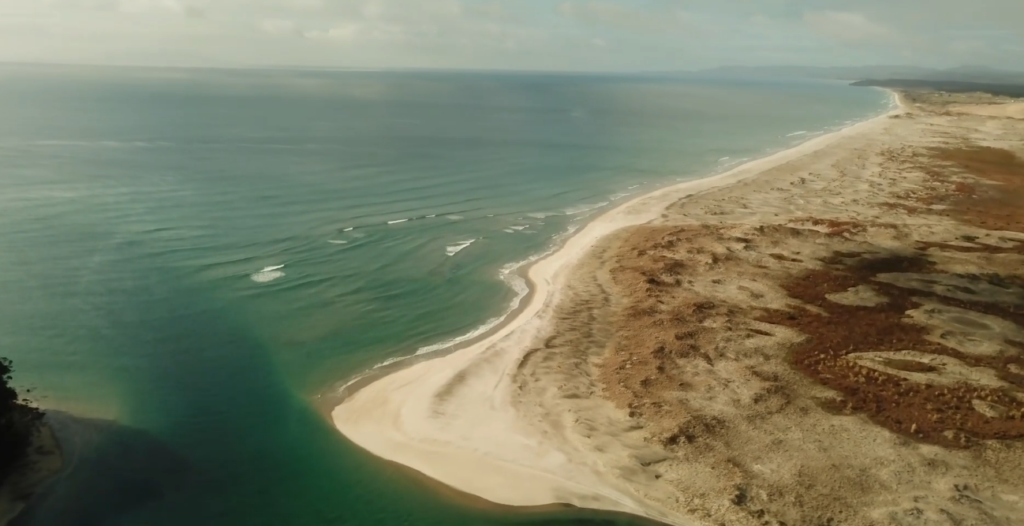
The framing makes a difference this time. A concept that particularly speaks to elders whose oral histories link generations to a single reef, a particular coconut plantation, or a cemetery spot close to the sea is “migration with dignity,” which officials are advocating.
One cannot overestimate the cultural impact of migration. For many native islanders, departing is equivalent to grieving. They view it as exile rather than escape. For this reason, it is especially advantageous that New Zealand has included funds for adaptation initiatives like sea wall construction or sustainable agriculture initiatives. Although not everyone wishes to leave, it recognizes that everyone should have the option.
Amnesty International studies from 2025 made it abundantly evident that the current refugee rules are still unable to deal with climate displacement. Climate change is not a recognized justification for asylum under the 1951 Refugee Convention. Due to this legal loophole, thousands of vulnerable families are left in a dangerous situation where they are neither “qualified” to relocate nor too endangered to stay.
In one particularly poignant instance, a judge in New Zealand awarded a Tuvaluan family residency on humanitarian grounds, citing the harm posed by climate change. Although it was an uncommon gesture, it highlighted the potential legal uncertainty for many. Discretionary goodwill-based policies are exceptions, not rules.
The fact that New Zealand now appears prepared to formalize what was previously experimental is noteworthy. Long-term job placements, student pathways, and family reunion initiatives are all included in the proposed framework as complimentary migration channels. Compared to mass displacement, this integrated approach is far more practical and humane.
“We’re not just designing visas,” a policy advisor acknowledged during a session I attended in Wellington last year. We’re creating futures. That statement has stuck with me, particularly since I’ve seen towns maintain customs while constructing temporary residences on higher ground.
Australia, New Zealand’s regional partner in a number of areas, has chosen a different path. It has promised millions for adaptation, but it hasn’t expressed much interest in parallel migration programs. In the future, if climate migration increases, this disparity may put pressure on regional diplomacy.
The structure in New Zealand, however, presents a viable example. It combines technical insight with emotional intelligence, which is all too frequently lacking in discussions on immigration. The nation is creating something especially novel by utilizing its current migratory infrastructure and improving it with climate-conscious approaches.
Reactive policymaking is also subtly criticized in the 2030 climate migration strategy. New Zealand is investing early, hearing community input, and creating safeguards that could benefit people far beyond the Pacific, instead of waiting for disaster to spur action.
This policy is not risk-free. The public’s backing may wane. Governments shift. It will never be easy to create a migration scheme that respects both necessity and sovereignty. However, if it is successful, it might be extremely helpful in protecting Pacific cultures and preventing forcible relocation.
There is more to this than simply crossing borders for the people of Kiribati or Tuvalu. It has to do with maintaining ritual, language, and religion. About bringing the laughter, the hymns, and the boat carvings into new territory while being aware of their origins.
The tide will rise in 2030. But maybe the hope will also be with this strategy.
Disclaimer
Nothing published on Creative Learning Guild — including news articles, legal news, lawsuit summaries, settlement guides, legal analysis, financial commentary, expert opinion, educational content, or any other material — constitutes legal advice, financial advice, investment advice, or professional counsel of any kind. All content on this website is provided strictly for informational, educational, and news reporting purposes only. Consult your legal or financial advisor before taking any step.
