

Many people probably thought it was clever when Donald Trump asked on social media in January 2026, “WHATEVER HAPPENED TO GLOBAL WARMING???” as a massive winter storm cut off power to over 600,000 homes and businesses throughout the eastern half of the United States. Power lines in Mississippi are coated with ice. Chicago’s temperatures are in the single digits. From Texas to the Carolinas, trees are breaking under the weight of the freezing rain. From the outside, it appeared to be a world that was not warming at all.
Naturally, there was global warming, which increases rather than decreases the likelihood of winters like this one. For the better part of ten years, climate scientists have been attempting to explain this aspect of climate change to a public that still primarily associates it with heat. It is the aspect that is often overlooked in the pictures of frozen roads and darkened neighborhoods. It is not obvious how a harsh cold outbreak and a warming planet are related. It involves looking about twenty miles above the Earth’s surface, where the North Pole is surrounded by a mass of swiftly moving air known as the stratospheric polar vortex, and where things are getting worse.
Key Facts: U.S. Winter Storm Intensification & Climate Change
| Topic | Intensifying U.S. winter storms linked to climate change |
| Key Scientists | Jennifer Francis (Woodwell Climate Research Center); Judah Cohen (MIT); Michael Mann (University of Pennsylvania); Mathew Barlow (UMass Lowell) |
| January 2026 Storm Impact | 600,000+ customers without power; 20+ deaths; states from Texas to New England affected |
| Chicago Wind Chill (Jan 2026) | -36°F — lowest since 2019 |
| Nor’easter Study Finding | Wind speeds and hourly precipitation rates have increased significantly since 1940 |
| Arctic Sea Ice Loss | Nearly one-third reduction since the 1980s |
| Atmospheric Moisture Effect | A warmer atmosphere holds ~7% more moisture per 1°C of warming |
| Polar Vortex Role | Arctic warming disrupts stratospheric polar vortex, pushing Siberian cold into central/eastern U.S. |
| FEMA Status | Agency lost 2,000+ employees in 2025; three directors in one year |
| Key Driver | Weakened jet stream caused by reduced Arctic-to-mid-latitude temperature contrast |
| Reference Links | Winter Storm Fueled by Global Warming – PreventionWeb · How the Polar Vortex Intensified a Major US Winter Storm – The Conversation |
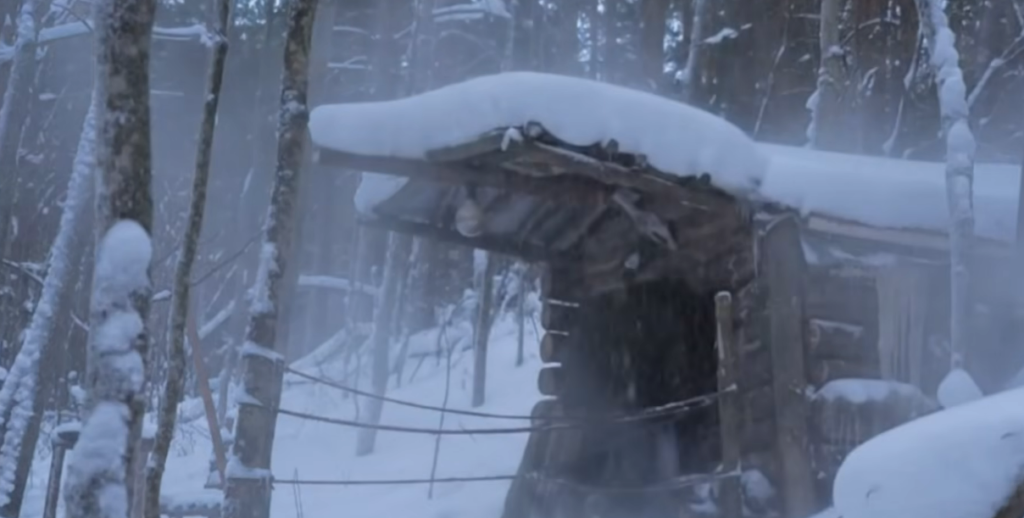
For years, Jennifer Francis, a senior scientist at the Woodwell Climate Research Center in Falmouth, Massachusetts, has studied the impact of rapid Arctic warming on mid-latitude weather. She described the sequence of events in the days following the January storm with the kind of patience that scientists acquire after repeatedly reassuring skeptics. The temperature differential between the polar region and the mid-latitudes is lessened by the Arctic’s rapid warming, which is occurring far more quickly than the rest of the planet and has reduced sea ice by almost a third since the 1980s. The jet stream is typically kept tight and swift by this contrast. Without it, the jet stream becomes wavy and sluggish, creating big north-south bends that let Arctic air enter the continental United States much deeper than it could have a generation ago. “Big waves like this are more common when the Arctic is unusually warm,” said Francis, “and it’s near record-warm right now.”
This was further complicated by a disturbed stratospheric polar vortex caused by the storm in January 2026. It’s easier to visualize than you might think, according to atmospheric scientists Judah Cohen of MIT and Mathew Barlow of UMass Lowell. The stratospheric polar vortex, which circles the pole much higher in the atmosphere and is typically compact and well-behaved, is essentially a second jet stream. Ripples are sent upward through the atmosphere when Arctic warming is uneven, especially north of Scandinavia. The stratospheric polar vortex is distorted and stretched southward over the United States when those ripples get big enough. Cohen has demonstrated that in that stretched position, the vortex draws extremely cold Siberian air across the Arctic and releases it into the eastern and central United States. That air moves quickly, so it doesn’t have time to warm up. The actual, historic cold that reaches the surface seems to most people to contradict everything they’ve been told about global warming.
All of these factors came together to create the storm that struck in late January. Warm, humid air rising from the Gulf of Mexico collided with a powerful Arctic air mass. The atmospheric architecture required for storms to grow large was produced by a number of jet stream disturbances. As a result, an arc from Arkansas to Massachusetts saw more than a foot of snow, with some places seeing nearly two feet. The South was covered in ice. In Oxford, Mississippi, where the mayor compared the damage to a tornado on every street, tree limbs fell on homes, vehicles, and power lines. The governor of Tennessee described the storm as “unusually dangerous in many ways,” which is the kind of understatement that comes after you’ve witnessed ice form on roads that southern utility workers were just not prepared to handle.
At the center of all of this is what climate scientist Michael Mann of the University of Pennsylvania measured for the first time in a 2024 study: since 1940, nor’easters—strong storms that spin up along the East Coast and pull cold air from the pole while dragging moisture from the subtropics—have greatly increased in intensity. They have greater maximum wind speeds. They have higher rates of precipitation per hour. The physics underlying this is linked to everything else: stronger storms that, in Mann’s words, “pull up more warm air on one side and pull more cold air down on the other side,” warmer oceans that supply more moisture into the atmosphere, and a warmer atmosphere that can hold more of it. Together, the extremes on either end become more intense.
It’s difficult to ignore the fact that the communities most affected by this are frequently the least equipped to deal with it. Ice storms are not designed for the Deep South. Mississippi and Louisiana buildings are not made to withstand single-digit temperatures. Nearly half of the 339 patients treated for cold-exposure injuries at emergency rooms over the course of a single weekend in Chicago, where wind chills reached 36 below zero during the January event, were Black, in a city where resources for cold weather are not evenly distributed among neighborhoods. While waiting to spend the night at a nearby church, Ivon Ivans, a woman who has been homeless for three years, called the weather “torturous” at a warming center in Jefferson Park. Her fiancé has had long-term pulmonary illness. Breathing becomes more difficult in the cold.
The question of disaster response is a problem in and of itself. At the time of the storm, FEMA, the organization in charge of coordinating multi-state disaster responses, was cycling through its third director in a year and had lost over 2,000 employees under the Trump administration in 2025. Experts in emergency management had been anxiously anticipating the day when a severely compromised agency would encounter a large-scale incident of this nature. “We’ve been lucky, really, over the last year,” said retired NOAA meteorologist Alan Gerard. It seems that luck was beginning to run out.
Disclaimer
Nothing published on Creative Learning Guild — including news articles, legal news, lawsuit summaries, settlement guides, legal analysis, financial commentary, expert opinion, educational content, or any other material — constitutes legal advice, financial advice, investment advice, or professional counsel of any kind. All content on this website is provided strictly for informational, educational, and news reporting purposes only. Consult your legal or financial advisor before taking any step.
