

The Arctic used to seem far away, even legendary, a region of icy silence punctuated only by wind and the sporadic cautiously approaching research vessel. As commercial ships map out previously ice-sealed routes, that stillness is now being broken more frequently.
The number of vessels sailing north of the 60th parallel increased by 37% between 2013 and 2023. The distance traveled in Arctic waters increased by 111%, which is even more remarkable. Sea ice melting has subtly changed global logistics over the last ten years, creating routes that shipping executives see as especially advantageous for reducing travel time and fuel expenses.
The reasoning seems simple. Traveling between Asia and Europe can be shortened by using northern passageways, which also reduces the number of transit days and fuel consumption each voyage. who efficiency is extremely helpful for businesses who are trying to manage narrow margins.
However, strain in one column can result from efficiency in another.
| Key Context | Details |
|---|---|
| Shipping Growth | Vessel numbers in Arctic waters rose 37% from 2013 to 2023 |
| Distance Traveled | Total sailing distance increased 111% in the same period |
| Key Pollutant | Black carbon (soot) accelerates ice melt when deposited on snow and ice |
| Emissions Trend | Black carbon emissions north of 60° latitude have risen steadily |
| Oil Spill Risk | Remote conditions make spill response extremely difficult |
| Regulatory Body | International Maritime Organization (IMO), including its Pollution Prevention and Response Committee |
| Climate Context | Arctic warming is occurring roughly four times faster than the global average |
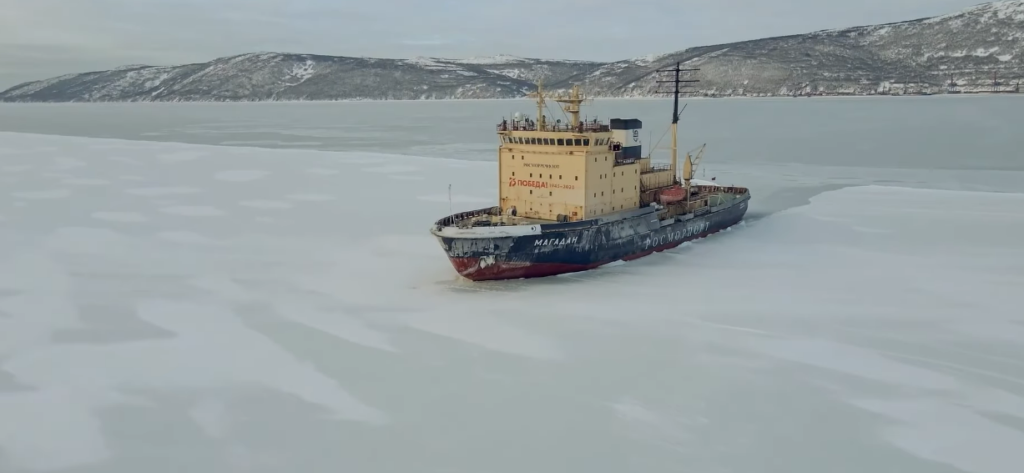
Surfaces that originally reflected sunlight become darker when black carbon, a fine soot generated when ships burn heavy marine fuels, falls over ice and snow. These particles enhance melting in an area that is already rising at a rate that is remarkably consistent across several climate studies by absorbing heat rather than deflecting it. The warming effect of black carbon can be up to 1,600 times that of carbon dioxide during a 20-year period.
It is not a theoretical multiplier.
Even after the heavy fuel oil restriction in 2024, emissions north of 60° latitude have been continuously increasing. The immediate impact of the regulation has been greatly diminished by loopholes and transitory concessions. Soot from fishing boats, cargo ships, and cruise ships keeps piling up on top of the dwindling ice.
In cold water, pollution behaves differently; it lingers longer and spreads more slowly. Governments have made cutting carbon emissions a primary priority in light of global warming, but Arctic circumstances make every mistake more noticeable. In temperate waters, an oil spill is catastrophic; in Arctic waters, it may become nearly irreversible.
In isolated areas damaged by ice, cleanup is logistically challenging. Response activities are frequently delayed due to inadequate infrastructure, severe weather, and extended periods of darkness. As the sole practical defense, prevention is not only advised but also quite dependable.
I recall being quietly uneasy about how imperceptible that pollution appeared as I was standing on a harbor wharf in northern Norway and watched a cargo ship loiter close to the fjord, its exhaust thin against the winter sky.
The changes are less obvious but no less significant underwater. Marine animals depend on these waterways for their existence, and increased vessel activity adds noise to those areas. Seals and whales use sound to communicate, hunt, and navigate. These auditory patterns can be severely disturbed by even a slight increase in shipping, changing habitats in ways that are hard to undo.
An additional level of risk is introduced by ballast water discharge. In order to stable cargo, ships frequently absorb and release saltwater, which may introduce invasive species into ecosystems that have evolved independently. Such imports have the potential to ripple across food chains in delicate Arctic habitats, upsetting centuries-old balances.
The Arctic is not a barren land just begging to be exploited. For survival and cultural continuity, indigenous groups rely on stable ice patterns and thriving marine life. For many, the opening of shipping lanes represents a real change in day-to-day living rather than an abstract policy argument.
Although the pace of response has been varied, regulators are making an effort. Black carbon standards have been a topic of discussion at the International Maritime Organization for many years. A number of countries have indicated that fuel choice is a particularly creative way to reduce soot emissions by putting forward cleaner “polar fuels.”
Black carbon emissions might be immediately reduced by switching to lighter fuels; if this adjustment were implemented uniformly throughout fleets, it would be significantly better. Technically, certain measures are simple, but consensus is hampered by political and economic conflicts.
Environmental prudence is frequently overshadowed by geopolitical objectives. Arctic policymaking involves the intersection of commercial competition, resource extraction aspirations, and security considerations. It is still difficult for medium-sized marine countries to strike a balance between ecological care and economic potential.
The strain is exacerbated by marine trash. In colder waters, plastic debris and abandoned fishing gear remain longer, decompose more slowly, and build up along coastlines. Although enforcement has delayed, an international action plan to stop plastic discharge from ships was supposed to be very effective in reducing this issue.
Scrubbers move pollutants from the sky to the sea in an effort to lower air pollution. That trade-off is contentious in warming oceans, and it could be especially harmful in Arctic regions. Additional contaminants are not well suited to be absorbed by sensitive marine nurseries and feeding grounds.
Global use of renewable energy has increased over the last ten years due to advancements in technology and declining costs. This impetus raises the prospect of a cleaner propulsion system transition for maritime transportation. Alternative fuels, electrification, and hybrid engines are all becoming more and more feasible, and if strict regulation were in place, their implementation in arctic waters would happen much more quickly.
There are indications of self-control. Citing their commitment to environmental responsibility, some large shipping companies have promised to stay away from Arctic routes. These pledges are especially helpful in showing that taking advantage of every available route is not necessary for commercial success.
Nevertheless, the economic allure is strong. The arithmetic seems convincing to stockholders because shorter routes use less fuel per trip. However, those per-voyage improvements may be countered by concentrated emissions in a sensitive area when traffic levels increase.
The Arctic serves as a regulator of the globe. Far beyond polar latitudes, its ice affects water levels, stabilizes atmospheric patterns, and reflects sunlight. Melting speeds up when soot darkens its surface, revealing darker waters that absorb even more heat. Once created, these feedback loops are incredibly resilient.
Coastlines thousands of miles away are impacted by events that occur in Arctic waters.
Systems of storms change. Sea levels are rising. Fisheries react to shifting tides. The relationships are complex and becoming more obvious.
We still have a chance to lead this new era of shipping in the direction of sustainability. Policymakers may establish frameworks that are surprisingly effective in preventing harm by increasing ballast water rules, phasing out exemptions, enforcing fuel standards, and enhancing waste management.
Disclaimer
Nothing published on Creative Learning Guild — including news articles, legal news, lawsuit summaries, settlement guides, legal analysis, financial commentary, expert opinion, educational content, or any other material — constitutes legal advice, financial advice, investment advice, or professional counsel of any kind. All content on this website is provided strictly for informational, educational, and news reporting purposes only. Consult your legal or financial advisor before taking any step.
