

When Antarctica is first seen on a map, it appears far away and almost hypothetical—an abstract white mass at the bottom of the world. However, the location feels anything but abstract when one is standing on a research vessel that is slicing through the Southern Ocean, as some scientists put it. Dark and agitated, the water bears a silent burden: it absorbs a startling amount of the carbon dioxide that people emit. Long taken for granted, that role is starting to appear vulnerable.
The Southern Ocean has been silently removing carbon dioxide from the atmosphere and storing it in deep water for decades, functioning as a global safety valve. Perhaps more than most people realize, this unseen process has slowed global warming. However, recent studies cast doubt on the idea that this system—often referred to as the Antarctic carbon sink—may be deteriorating more quickly than anticipated. The speed at which the changes are taking place seems to surprise scientists themselves.
| Category | Details |
|---|---|
| Region | Southern Ocean surrounding Antarctica |
| Role | Absorbs ~40% of oceanic CO₂ uptake |
| Key System | Antarctic Circumpolar Current (ACC) |
| Major Concern | Declining carbon absorption capacity |
| Key Drivers | Ice melt, freshwater influx, changing winds |
| Scientific Focus | Ocean circulation, iron availability, plankton growth |
| Notable Area | West Antarctic Ice Sheet |
| Risk | Potential shift from carbon sink to carbon source |
| Reference 1 | Nature Climate Research |
| Reference 2 | ScienceDaily Climate Study |
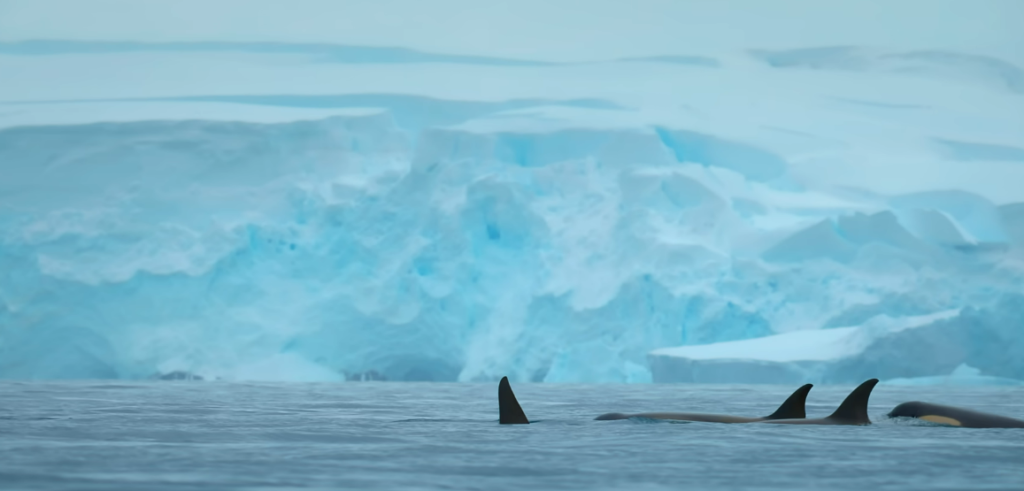
The ice itself is one of the more disturbing observations. Large amounts of freshwater are released when glaciers break and drift into the ocean, gradually changing the chemistry of the nearby waters. That might seem like a small change on paper. In actuality, it upsets the delicate equilibrium that permits carbon-rich, dense water to sink into the deep ocean. The carbon has nowhere to go in the absence of that sinking motion. As it approaches the surface, it raises concerns about how long the system can continue to operate in the same way.
The strongest ocean current on Earth, the Antarctic Circumpolar Current, seems to be slowing down at the same time. It’s difficult to avoid feeling a twinge of unease when watching satellite animations of its once unrelenting flow that now exhibits signs of hesitation. Although models provide estimates, it’s still unclear how abrupt the shift might be. Scientists predict that this current could weaken significantly in the upcoming decades. Ocean systems tend to change gradually until they stop doing so.
The wind comes next. The ocean is being stirred in ways that seem counterintuitive by stronger westerlies brought on by changing climate patterns. They are drawing deep, carbon-rich waters back to the surface rather than aiding in the absorption of carbon. It resembles a system exhaling what it once inhaled, which is an odd reversal. Scholars examining these patterns frequently report hesitant moments, as though the ocean is reevaluating its function.
The story becomes even more complicated when looking at biology. For many years, scientists believed that when ice melted, iron would be released into the ocean, where it would fertilize algal blooms that would absorb more carbon from the atmosphere. Intuitively, that theory made sense. More carbon capture, more life, and more nutrients. However, sediment samples collected miles below the ocean’s surface reveal different information. It turns out that the iron isn’t always functional. It is chemically changed and trapped in forms that are difficult for algae to absorb. Seeing that assumption fall apart is like seeing a silent scientific letdown—one of those times when nature defies expectations.
Additionally, sea ice is slowly melting and has drastically decreased in recent years. Large areas of open water where ice once existed are visible in satellite photos. It’s not just a visual change. It modifies plankton populations, which are the foundation of the carbon-absorbing process, and reshapes ecosystems. It’s difficult to ignore how everything seems interconnected and how one change affects another.
The potential for a tipping point is what makes this so unsettling. The Southern Ocean may eventually stop absorbing carbon and start releasing it, according to some scientists. It sounds improbable and dramatic. However, the underlying mechanisms—weaker biological activity, warming waters, and changing currents—are already apparent. The trajectory is hard to ignore, but it’s unclear if they will converge into a greater shift.
This has a subtle irony. The assumption that natural systems like oceans and forests will continue to absorb a significant portion of emissions has been the foundation of global climate discussions for years. This buffering effect appears to be believed by investors, policymakers, and even casual observers. However, that assumption might not hold if the Antarctic carbon sink continues to deteriorate. Warming would accelerate in ways that current projections might underestimate if more carbon remained in the atmosphere.
Disclaimer
Nothing published on Creative Learning Guild — including news articles, legal news, lawsuit summaries, settlement guides, legal analysis, financial commentary, expert opinion, educational content, or any other material — constitutes legal advice, financial advice, investment advice, or professional counsel of any kind. All content on this website is provided strictly for informational, educational, and news reporting purposes only. Consult your legal or financial advisor before taking any step.
