

When someone challenges a system and the system prevails on a technicality rather than the merits, a certain kind of fatigue sets in. That is essentially what happened to a group of young Georgians who were born and raised in the state, completed their high school education, paid taxes with their families, and then showed up at Georgia’s public universities only to be informed that they would have to pay international student fees. Not because they hadn’t spent enough time there. Not because they weren’t deserving of their position. However, they were discreetly labeled as outsiders in the state they had always called home due to a 2011 policy passed by an unelected body.
The ensuing legal challenges went through several courts over the course of several years. The Georgia Board of Regents, which is in charge of the University System of Georgia, was sued by a group of students with DACA status—people who were brought to the country as minors and are lawfully residing under the federal program established during the Obama administration. With real constitutional support, they contended that it was against federal law to charge DACA recipients international tuition rates instead of in-state rates. They claimed that the Constitution’s Supremacy Clause was being violated. The equal protection clause of the Fourteenth Amendment was being disregarded. These arguments weren’t pointless. For years, federal courts have taken similar issues very seriously.
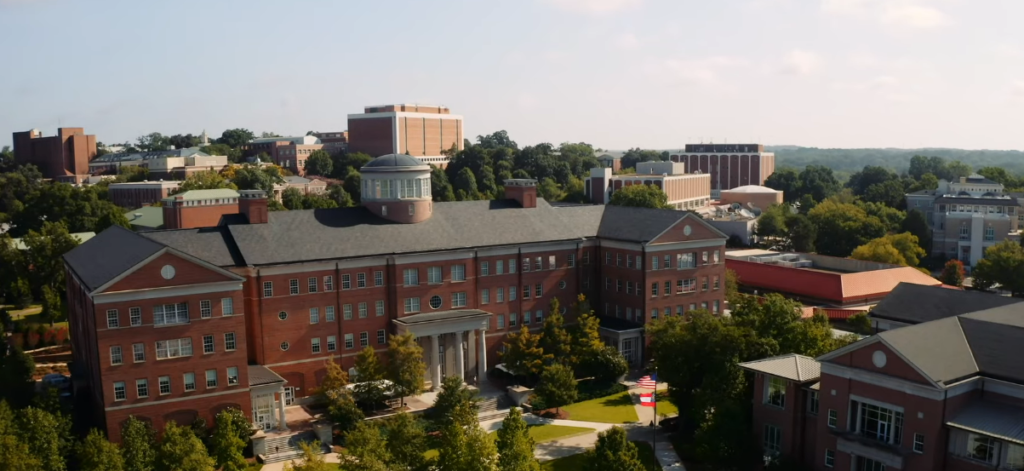
Two policies had been implemented by the Board of Regents. One completely prohibited undocumented students from enrolling in Georgia’s top five public universities, such as the University of Georgia in Athens, where students swarm the Tate Student Center and stroll along North Campus’ tree-lined pathways every weekday. Those who could attend other state schools were compelled by the other policy to pay at international rates. That pricing structure was both financially unfeasible and, many claimed, deeply offensive to students who had spent their entire lives in Georgia.
Nonetheless, the courts continued to come up with excuses for not making a decision regarding the case’s core issues. In March 2015, the Georgia Court of Appeals denied an appeal and upheld a lower court ruling on the grounds of sovereign immunity, a legal theory that protects state agencies from lawsuits unless specifically permitted by the legislature. As a state body, the Board of Regents enjoyed protection. The merits of the students’ constitutional arguments were never really heard. One of the undocumented students caught up in this, Alejandro Galeana-Salinas, expressed disappointment at the time but took a broader perspective, drawing comparisons between the legal battle and the Civil Rights Movement, which appeared to be a series of setbacks before it became something more.
| Field | Details |
|---|---|
| Case Name | O’Connell v. Georgia Board of Regents |
| Plaintiffs | DACA-recipient students; Georgia Latin Alliance for Human Rights |
| Defendant | Georgia Board of Regents (University System of Georgia) |
| Legal Counsel (Plaintiffs) | MALDEF (Mexican American Legal Defense and Educational Fund); Horsley Begnaud; Charles Kuck |
| Court | Georgia Court of Appeals; later Georgia Supreme Court; federal court |
| Policy Challenged | Board of Regents Policy — barring undocumented students from top 5 public universities; charging international tuition rates |
| Policy Enacted | 2011, by the unelected Georgia Board of Regents |
| Key Legal Doctrine | Sovereign Immunity (shields state agencies from lawsuits) |
| Constitutional Claims | Violation of Supremacy Clause; Fourteenth Amendment Equal Protection Clause |
| Outcome | Lawsuit dismissed — Board of Regents immune from direct suit |
| Georgia’s Position | One of six U.S. states explicitly denying in-state tuition to Dreamers |
| Federal Program | DACA (Deferred Action for Childhood Arrivals), established under President Obama |
In March 2016, a federal lawsuit was filed. It was filed by MALDEF and Horsley Begnaud on behalf of two DACA students, the Georgia Latin Alliance for Human Rights, and each member of the Board of Regents individually, not the board as a whole. This was a calculated strategic action intended to avoid the issue of sovereign immunity. The argument was that state agencies are better protected than individual officials. The lawsuit claimed that the University System’s policies violated the equal protection clause by discriminating against DACA recipients without a constitutional basis, as well as the supremacy clause by going against federal immigration law and the federal government’s exclusive authority over immigration status. When the tuition bill arrived, the state was telling mostly Latino students who had grown up in Georgia that they were somehow not Georgians, according to Victor Viramontes of MALDEF.
When you look at the situation objectively, it’s difficult to ignore how strange it is. These students are in the US lawfully. Regardless of its contentious political past, DACA permits legal presence and employment. Their status had already been decided by the federal government. In essence, Georgia’s public university system was adding another, more stringent classification on top of that, one that is not found in any federal legislation. The claim that states are unable to control immigration is a well-established one. It has been much more difficult to determine whether that argument will ultimately prevail in a Georgia courtroom.
Georgia is one of only six states in the union that expressly forbid Dreamers from receiving in-state tuition. Twenty-two other states have taken the opposite stance, granting in-state rates to eligible undocumented or DACA students who have completed their high school education in the area. The difference is striking, and it’s no longer just a legal issue; rather, it’s a policy decision that various states are responding to in different ways. There is a perception that the legal environment surrounding this matter is still genuinely unresolved nationwide, with courts in various circuits coming to differing conclusions.
The Georgia cases perhaps best illustrate how procedural law can prevent a policy from ever being evaluated on its merits. One route was blocked by sovereign immunity. Another was opened by individual capacity suits. The attorneys for the students promised not to give up. It remains to be seen if a court will ultimately rule on the constitutionality of the policy itself, as opposed to who can and cannot be sued. For the students who are caught in the gap, the wait is measured not in legal terms but in terms of seats at universities they can see from the outside and tuition bills they cannot afford to pay.
Disclaimer
Nothing published on Creative Learning Guild — including news articles, legal news, lawsuit summaries, settlement guides, legal analysis, financial commentary, expert opinion, educational content, or any other material — constitutes legal advice, financial advice, investment advice, or professional counsel of any kind. All content on this website is provided strictly for informational, educational, and news reporting purposes only. Consult your legal or financial advisor before taking any step.
