

After four days of jury deliberations in a federal courthouse in Manhattan, the verdict was delivered on a Wednesday afternoon. After weeks of presenting their case against Live Nation Entertainment and its subsidiary Ticketmaster, thirty-three states and the District of Columbia returned with a clear verdict: Live Nation was an unlawful monopoly that hurt customers, overcharged ticket purchasers, and locked out rivals by controlling venues, marketing, and ticketing. Those who paid $25 in service fees for a $40 ticket had been waiting a long time for this kind of verdict.
The case stems from a number of complaints that had been accumulating in the live music sector for more than ten years. In 2010, Live Nation and Ticketmaster merged, bringing together the platform that manages between 70 and 80 percent of primary ticketing for major concerts and live events with the company that owns or operates hundreds of venues and oversees major artists. From the start, critics claimed that this combination gave a single organization disproportionate control over almost every chokepoint in the live entertainment supply chain, including where artists perform, who advertises their shows, how tickets are sold, and what fees customers pay. Before the majority of its present fans were even born, Pearl Jam was voicing concerns about Ticketmaster’s influence. In more recent years, Olivia Dean, Taylor Swift, and The Cure have all publicly criticized the ticketing company.
| Field | Details |
|---|---|
| Defendant | Live Nation Entertainment, Inc. & Ticketmaster (subsidiary) |
| CEO (Live Nation) | Michael Rapino |
| Case Type | Federal Antitrust / Monopoly Trial + Securities Class Action |
| Antitrust Case No. | United States v. Live Nation Entertainment |
| Filed By (Antitrust) | U.S. Department of Justice + 39 states + D.C. (filed May 23, 2024) |
| Trial Location | U.S. District Court, Manhattan, New York |
| Trial Duration | March 2, 2026 – April 15, 2026 (approximately 5 weeks) |
| Jury Deliberation | 4 days |
| Verdict Date | April 15, 2026 |
| Jury Finding | Live Nation and Ticketmaster operated an illegal monopoly |
| Market Share (Ticketing) | ~70–80% of major concert ticket sales |
| DOJ Settlement (March 10, 2026) | $280 million; divestiture of up to 13 amphitheatres; 15% service fee cap |
| States Proceeding to Trial | 33 states + D.C. |
| Securities Class Action | Donley v. Live Nation Entertainment, Inc., Case No. 2:23-cv-06343 |
| Securities Settlement Amount | $20 million |
| Securities Class Period | February 23, 2022 – May 22, 2024 |
| Court (Securities) | U.S. District Court, Central District of California |
| Live Nation Revenue (2025) | ~$25 billion |
| Presiding Judge (Antitrust) | U.S. District Judge Arun Subramanian |
| Key Critic | New York AG Letitia James |
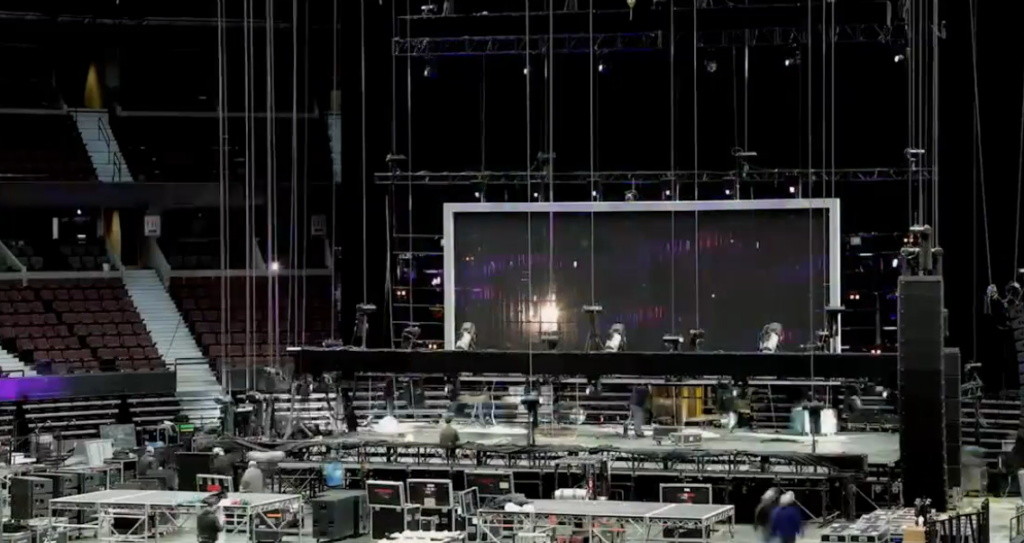
The chaotic rollout of Taylor Swift’s Eras Tour presale in 2022, which resulted in hours-long lines, system crashes, and millions of fans locked out, was the particular incident that brought public annoyance into the mainstream of politics and prompted congressional hearings. Along with 39 states and D.C., the Biden-era Justice Department filed a formal antitrust lawsuit in May 2024, accusing Live Nation of retaliating against rivals, limiting artists’ access to venues that did not use its services, entering into long-term exclusive contracts with venues to prevent rival ticket sellers, and generally using its market position to maintain high prices and little competition.
Some onlookers were quietly irritated by what transpired next. The DOJ and a few states reached a $280 million settlement with Live Nation in March 2026 while the trial was still in progress. The settlement included a 15% cap on service fees at specific venues and the mandatory divestiture of up to 13 amphitheatres. The National Independent Venue Association’s head, Stephen Parker, put it bluntly: “not significant enough to call a slap on the wrist.” The settlement was deemed insufficient by 33 states and Washington, D.C., and the trial was continued. Michael Rapino, the CEO of Live Nation, denied that his business engaged in anticompetitive behavior for hours while testifying. After four days, the jury couldn’t agree.
Anyone attempting to follow this story may become confused by the two concurrent legal proceedings that are worth monitoring. State attorneys general and the federal government brought the antitrust trial, which resulted in the verdict on Wednesday, because of the company’s market behavior. Donley v. Live Nation Entertainment, a different securities class action, focuses on claims that the company misled investors about its cooperation with regulators and its adherence to antitrust laws. Shareholders who bought Live Nation stock between February 2022 and May 2024 were covered by the $20 million settlement of that securities case, which was filed in August 2023 in federal court in California. The case illustrates how the legal exposure surrounding Live Nation’s actions extended well beyond consumer harm into investor disclosure obligations, even though the claim form deadline for that settlement has already passed.
It was instructive to watch Live Nation react to the antitrust ruling. The company’s post-ruling statement indicated an appeal, pointed to pending motions, and mentioned that the jury’s expert testimony could still be contested. It did not acknowledge the jury’s findings on the merits. This is how litigation is typically handled. Given that post-trial motions are frequently used to challenge antitrust verdicts involving intricate economic theories, it’s also a reasonable interpretation of the circumstances. Although the verdict is important, it is not the last word. The remedies phase, which includes the question of whether Live Nation could be forced to sell Ticketmaster entirely, is still in progress, according to U.S. District Judge Arun Subramanian, who ordered both parties to coordinate on scheduling next steps.
Beyond the legal proceedings, there is a sense that the concert industry is at a turning point. A jury verdict alone cannot determine whether ticket prices actually decrease, whether venue operators have more freedom to select their ticketing partners, or whether a forced split between Live Nation and Ticketmaster creates a more competitive market. Both the finding and the remedy are important. What structural adjustments the company needs to make will ultimately be determined by a judge. Whether those who have spent years paying $25 in fees on a $40 ticket ever see anything significantly different in their checkout experience will depend on that decision rather than Wednesday’s verdict.
Disclaimer
Nothing published on Creative Learning Guild — including news articles, legal news, lawsuit summaries, settlement guides, legal analysis, financial commentary, expert opinion, educational content, or any other material — constitutes legal advice, financial advice, investment advice, or professional counsel of any kind. All content on this website is provided strictly for informational, educational, and news reporting purposes only. Consult your legal or financial advisor before taking any step.
