

Situated on Broad Street, a short distance from the former Capitol building, Richmond City Hall is an institution that has endured more than its fair share of challenging times in Virginia history. It doesn’t appear that requests for public records end up in this building. That’s essentially what was going on inside, though, according to Connie Clay, a former FOIA officer who spent about six months attempting to do her job before being fired for it. The city’s $549,000 settlement, which was reached in April 2026 following two years of litigation and more than $670,000 in legal defense expenditures, does little to refute her account.
In March 2024, Clay filed a lawsuit seeking $250,000 in damages, claiming that her supervisor, former Public Relations Director Petula Burks, had instructed her to conceal or postpone documents that city dwellers were legally entitled to view. According to Virginia’s Freedom of Information Act, the majority of requests must be completed within five business days. According to Clay, she was frequently instructed to withhold information from the public, sit on requests, and request extensions when none were necessary. She was fired when she resisted and reported the practices as illegal. In response, the city claimed that she didn’t fit the legal definition of a whistleblower and that officials had only disagreed with her regarding FOIA issues and found her to be uncooperative.
Key Information Table
| Detail | Information |
|---|---|
| Plaintiff | Connie Clay |
| Role at City | Freedom of Information Act (FOIA) Officer, City of Richmond, Virginia |
| Employment Period | July 2023 – January 2024 |
| Defendant | City of Richmond, Virginia |
| Original Defendants Named | Petula Burks (former Director, Office of Strategic Communications and Civic Engagement); former Mayor Levar Stoney |
| Burks Status | Later dropped as named defendant |
| Lawsuit Filed | March 2024 |
| Original Damages Sought | $250,000 |
| Settlement Amount | $549,000 (includes attorneys’ fees and costs) |
| Settlement Announced | April 10–11, 2026 |
| Settlement Span | Two years of litigation; two mayoral administrations |
| City’s Legal Defense Cost | Over $670,000 (per Axios) |
| Core Allegation | Wrongful termination after Clay raised concerns that the city was unlawfully withholding or delaying FOIA-required records |
| Key Quote (Clay) | “If I don’t say something, who will?” |
| Key Quote (Burks, per Clay) | “I just don’t want the city to look stupid” |
| Judge’s Findings | City failed to preserve key evidence on a lost work cell phone belonging to Burks; “reckless failure”; city lawyers showed “apparent lack of candor” and “lack of good faith” in settlement negotiations |
| Jury Instruction Consequence | Judge ruled that if case went to trial, jury would be instructed to assume lost phone contents were unfavorable to the city |
| CAO Statement | Odie Donald II: settlement is “not an admission of wrongdoing”; continued litigation “not in the best financial interest of the City” |
| Clay’s Statement | “Matter has been amicably resolved; no further comment” |
| Clay’s Attorney | Sarah Robb |
| Circuit Court Judge | Claire G. Cardwell |
| Virginia FOIA Standard | Most requests must be fulfilled within five business days |
| City’s Defense Argument | Clay did not meet the legal definition of a whistleblower under Virginia law; officials merely disagreed with her on FOIA matters |
Before the case even reached trial, that defense started to crumble. Judge Claire G. Cardwell of the Circuit Court determined that the city had neglected to protect important evidence on Burks’s work cell phone, which had reportedly vanished. The judge called this a “reckless failure” and concluded that the city’s private lawyers had shown a “lack of good faith” and a “apparent lack of candor” in the court-mandated settlement talks. If the case had gone to trial, the jury would have been instructed to presume that whatever had been on that lost phone was detrimental to the city’s position. This would have had a significant impact. No defendant wants a jury to be given that instruction.
It’s difficult to ignore this case’s arithmetic. At first, Clay asked for $250,000. Fighting the lawsuit cost the city more than $670,000. Ultimately, they wrote a check for $549,000, which is more than twice the initial demand. That payment was made without acknowledging any wrongdoing. Odie Donald II, Chief Administrative Officer, issued a statement that adhered to the standard playbook: the settlement should not be seen as a compromise on the underlying facts, and further litigation was not in the city’s or its citizens’ best financial interests. Clay’s name was not mentioned in the statement. That omission has a certain telling quality.
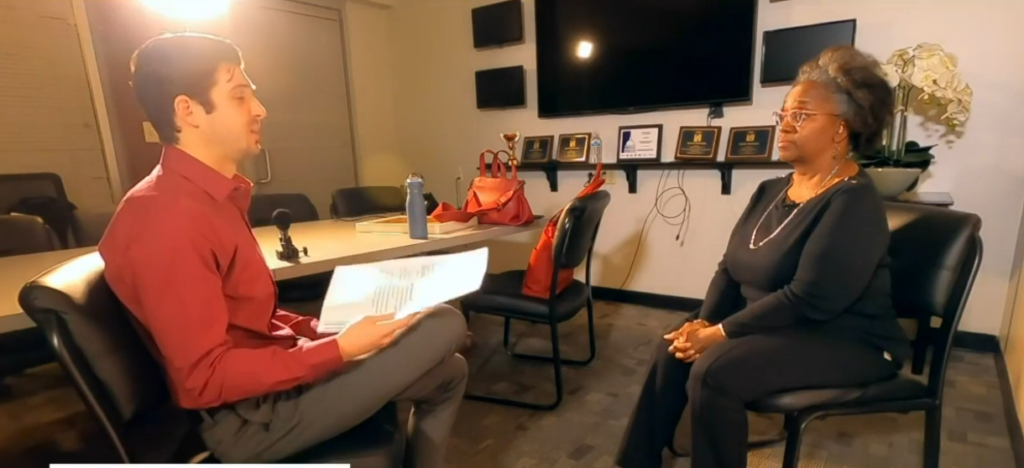
In past interviews, Clay had been candid about the reasons behind her lawsuit. In an interview with Richmond’s CBS 6, she detailed specific situations in which she was asked to conceal information or postpone answering requests that ought to have been completed right away. She remembered talking to Burks about her boss’s direct statement that she didn’t want the city to “look stupid.” According to her, Clay’s reply was equally straightforward: “Well, the city needs to stop doing stupid things.” Although it’s not the type of institutional exchange that frequently finds its way into court documents, it captures a genuine aspect of how accountability works in urban bureaucracies when those in charge of transparency are answerable to those who wish to avoid it.
Two mayoral administrations were involved in the case. Levar Stoney, the previous mayor, filed it, and Danny Avula, the current mayor, continued it. At first, Stoney was listed as a defendant. In the end, Burks was removed from the case. The city continued to litigate, accruing legal costs, losing the phone, receiving criticism from the judge, and finally reaching a settlement that cost Richmond taxpayers significantly more than they would have paid to settle the case at the outset.
Beyond this specific instance, there is a more general point here. In municipal government, FOIA officers hold an odd position because, although they work for the city, they are meant to be the means by which citizens hold the city accountable. The structural tension is evident when a communications director oversees a FOIA officer and is responsible for managing the city’s public image. Clay is not the first person in a position like this to find that upholding transparency laws can directly conflict with those in charge of your employment. She is one of the few, though, who decided to take action and persisted for two years while the city spent almost three times its potential liability attempting to get her to leave.
It’s genuinely unclear if Richmond’s new administration will learn anything from this result. The settlement has been paid. The statement is released. The case has been closed. Future FOIA requests and FOIA officers will eventually have to respond to the question of whether the practices Clay complained about have actually changed inside City Hall.
Disclaimer
Nothing published on Creative Learning Guild — including news articles, legal news, lawsuit summaries, settlement guides, legal analysis, financial commentary, expert opinion, educational content, or any other material — constitutes legal advice, financial advice, investment advice, or professional counsel of any kind. All content on this website is provided strictly for informational, educational, and news reporting purposes only. Consult your legal or financial advisor before taking any step.
