

This past Sunday was one of those nights where you could practically feel the tension that permeates financial desks on Sunday evenings. In early overnight trading, Dow futures fell 293 points, or about 0.7%, as traders realized that the Middle East had not produced any positive news over the weekend. As the fifth week of the war between the United States and Iran approaches, markets, which had spent the majority of March hoping for a quick diplomatic resolution, are running out of both patience and optimism.
| Category | Details |
|---|---|
| Full Name | Dow Jones Industrial Average Futures (Dow Futures) |
| Common Ticker | YM (Mini Dow Futures) |
| Type | Stock Market Index Futures Contract |
| Underlying Index | Dow Jones Industrial Average (DJIA) |
| Exchange | Chicago Mercantile Exchange (CME) — Globex Platform |
| Trading Hours | Nearly 24 hours, Sunday–Friday |
| Contract Size | $5 per index point (Mini Dow) |
| Currency | U.S. Dollar (USD) |
| Current Level (Mar 30, 2026) | ~45,422–45,528 (fluctuating) |
| Friday Close (DJIA) | 45,166.64 (down 793.47 points) |
| Current Market Status | Dow in correction territory |
| Key Events This Week | Fed Chair Powell speech, JOLTS, ADP, Jobs Report (Friday) |
| Reference Links | CNBC Dow Futures Live | Investing.com Dow Jones Futures |
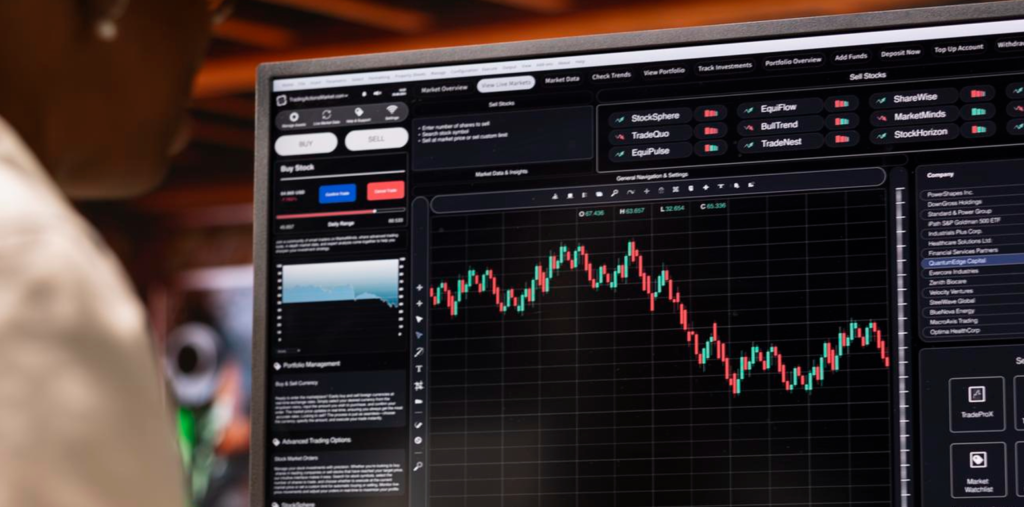
The image had changed a little by Monday morning. As investors attempted to stabilize following a rough Friday session, futures linked to the Dow Jones Industrial Average recovered some ground, gaining about 68 points, or 0.2%. That day, the Dow fell by almost 800 points, formally entering correction territory, which is characterized as a drop of more than 10% from a recent peak. At a seven-month low, the S&P 500 recorded its fifth weekly loss in a row. For a longer period of time, the Nasdaq has been in correction. It’s difficult not to suspect that something more than short-term volatility is at play when you watch all three major indices bleed together like this.
There is no subtlety to the proximate cause. The Pentagon is reportedly getting ready for weeks of ground operations in Iran, including potential raids targeting Kharg Island, which handles about 90% of Iran’s oil exports. On Monday, Brent crude was trading between $108 and $109 per barrel. Thousands of paratroopers from the 82nd Airborne are reportedly on their way, and the 31st Marine Expeditionary Unit has already reached the area. The markets are no longer placing bets on a speedy exit. Only 25% of Capital Alpha Partners believe the conflict will end by the end of May, and there’s a good chance it will continue until 2027. If that timeline is accurate, it completely alters your perspective on energy costs, inflation, and corporate profits.
For all of this, Dow futures have effectively turned into a pressure gauge. Traders look for signs of sentiment in those pre-market numbers every morning before the New York Stock Exchange floor even opens. For weeks now, they have been observing a market that is torn between two opposing impulses. There is hope that Trump’s diplomatic initiatives with Iran will yield tangible results. Additionally, there is concern that the conflict is growing rather than shrinking as a result of the Houthis firing missiles toward Israel over the weekend. Even if Hormuz eventually reopens, the Red Sea corridor, which was already a flashpoint during the Israel-Hamas conflict, is turning into a chokepoint once more that could impede oil flows.
Outside of a trading floor, gas prices serve as the most concrete reminder of all of this. On Sunday, the national average in the United States reached $3.98 per gallon, a full dollar increase in just one month. It is not an abstraction. When people fill up to drive to work, they see that number at the gas station, and it has a direct impact on consumer sentiment, retail spending, and ultimately corporate revenues. NewEdge Wealth’s chief investment officer, Cameron Dawson, recently made an intriguing observation on CNBC’s Closing Bell, arguing that the sell-off has been so indiscriminate that some high-quality stocks are now actually on sale. She might be correct. However, it is much simpler to recognize “throwing the baby out with the bathwater” in retrospect than it is during the process.
There will be an exceptional amount of data this coming week that could move things either way. Only a few weeks after the central bank kept rates unchanged, Fed Chair Jerome Powell is expected to speak on Monday. This decision was likely simpler back then than it would be now, since oil-driven inflation is making the entire rate-cutting calculation more difficult. The Labor Department will still release its jobs report on Friday even though the market will be closed for Good Friday. This includes the JOLTS report, ADP payrolls, and the ISM Manufacturing PMI. Following the shocking loss of 92,000 jobs last month, Wall Street anticipates a payroll rebound to about 45,000.
Whether any of that information will be sufficient to change the tone is still up in the air. The number of jobs is important, but the response might be muted or even perverse if Brent crude is still above $105 when it declines and if there are fresh stories from the Gulf overnight. Some parts of the market believe that until there is either a credible ceasefire or some clarity on how long this conflict actually lasts, the Dow, and consequently Dow futures, won’t find a true floor. Up until that point, every Sunday night has a certain significance, and every overnight futures figure seems like the opening line of a tale that no one is quite sure how to complete.
Disclaimer
Nothing published on Creative Learning Guild — including news articles, legal news, lawsuit summaries, settlement guides, legal analysis, financial commentary, expert opinion, educational content, or any other material — constitutes legal advice, financial advice, investment advice, or professional counsel of any kind. All content on this website is provided strictly for informational, educational, and news reporting purposes only. Consult your legal or financial advisor before taking any step.
