

Digital education is bringing about a very human kind of globalization by erasing physical barriers, one that is based on shared learning, empathy, and curiosity rather than politics or commerce.
One influential figure in this shift, Dr. Rhianna Rogers, has been influencing how colleges use online learning to overcome cultural barriers. She has highlighted how inclusive design and active participation can make online learning environments especially advantageous for students from remote or marginalized communities in her role as a Fellow at the Rockefeller Institute of Government. Her stance is very clear: education should enhance rather than limit people’s lives.
Students now attend classes from Lagos to London and Seoul to São Paulo thanks to technology like video conferencing and real-time translation. Once unthinkable, young students discussing literature or climate policy in a chat box across continents has become a daily occurrence. These digital interactions are changing young people’s conceptions of identity and belonging in ways that go beyond simple convenience.
Online learning environments like Google Classroom, Coursera, and ClassDojo have made learning more interactive. Through organized international exchange programs, students work together to solve problems, exchange local viewpoints, and break down stereotypes through simple conversation. With the exception of the airfare, the process feels remarkably similar to cultural immersion.
| Category | Information |
|---|---|
| Core Concept | Virtual classrooms connect students globally, fostering empathy and cross-cultural understanding |
| Key Advocate | Dr. Rhianna Rogers, Associate Professor at SUNY Empire State College and Fellow at Rockefeller Institute of Government |
| Educational Benefit | Promotes global competencies such as adaptability, empathy, and intercultural communication |
| Tools and Technologies | Virtual Reality (VR), video conferencing, digital collaboration tools, AI-powered translation platforms |
| Research Sources | Rockefeller Institute of Government, ResearchGate, eLearning Industry, Greater Good Science Center |
| Societal Impact | Encourages inclusion, dissolves geographical barriers, and supports peace education initiatives |
| Challenges | Digital inequity, time zone coordination, and lack of culturally responsive teaching training |
| Key Trend | Culturally responsive pedagogy (CRT) integrated into online education |
| Economic Context | Global EdTech sector projected to exceed $700 billion by 2034, emphasizing cross-border learning |
| Reference Source | https://rockinst.org/issue-area/ep-17-using-online-learning-to-bridge-cultural-divides |
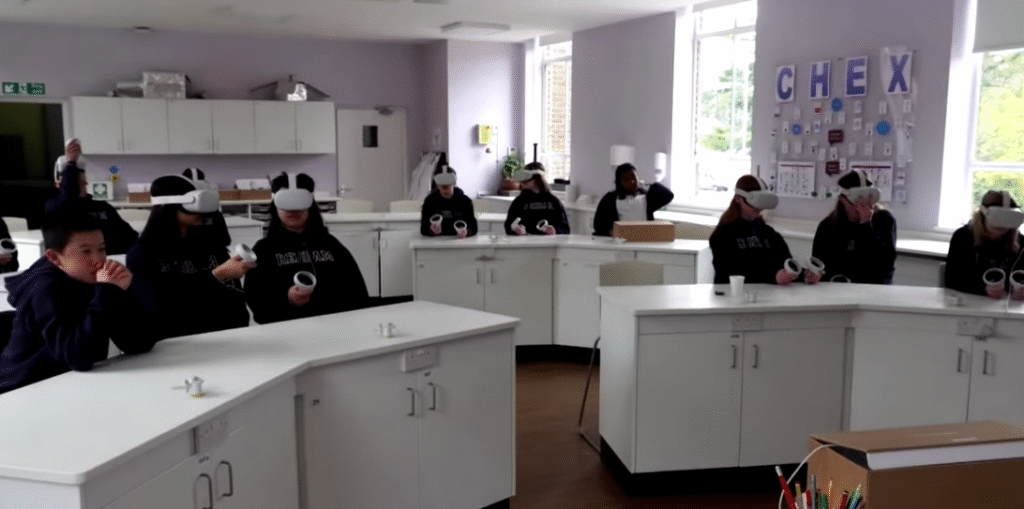
These interactions are frequently referred to by Dr. Rogers as “cultural laboratories.” They give students the opportunity to practice conversation, assess empathy, and cultivate global awareness in real time. In order to encourage students to share their lived experiences as part of the lesson, her courses are built around digital interaction and storytelling. This unique fusion of human connection and academic rigor is teaching cultural awareness as a life skill rather than as a sociological footnote.
The effect is quantifiable. Students who participate in virtual exchanges exhibit significantly enhanced emotional intelligence, active listening, and conflict-resolution abilities, according to research from the Greater Good Science Center. These students are learning how to feel and communicate across cultural boundaries in addition to speaking different languages.
This educational bridge has been greatly accelerated by technological advancement. Cross-cultural communication is becoming easier thanks to artificial intelligence, which can translate idioms and phrases with surprisingly high accuracy. Another layer is added by virtual reality platforms, which let students explore historical sites, virtual museums, and simulated communities that give them a taste of another culture. These tools, which use sensory experience instead of abstract instruction, are very effective at fostering shared understanding.
In an article for eLearning Industry, Joseph Evanick referred to this change as a “cultural transformation of education.” He points out that traditional hierarchies are broken down in virtual classrooms, transforming students into co-creators of knowledge and teachers into facilitators. By substituting active collaboration for passive consumption, the dynamic has significantly increased student engagement.
This social potential has drawn the attention of celebrities and international advocates. Actress Emma Watson, who is well-known for her involvement with the UN’s HeForShe campaign, has openly supported online global education initiatives that use digital literacy to empower women and girls. In a similar vein, Shakira’s Barefoot Foundation has backed online exchange programs that highlight shared language learning as a means of fostering empathy between Latin American and European educational institutions. These initiatives demonstrate how well-known people are adopting education as a means of promoting social harmony as opposed to prestige.
Professional settings can also benefit from shared digital education. Through platforms like Teams for Education and Horizon Workrooms, major tech companies like Microsoft and Meta have made investments in global classroom initiatives. These tools have the potential to democratize access to high-quality education, as evidenced by Satya Nadella’s description of them as “digital passports for equality.” Technology companies are unintentionally promoting peace by incorporating cultural learning directly into digital collaboration tools.
The emotional effects are just as significant. Students who take part in international projects say they feel closer to their classmates and are more adept at handling differences. Many carry on these online friendships into adulthood, working together on cross-border research, artistic endeavors, and social projects. Classrooms are the new consulates of cultural cooperation, and friendship is being used as a diplomatic tool. It’s a quiet revolution.
However, using technology to bridge cultural divides is not without its challenges. Digital inequality is still a major problem. The devices or high-speed connectivity required for full participation are unavailable to millions of students. Teachers also need to make sure that digital content is culturally sensitive. Instead of eliminating stereotypes, a virtual conversation that disregards regional traditions or distorts identities runs the risk of perpetuating them. It takes intentional sensitivity and design to address these subtleties.
But progress is indisputable. Geographical barriers have been greatly diminished by virtual classrooms, which have also increased students’ access to global engagement opportunities. They are surprisingly inexpensive for schools that are unable to support in-person exchange programs because of their inclusive nature. The shift from isolationist learning to interconnected education is a transformation rather than a trend for many institutions.
“Technology is only as inclusive as the humans who design it,” Dr. Rogers frequently reminds her students. Her observation perfectly captures the difficulty and potential of virtual classrooms: while they are not naturally unifying, they can become so if they are led by equity, empathy, and cultural intelligence.
A virtual storytelling program that links kids from Brazil, Kenya, and Japan is one especially motivating example. By contributing folktales from their respective cultures, each group builds a collective digital collection of tales that honor diversity and unity. The project has demonstrated to young students that their imaginations frequently overlap even though there are oceans between them.
Disclaimer
Nothing published on Creative Learning Guild — including news articles, legal news, lawsuit summaries, settlement guides, legal analysis, financial commentary, expert opinion, educational content, or any other material — constitutes legal advice, financial advice, investment advice, or professional counsel of any kind. All content on this website is provided strictly for informational, educational, and news reporting purposes only. Consult your legal or financial advisor before taking any step.
